

REVIEW: Sigma DP2 Merrill - A Diamond in the Rough
If there's a singular phrase to summarise the Sigma DP2 Merrill, it would be "it cuts both ways". In that, I mean it's a very, very flawed camera, with a lot of peeves and annoyances, and you almost wonder why not get any other camera. Yet, in the right circumstances, with enough patience and determination, the DP2 Merrill is one of the most impressive cameras that you can buy, especially if you're care about colours.
If there's a singular phrase to summarise the Sigma DP2 Merrill, it would be "it cuts both ways". In that, I mean it's a very, very flawed camera, with a lot of peeves and annoyances, and you almost wonder why not get any other camera. Yet, in the right circumstances, with enough patience and determination, the DP2 Merrill is one of the most impressive cameras that you can buy, especially if you're care about colours.


And we'll get into that in just a second. But to start off with, we can't overlook the highlight of the Sigma DP2 Merrill - its Foveon X3 sensor. It's a 46-megapixel sensor (capturing 44.3 million effective pixels) with a resolution of 4,704 x 3,136. Besides all those flashy numbers, what's most unique about that sensor is the '3' in 'X3'. This notes that the sensor has not 1, but 3 layers stacked on top of one another.
PLEASE NOTE: I PURCHASED THIS WITH MY OWN MOMEY AND NO PAYMENT OR CONTROL WAS EXCHANGED FOR PUBLISHING THIS UNBIASED REVIEW
When this camera hits, it really hits…
In most other cameras, the layers that record RGB data (basically, red, green, and blue colour spectrums) lie adjacent to each other within the same layer of the sensor. But not in the DP2 Merrill, as that Foveon sensor lays every layer on top of each other, which theoretically, should allow it to capture mesmerising colours. True to their word, the images that come out of mine showcase some gorgeous colour work.
Additionally, the shots that I was able to pull off were highly detailed and crisp, with colours that render it almost true to life. And, with a good amount of vibrancy, avoiding the sometimes dull colours that digital cameras sometimes capture. It should be noted that although the sensor is a 46-megapixel unit, the final images that come out of the DP2 Merrill are processed into (just a tad over) 15-megapixel photos.

Some (Very) Good, Some (Quite) Bad
The idea of the 15-megapixel photos is that each of the three sensors processes 5 megapixels each, with as much of the RGB data as it can take in and process. While this might not be as impressive in 2023, where 15-megapixels can be considered commonplace, the colours and details you get in each shot are mightily impressive. This is made even better thanks to the snappy autofocus and intuitive controls.
The most commonly-used dials - aperture, shutter speed, and ISO - are within easy reach and are always accessible. Before we forget, that 30mm f2.8 Sigma lens (which is a 45mm equivalent in 35mm speak) is also deserving of much praise. The image comes up super sharp, even at f2.8, and I've found that there's still room for improvement once you stop it at f4. This makes up for the fact that it's a fixed lens.
Video Source - Hifi Huff via YouTube
With that being said, Sigma's DP2 Merrill isn't really all sunshines and rainbows. For all its capabilities in colour rendering and processing, the Foveon sensor underneath (and the camera itself) has many distinct flaws. Chief among which is the general slowness at which it takes photos - the number one thing that cameras are supposed to do. Snap on the shutter button, and there's always a lengthy delay before the final image appears.
Sometimes, it could literally take you several seconds of waiting! It feels even more lethargic thanks to the lack of a bust mode setting. This is partly thanks to the added processing required by the Foveon X3 sensor to capture and process all that RGB data to best highlight and accentuate the colours. This could naturally lengthen the delay between shots, as well as writing the final image onto your SD card.
“Yet, with enough patience and in the right lighting conditions, you can get some truly breath-taking shots”
A Mighty Double-Edged Sword
Personally, I'm not too bothered by this, given that I'm used to taking photos with older film cameras, as the latter has a similar delay to finalise each shot. However, if you're accustomed to the snappy shots on modern digital cameras - or even your smartphone - this can be quite a frustrating experience. You ought to treat it like film cameras... Rather than spray and pray, aim for calculated, precise shots each time.
Speaking of film cameras, the Sigma DP2 Merrill is just as incapable of taking good photos in any low-light situation. I personally only use this for taking photos in the daytime, with a lot of light to work with. Seeing how bad the low-light performance is, I wouldn't go anywhere above 400 ISO. And, simply stick to its base 100 ISO setting. Beyond that, you'll get weird effects with colours along the darker spots - even with slower shutter speeds.
Video Source - Mattias Burling via YouTube
Nonetheless, it could still be okay for you to crank it up to 800 ISO if you're taking black-and-white photos, albeit with a slight loss in sharpness and a hint of added noise. This here is the Achilles Heel of the Foveon sensor - terrible low-light shots. Therefore, you should ideally avoid any night-time photography. I've even tried setting up the DP2 Merrill atop a steady tripod and set with a long exposure, but with no changes.
In fact, the low-light performance is so abysmal, that even relying on indoor fluorescent lights, or a bit of street photography under street lights, as well as trying to take a photo when it's sundown... Could really take away and sap out those vibrant colours from earlier. In short, the best conditions to take photos on the Sigma DP2 Merrill would be under bright sunlight, in the middle of the day, and possibly outdoors.
Many Quirks And Features
While we're discussing the downsides, there's also the issue of software. The DP2 Merrill - as with a lot of other Sigma cameras - requires that you use Sigma's own proprietary software if you want to export your images. This is due to the fact that the DP2 Merrill writes images in an odd file format. So extreme is this, that Lightroom and a lot of other editing applications can't even read the files out of your camera.

Going through the process feels a little bit like dealing with film, but without the chemicals and added cost!
Thus, only once you've had it exported through the Sigma Photo Pro app that you can use those images however you wish. While it doesn't sound like much, it does add an unnecessary extra layer of work and complication to your workflow. It's not helped, by the way, that the Sigma Photo Pro software can be a bit counter-intuitive at times, which isn't really ideal as your only and singular gateway for exporting images.
Video Source - Matt Jacobs via YouTube
Although not really downsides, there are other quirks and oddities that you need to know before using a DP2 Merrill. For example, it lacks any viewfinder, whatsoever. As a result, you're left trying to compose each shot through the 3-inch LCD display. This won't just look awkward to passers-by, but it's also hard to use under bright sunlight. You know... The one time of day when you want to use your DP2 Merrill.
Strange things happen in the dark…
Not to mention, an LCD display, by nature, doesn't really do a great job of showcasing exposure and focus settings. Then, there's the DP2 Merrill's battery life. Between the need to continuously run the LCD screen and operate the power-hungry Foveon sensor, you'll run out of juice fairly quickly. While it might be a fun camera to shoot with when the solar systems align properly, it's no doubt a compromise anywhere else.
A Flawed Diamond In The Rough
Another thing that I've yet to touch upon is the build quality of the Sigma DP2 Merrill. It's pretty compact and lightweight, making it a great camera to bring along day-to-day. Aside from that, it's also built very well, offering you a solid feel in the hand, as though you're holding a brick. Even though the construction is mostly made from plastic, I do like the monolithic all-black looks of the DP2 Merrill.

In summary, Sigma's DP2 Merrill is a very flawed camera... Unapologetically bad low-light performance, super-slow image processing and write speeds, the lack of a proper viewfinder, as well as the need to use Sigma's clunky software. Yet, with enough patience and in the right lighting conditions, you can get some truly breathtaking shots, with eye-pleasing colours and photos that feel very much true-to-life.
Video Source - Tetsujin via YouTube
It's a really great camera, even if it's highly compromised in more ways than one. Admittedly, I'd wished I could whip out the DP2 Merrill more often, but it's hard to find the ideal scenario for it... Bright and sunny weather, which for us here in the gloomy old UK, such sunlight is a rare commodity to attain. So, for any of you who are keen to try, Sigma's DP2 Merrill can put out stunning pictures that are hard to beat.
The only major obstacle now is getting your hands on one. As it was fairly recently put out of production, you might be able to find a few stragglers on camera store shelves, yet to be sold. Otherwise, a trip over to eBay might yield well-kept examples that are still good for many more years to come. Values, it seems, are still on the higher end of the price bracket, so perhaps others are seeing its potential, too.

A NOTEWORTHY UPDATE…
When I came to edit my photos for this review, I noticed about three (from 150+) images were, let’s just say a bit broken… I get the feeling that this is a sensor read-out issue or a processor problem rather than a physical issue with the camera. However, it’s probably worth noting that, with any camera of this age - they are prone to producing issues. I’ll be sure to keep an eye on this and will, of course, do an update post if it gets worse but - buyer beware…
After posting this, a reader kindly got in touch and suggested it may be an issue with using third-party batteries. Being honest, I didn’t even notice what battery was in the camera but after checking, it was indeed a third-party. I have now changed it to a native battery and will see if that clears the problem up.
Specs And Details


Image gallery

















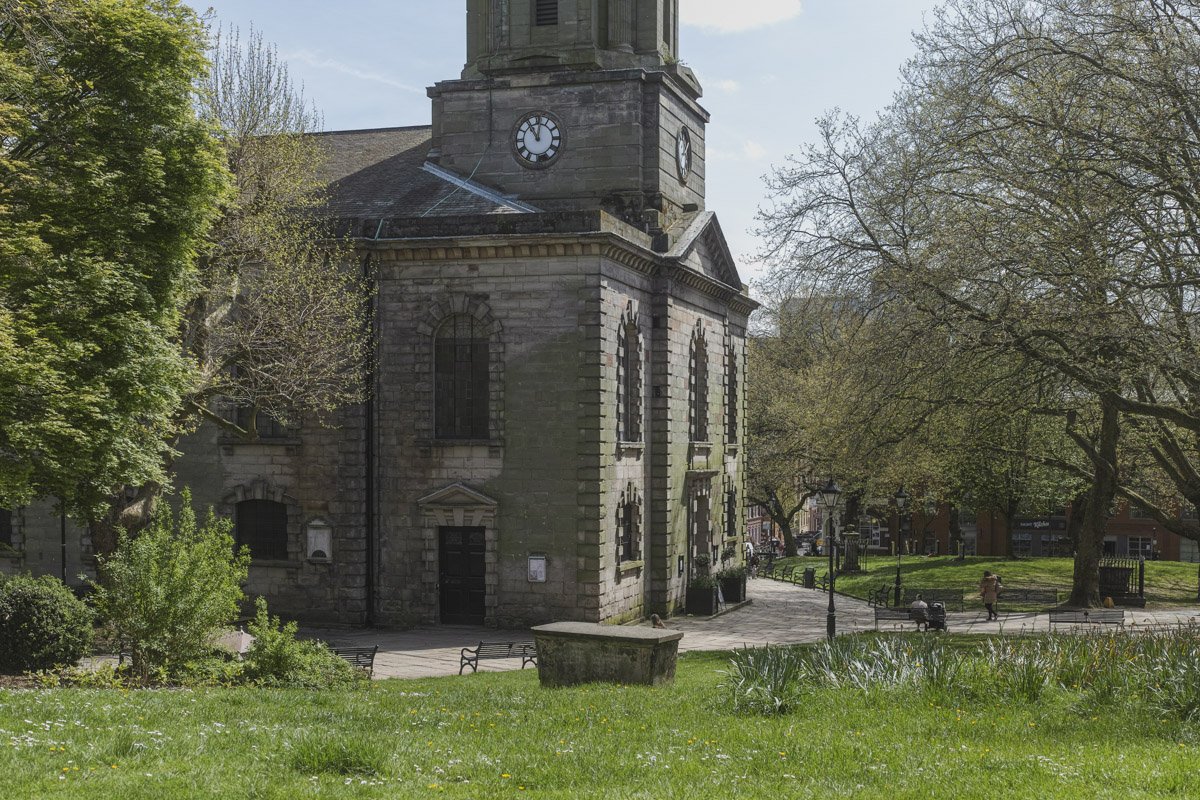


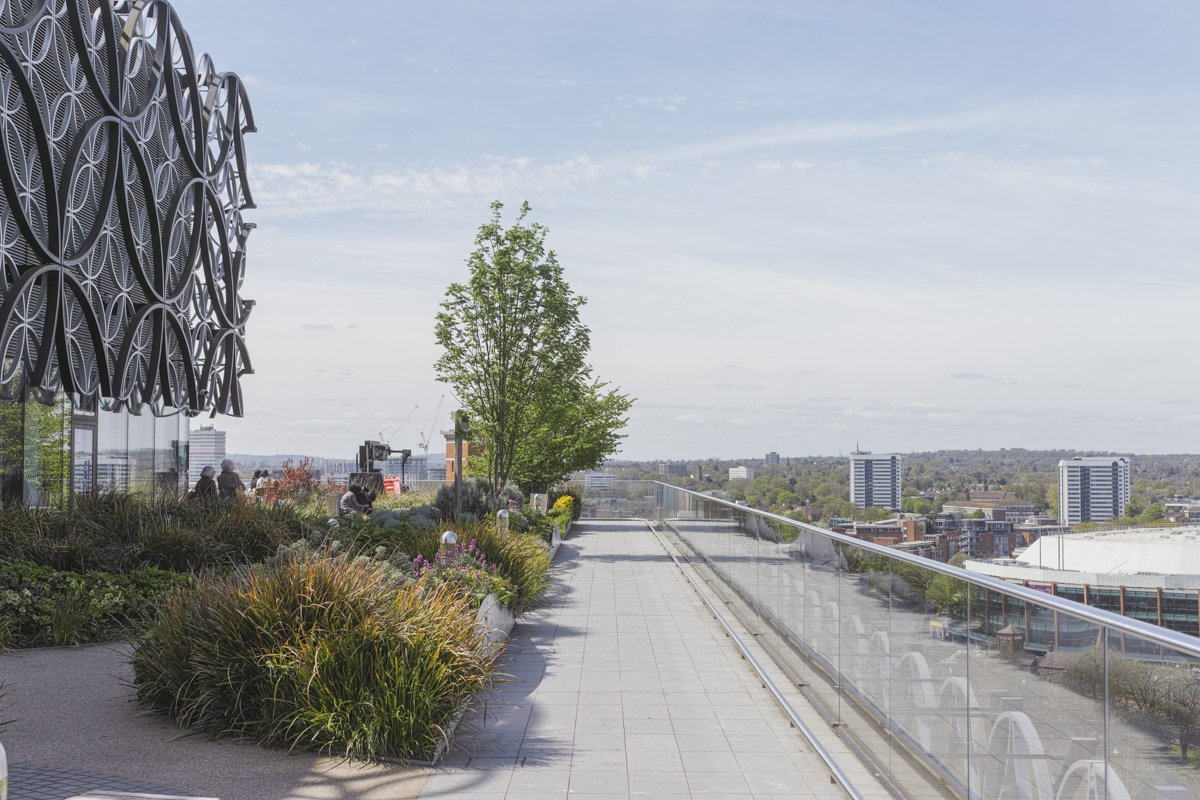


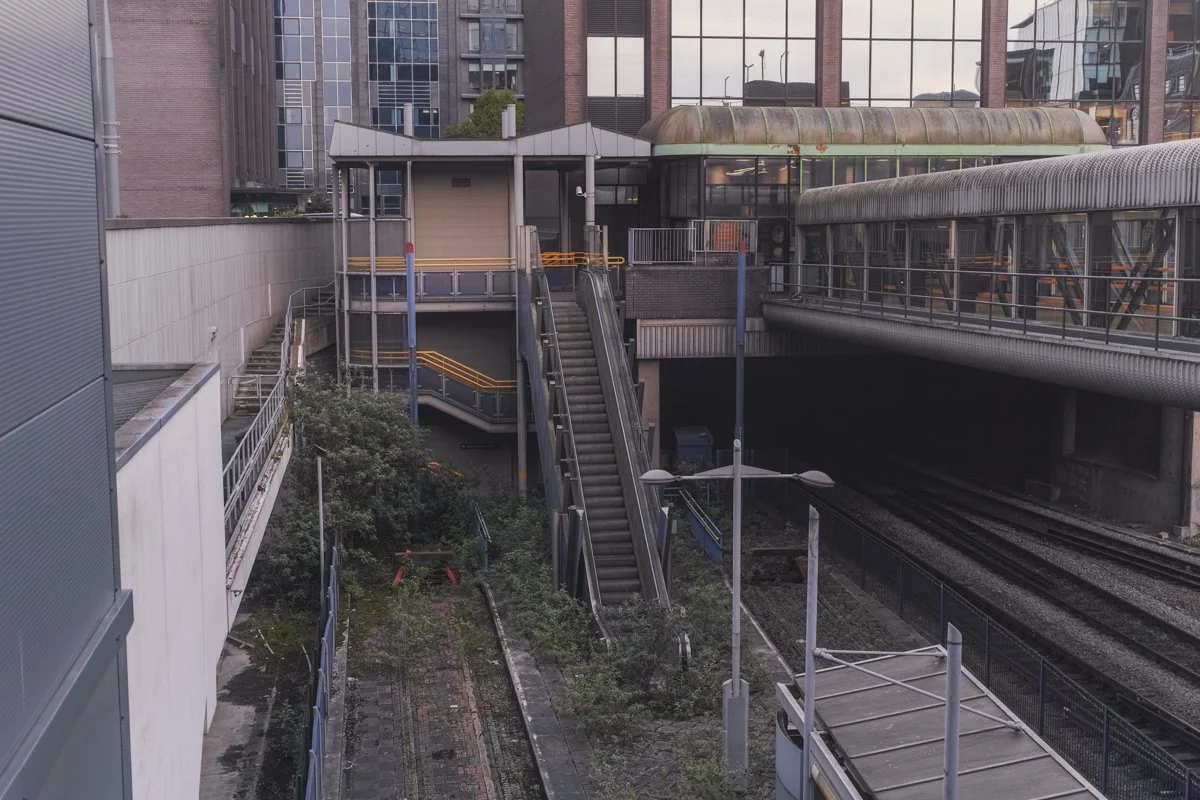

About the Author - Ross Jukes is a professional Photographer and Videographer with over a decade of experience. Working in both Digital and Analogue formats, Ross has worked with international clients, had his worked published numerous times and exhibited his work extensively. With a passion for all things photographic, Ross combines his experience, enthusiasm and dedication to his art form to create engaging and educational content for the photographic community.


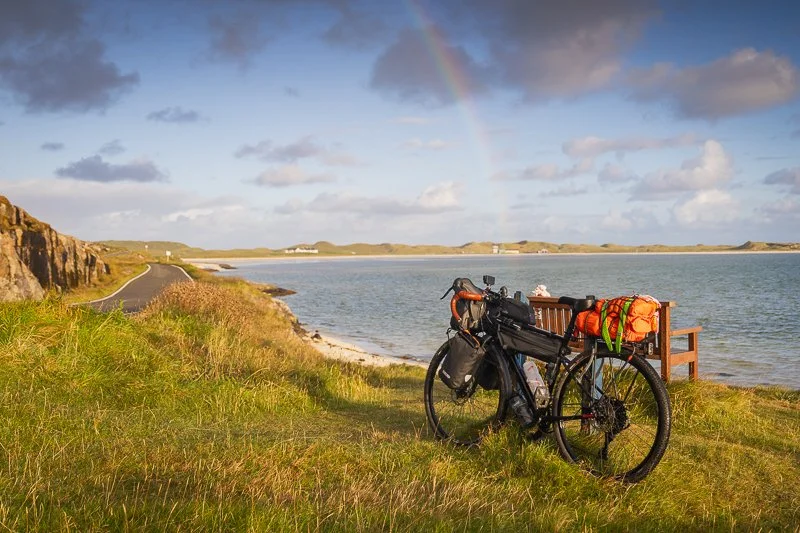
Disclaimer: All links to Amazon UK are affiliated links - you will still pay the same price but I will receive a small commission for providing the link. All information provided in this blog is intended either for educational or entertainment purposes and is accurate to the best knowledge of the author. However, further research/professional advice should be sort before making purchases/implementing any advice given and no responsibility is taken by the author or parties mentioned here within.
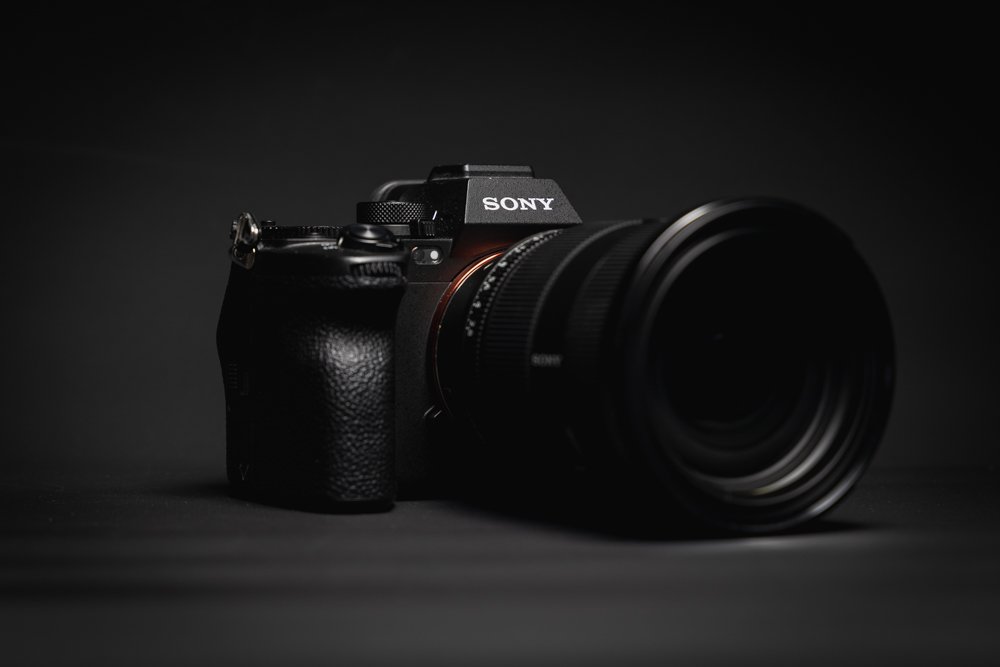
REVIEW: Sony A7RV - Good things come in Small Packages!
The Sony A7RV is a high-end mirrorless camera with impressive specs, including a 61-megapixel sensor, 4K video, and fast autofocus. It's an excellent choice for professional photographers who demand the best image quality and versatility.
Sony's place in the world of photography and cinematography has been well-established by now. They've made some of - if not, THE - best cameras on the market. Among their most popular line-up of cameras is the Alpha series, lauded by experienced professionals, as well as hobbyists and rookies alike. They're very versatile, yet remain rather approachable, and could take some fantastically great photos, to boot.
The Sony Alpha series is the camera equivalent of a Porsche 911 in the sports car world; it'll do everything just right, with no complaints. The latest addition to this long line of excellence is the Sony A7RV (or Mark V), as the successor to the much-respected Mark IV and Mark III. As with its predecessors, the A7RV has a full-frame, mirrorless format. However, Sony claims to have made certain iterative improvements.
PLEASE NOTE: I WAS SENT THIS ITEM FOR REVIEW BUT NO OTHER PAYMENT OR CONTROL WAS EXCHANGED FOR PUBLISHING THIS UNBIASED REVIEW
That is very much a case of evolution rather than revolution, as Sony's Mark VI and Mark III were already so close to perfection, but had some minor quirks that needed ironing out. So then, if you have a Mark IV or a Mark III, do you need to make the upgrade? Well, in a short summary, the A7RV is a brilliant camera that produces some amazing images with a healthy dose of dynamic range and superb crispness.
Yet, the A7RV could also hold its own when it comes to videos, with the same attention to depth, which is partly thanks to the Mark V's revised auto-focus tech. Admittedly, I didn't get as much time to shoot with it as much as I wanted to - this A7RV was a loaner from Sony for this review. Nevertheless, even with the limited amount of time that I've spent with it, it's quite noticeable that this is no ordinary camera.
Great For An Everyday Carry Camera
Despite how impressive the image quality and video recording features are, the Sony A7RV is surprisingly easy to lug around. This makes it rather comfortable as an everyday carry, whether you're always on the hunt for the next world-class shot. Or, if you have a busy schedule ferrying between one client to another on a photoshoot. Though it's not otherworldly rugged, the A7RV is robust enough for most people.
It has some water and dust resistance, so you don't have to baby it too much. Meanwhile, its ergonomics are interesting, to say the least. The grip, in particular, might not be for everyone. At times, it may feel as though your fingers are being squished between the grip and the lens. This was somewhat expected, as it is an evolution in design over the old Mark III and IV. Therefore, old users might find it familiar.
For better or worse, if you've handled a Mark III or IV beforehand, you'll get comfy with the A7RV quickly. This also means that you'll familiarise yourself right away with the button and dial placement, which is mostly the same as its predecessors. At least, the usability of the A7RV is made easier thanks to its decent battery life, courtesy of a 16.4 battery pack. Its endurance, of course, will vary from one user to another.
It's claimed to last anywhere between 530 shots to 440 shots on a full charge, depending on whether you use the rear display or the EVF more. Another neat physical inclusion of the A7RV is the speedy Wi-Fi that makes file sharing (even larger file sizes) much more seamless. For a wired connection, the upgraded USB 3.2 Gen 2 (type-C) would be able to offload videos and images more rapidly to your computer, too.
Video Source - DP Review TV via YouTube
Almost Mystical Auto-Focus Performance
The Sony A7RV adopts a seemingly similar (yet enhanced) 60MP BSI CMOS sensor that's evolved from the Mark III and IV. Among the highlights is the ability to shoot 10-bit video at 4k (60p) or 8K (24p) - more on that later. In addition, Sony's paired the Mark V with a beefier BIONZ XR processor. What I've found to be most fascinating is the processor's ability to compute and process some AI-trained algorithms.
That AI was mainly tasked with improving auto-focus on the A7RV, which must be said, is almost magical in how it performed. Even compared to the already-great Mark III and IV, the Sony A7RV's auto-focus can more accurately and quickly focus on human subjects. This not only covers focusing on their eyes and faces but also on entire human bodies, too. On top of that, the AF can readily track other subjects.

This includes animals, birds, insects, cars, planes, trains, and other similar animate or inanimate (but fast-moving) subjects. You could further fine-tune this even more in the menus, with an abundance of options. For example, do you want the auto-focus to aim at the (human) subject's eyes and head, or just the eyes? This speedy AF subject recognition is a boon to pictures and videos, even under very poor lighting.
Albeit, the plethora of settings may be rather perplexing and overwhelming to deal with when you're just getting into it. Then again, most of you - like myself - probably need to set one or two parameters, before being done with it and never going into the AF menus ever again. So, it's manageable. Otherwise, that AI does more than just upping the auto-focus performance to aid you in taking the best shots possible.
The Wonders Of Artificial Intelligence
Besides the auto-focus, even the Sony A7RV's white balancing has some AI assistance to it. It'll hence step in, with optimisations in the Mark V's colour science, to automate the consistency and exposure to all the lightning around you. As such, for instance, if you're shooting indoors with plenty of varying light sources beaming in the surroundings, the colour temperatures in the shot will remain fairly consistent.
I get that this is the sort of camera where, if mistakes are being made by the human photographer, the AI on the A7RV will compensate to reduce the side effects of those ‘oopsies’ as much as possible. Or, it would be able to automate or take over certain processes to ensure that those mistakes can't be made at all. Its computing capabilities are beyond awe-inspiring, no doubt. Yet, the AI does much more than that.
Between that powerful processor and the AI algorithms, this meant that you're getting further enhanced 8-stop image or video stabilisation. Specifically, in the case of the A7RV, we're looking at IBIS (or, in-body image stabilisation), which is sensor-based. Thus, it doesn't need to combine in-body and in-lens image stabilisation together, unlike some other cameras in its class. There are some benefits to that.
Primarily, this means that you could benefit from this improved image stabilisation feature, even if you're pairing the A7RV with a lens that's not capable of in-lens stabilisation. Other benefits of IBIS include your ability to shoot at pretty low shutter speeds, yet without any excessive softening in the image. Nor, would you need to deal with motion blur. The ‘techy’ quirks of the Sony A7RV don't stop there, either.
Video Source - DP Review TV via YouTube
Taking A Lot Of Photos With Ease
The A7RV then features Sony's Pixel Shift mode. That lets you shoot multiple photos of the same shot, but at the same time, shifting the sensor by one-half of a pixel in-between shots. This alone allows you to get an enormous amount of input and information from a single shot of each pixel. It's to the detriment of having to deal with big file sizes. But on the plus side, you get better colour accuracy and sharpness.
This multi-shot high-resolution Pixel Shift mode can be set in one of two configurations. There's the 4-shot mode, which captures RGB data from each output pixel. Thus, affording you better chroma resolution without any softening side effects due to the filter patterns. Additionally, there's the 16-shot mode, which captures 16 different shots - basically the same as the 4-shot mode, but done four times in total.
However, it does so at slight offsets that effectively boost the Sony A7RV's overall capture resolution to a whopping 240MP. That's up from its native resolution of 9,504 x 6,336 pixels to 19,008 x 12,672 pixels. An important caveat to note here is that the task of stitching together all 4 or 16 shots requires that one uses Sony's Imaging Edge desktop app. Unfortunately, it's not supported by any third-party software.
If you can get past that stumbling block, Pixel Shift is excellent at yielding impressively-sharp images with a supreme level of detail. That's assuming that the subject is mostly static, and you've mounted the A7RV onto a solid tripod. Although, some correction options are available, even with slight compromises in the picture quality. Therefore, this makes it ideal for something like architectural photography.
“Though this is as close as you can get to perfection in a camera.”
Many (File Format) Options Aplenty
Another welcomed change to the A7RV over the old Mark III and Mark IV is the ability to save the images in other file formats. In so doing, potentially saving some storage space. In the past, you'd have no choice but to shoot images and save them in the full 60MP resolution. Even for some professional photographers, it's a bit overkill, as not every shot requires 60MP. This time, 60MP fully uncompressed RAWs remain.
But on top of that, you can process and save the images in 26MP and 15MP RAW files, as well. These are essentially down-sampled and compressed shots from the full 60MP image. This will come in handy if the memory card's running low on bytes, or if you don't really need the full 60MP to work with. Nevertheless, the 26MP and 15MP compressed RAW files don't come with a significant loss in image quality.
In most cases, these compressed images still show better than some cameras that shoot natively in 26MP or 15MP, respectively. That also applies to the A7RV's continuous shooting at 10p with both auto-focus, as well as auto-exposure. Another upgrade over the Mark III and Mark IV, however, is the Mark V's much deeper buffer depth. It's now at a staggering 1,000+ images if you're saving your shots in JPEG.
The AR7V is tiny compared to the 51 Megapixel monster Pentax 645Z
Yet, even with the uncompressed RAW files, it could still manage 135 images. Or, around 547 to 583 with either lossless compressed or compressed RAW. These, altogether, should make it easier to manage your files, particularly with the aforementioned Pixel Shift mode turned on. In its fully uncompressed form, it's not uncommon to find singular images that are deep in the three-digit MBs, or even 1GB+ in size.
Video Source - Gerald Undone via YouTube
All The A7RV's Nice-To-Haves
Another thing that I've yet to mention in detail is the ISO and dynamic range. The latter is another strong point of the Mark V, and Sony's experience with making world-class sensors show just how much you'd get out of its dynamic range. It's arguably better than pretty much most other full-frame sensors out there, and only beaten by a meaty Medium Format camera. Its ISO performance is pretty good, too.
It's certainly a step up from the Mark III and Mark IV, though the latter are good enough on their own. In saying that, the Mark IV did have a bit more noise at the higher ISO values compared to the new Mark V. Even though, both the IV and V have the same ISO range between 100 to 32,000. But, you could extend it on either end from 50 to 102,400 - you really don't want it anywhere near that extreme, though.
I do think the 12,800 mark is the ideal ISO value that gets the most out of a shot's colours and contrast in the A7RV. But, without adding any noticeable noise to the shot. Also worth mentioning is the viewfinder (an EVF type), which is another big change from the Mark IV. It comes with a healthy 0.9x magnification and is mated to a super-sharp 9.44M dot OLED screen. It's worth getting the A7RV just for the EVF.
Moreover, it has automated brightness settings depending on the lighting and is made better with crisp optics. On that note, the A7RV comes with a rotating 3.2-inch touchscreen that can flip out, tilt, and pivot. It's a neat party trick that nonetheless makes it easier to manipulate the settings menu and preview your shot while you have the A7RV propped up at an awkward angle to view the display directly.
Wrapping Up The Sony A7RV
Though this is as close as you can get to perfection in a camera, the Sony A7RV is not without its faults. A big downside is the price, retailing at around £3,900 (some retailers may have offers!). I do think that, at the end of the day, it's ultimately worth the asking price given all that it offers and what it's capable of. Furthermore, this is more or less in line with the rest of the market for mirrorless, full-frame cameras, given how the economy's been.
Inflation and supply chain shortages are mostly to blame for the high RRP between the Mark V and the old Mark IV. Regardless, this will be undoubtedly cost-prohibitive unless you're willing to invest heavily in photography gear, be it a hobby or a profession. The other downside with the A7RV (and this applies to a bunch of other Sony cameras besides the Mark V) is the A7RV's menu system and user interface.
If you have some experience with older or other Sony cameras, you might not find the UI or menus to be as clunky. With that being said, the user experience of having to navigate through a myriad of menu sub-systems on the A7RV is definitely not as intuitive as what you might find in some other competing cameras. Still, it's at least improved a bit over the older Sony UI that plagued Mark III and Mark IV users.
In short, you can at least anticipate more logically as to where sub-menus would pop out of. Despite that, that pretty much covers it for the frankly minuscule number of downsides and compromises that you have to deal with in the A7RV... The initial cost of having to purchase one, and the peculiar UI. Besides this, the Sony A7RV really is close to being the perfect camera, versatile, compact, yet very capable.
Vide Source - Lee Zavitz via YouTube
Okay, But What About The Lens?
Before passing on a proper summary, I think it's also worth taking a bit of time to mention the lens that's fitted onto the A7RV during my review period. Specifically, it was a Sony FE 24-70mm f2.8 GM II lens. The lens in question features a short zoom, which is a versatile form factor to work with. That's especially for an everyday carry. Moreover, it's a good starting point if you need a capable lens to work with.
From then on, you can slowly build up your collection of lenses to include other specific focal lengths. For those who do have many lenses, the 24-70mm lens is nevertheless a great do-it-all general-purpose focal length. Particularly, if you only have room in your bag for one or two lenses. Anyway, back to that lens, it arrives as the latest addition to Sony's G-Master line of lenses, with the II succeeding the old I.
This GM II lens is a full-frame E-mount lens, and just like the A7RV, it brings to the table a series of overall refinements and all-around improvements. Dimensions-wise, it's smaller, shorter, and lighter. This makes it more carryable compared to its predecessor, the type I. That's despite the fact that you're dealing with a very wide aperture of f2.8 - a relative rarity for a 24-70mm lens, letting you snap sharp photos.
Speaking of, it performed excellently in my testing with the A7RV. The image quality is superb all-around, and the lens focuses accurately. That's a must for any lens if it's to work well with the amazing A7RV's AI-assisted auto-focus system. Granted, this updated Sony GM II lens is a tad on the pricey side - just like the A7RV. But, for a professional on the go, it's a cost worth paying for, given its exceptional performance.
Pairing The Camera And The Lens
The one potential downside to this lens is the lack of in-lens image stabilisation. As noted earlier, this may not matter if you're pairing it with the A7RV (or some other Sony cameras). Since they rely on in-body and sensor-based image stabilisation (or IBIS), you don't need that additional in-lens image stabilisation. Sony themselves always preferred in-body compared to in-lens or combining in-body and in-lens together.
This does yield some benefits, such as helping to reduce camera shake and netting you better accuracy or room to compose your shot more precisely. The one slight inconvenience with IBIS here is that it needs to be turned on and off in the settings menu. In practice, it's slower than being able to flick a switch on your lens, if it had in-lens image stabilisation. The latter point could be another problem down the line.
Since the GM II lens doesn't have any in-lens image stabilisation, you'd better be wary to not pair it with a camera that has no in-body image stabilisation. Thus, it's another thing to worry about. Overall, between the Sony A7RV camera and the Sony GM II lens, it made for a splendid pairing. As a package, there's very little that I could fault them for - mostly the high cost of entry, and the Mark V's unintuitive UI.
If you can look past that, they take great photos (and videos, too), and I'd highly recommend them. There could be only one reason for you to not get one... And that's for folks like myself, who've already invested into another ecosystem. But, if I would start from scratch, I'd be hard-pressed to find any other full-frame mirrorless camera at this price point that is as compelling as the Sony A7RV (and a GM II lens).


About the Author - Ross Jukes is a professional Photographer and Videographer with over a decade of experience. Working in both Digital and Analogue formats, Ross has worked with international clients, had his worked published numerous times and exhibited his work extensively. With a passion for all things photographic, Ross combines his experience, enthusiasm and dedication to his art form to create engaging and educational content for the photographic community.
Disclaimer: All links to Amazon UK are affiliated links - you will still pay the same price but I will receive a small commission for providing the link. All information provided in this blog is intended either for educational or entertainment purposes and is accurate to the best knowledge of the author. However, further research/professional advice should be sort before making purchases/implementing any advice given and no responsibility is taken by the author or parties mentioned here within.

REVIEW: Arca Swiss C1 Geared Panning Cube Head
Discover the Arca Swiss C1 Geared Cube Head tripod head, a precision-engineered tool for pro photographers. Experience ultimate stability, 3D micro-precision adjustments, and compatibility with most tripods. Elevate your shots with this revolutionary design that redefines performance in the field.
When shopping around for camera gear, or if you're packing up for a long photo shoot, the tripod head is among the hardware that some tend to cheap out on or forget entirely. Sure, it's not that big of an issue, if you're mostly shooting from the hip. However, if you rely heavily on mounting your camera on a tripod, be it for long exposure photography or taking panorama shots, a good tripod head is a must-have.
But even then, the landscape of tripod heads is a diverse one to explore, with a varying number of options, differing in design and price point. Nonetheless, if money is no object, or if you're willing to invest a huge sum into perfecting your photography arsenal, the top of the tripod head hierarchy remains uncontested by the mighty Arca-Swiss C1 Cube. So unique is the C1 Cube, that there's nothing else quite like it.
PLEASE NOTE: I WAS SENT THis ITEM FOR REVIEW BUT NO OTHER PAYMENT OR CONTROL WAS EXCHANGED FOR PUBLISHING THIS UNBIASED REVIEW
It's a high-end, incredibly specialised piece of equipment that most would no doubt find overkill. Or, more particularly, the C1 Cube is geared toward photographers that value a tripod head that enables them to make amazingly precise and refined adjustments. So, you can imagine its uses in instances such as architectural, macro or landscape photography, with buttery-smooth panning shots, and its numerous adjustments.
You can tilt or position your camera to very fine degrees and do so in small increments to help compose a shot. Yet, all this supreme functionality hides underneath a robust and solid shell, alongside quite a lot of mechanical trickery that's unlike any other tripod head that you've come across. If there's such a thing as the best of the best tripod head, the Arca Swiss C1 Cube might be the king of the hill (for now).
Built Like An Absolute Unit
As soon as you get physical with the C1 Cube, you'll notice right away that you're dealing with something quite special. Though most tripod heads are built like tanks anyway, Arca Swiss's attention to detail with industrial design and engineering appears second to none. There's a good reason why this is the case, of course. Mainly, the C1 Cube is designed to support even large format cameras up to 8x10.
Moreover, I'm quite surprised by easily it handles these heavier cameras, and without any significant loss in stability when it's mounted onto a tripod. Granted, this does come at the cost of added weight, as that Arca Swiss C1 Cube weighs more than 1kg. Or, specifically, around 1,032g. That's certainly heavier than a lot of other tripod heads on the market. You'll understand more once you take a closer look at it.
The heft of the C1 Cube is thanks to the robust, tank-like construction, as well as the technical marvel that goes on inside with its geared mechanisms. And yes, the C1 Cube adopts a geared head design instead of a ball head, which has its respective pros and cons. As we'll uncover later, a geared head does mean that I'll be able to get more precise adjustments and positioning when manipulating the tripod head.
Elsewhere, Arca Swiss is well-known for the build quality of its products, and the C1 Cube is no different. The exterior of the C1 Cube is smooth and has even polishing all around. Even the threading on the dials and knobs is easy to grip onto. Furthermore, it's hard to escape the solid feel of the C1 Cube. Besides, it was basically made out of a solid chunk of Aluminum, which also explains the excessive mass.
Video Source - Ben Horne via YouTube
Smoothest Knobs And Dials Around
Speaking of its build, the knobs and dials on the Arca Swiss C1 Cube are definitely worth a mention, too. The rotation of the knobs and dials is smooth, which can be very hard to replicate in some other tripod heads. They feel consistent yet with enough tension to ensure that you can make finer adjustments a bit more precisely. Even with hard use, I've not been able to feel any play or looseness at all.
Moreover, the C1 Cube includes a series of tension control dials, as well. You can thus use these to adjust the tension of the aforementioned knobs. So, you could either tighten the movement of the knobs, which can help to make it harder to turn by accident or if you're prone to over-adjusting. Alternatively, you can loosen up the knobs with those tension control dials, and make them easier to manipulate.
Even if you're used to ball heads, those tension adjustments on the C1 Cube are still more than enough to prevent accidental movements. In addition, avoiding heavy loads - such as having mounted a heavier and larger camera - from shifting your tripod around. Looking around, I've not found any specified load rating specs for the Arca Swiss C1 Cube. There are a bunch of figures online, but 88lbs sounds about right.
Regardless, if the testimonies from C1 Cube owners are anything to go by, it can take quite a bit - so long as you're loading it up reasonably. With that in mind, let's go back to those knobs, as you'll note a few of them around the C1 Cube's outer shell. These are, as with any tripod head, crucial to changing the angle of tilt, rotation, panning, or levelling. Even in this category, the C1 Cube runs away with it.
Maximal Adjustability At A Whim
The Arca Swiss C1 Cube could handle a maximum degree of rotation and tilting of 30-degrees. That's an improvement over some of its closest rivals, which could only handle barely double-digit degrees in their tilt and rotation angles. On top of that, the C1 Cube handily manages 360-degrees of panning - as noted earlier, these adjustments are precise and buttery-smooth, with no noticeable notches or play.
To use these knobs and dials is pretty easy enough, as they're logically placed and spaced out, which is also to the benefit of ergonomics, especially on a long shoot. Throughout the head, you'll find four knobs that specifically sets the tilting and levelling on the X- and Y-axis, respectively. There's then another knob on the bottom to flip up the C1 Cube and then use it in its 90-degree vertical position mode.
This means that your camera is pointing straight toward the ground, which is not something many other tripod heads can claim to do. Near the bottom of the Arca Swiss C1 Cube, you'll then find other knobs to help with the panning, too. To make sure that you're absolutely level, the C1 Cube features bubble spirit levels, one on either side of the head, so you can quickly check the angle that it's positioned over.
Altogether, these make the Arca Swiss C1 Cube a stunningly versatile tool, particularly when you look at other competing tripod heads. However, this might be a detriment in other aspects. With the gearing as well as the sheer number of adjustments that you have, it can take some time to get used to them. Thus, I'd argue that despite its slickness in adjustability, it may be slower to use than simpler tripod heads.
Video Source - John Magnoski via YouTube
“Arca-Swiss’s attention to detail with industrial design and engineering appears second to none.”
The PERFECT PLATFORM
Two other highlights of the Arca Swiss C1 Cube are its base plate compatibility and the locking mechanisms. However, do take note that it's only compatible with Arca Swiss plates and brackets, with either minimal or non-existent support for third-party options. Given how much money is at stake when you're investing this much into photography gear, it's worth checking for compatibility between your equipment.
Specs-wise, the C1 Cube's tripod mount thread size is 3/8"-16. If you have been around the photo or video industry for any time, you will know that there are two main base plate system - Arca Swiss and Manfrotto. The choice between which you prefer is a very personal one but if I tell you I have an Arca Swiss plate on the bottom of almost every camera I won, you can probably guess my preference.
However, this isn’t to say that one is necessarily better than the other, but from my personal experience, I have always preferred the Arca Swiss system. It is also a system that has been thoroughly adopted by many third party providers with a seemingly endless list of rails and L-brackets all design to be (mostly) compatible with Arca Swiss’s tripod heads.
In fact, the only very, very minor downside that I came across was I very nearly loosened the camera from the head because I mistook the locking know for an adjustment knob. This would be of some concern with thousands of pounds worth of camera teetering on top! The solution, just make sure the locking knob for the plate is point backwards (towards you) and be very careful to check what you are undoing!
Buttery Tilts And Rotations
Having tested it with a variety of weighty cameras, not all! Movements and adjustments on the C1 Cube are as tight as you can get, with no play. The latter has been a bit of a deal-breaker for some photographers that have been looking at the Arca Swiss C1 Cube's competitors, where some play or backlash in the gearing are to be expected to a degree. This, therefore, enables you to make smooth, sweeping adjustments.
And, doing so precisely, such as gentle panning from side to side, which makes this excellent if you want to combine panorama shots together. Or, if you prefer the C1 Cube's locked-down stability, it also makes for an ideal tripod head (with the right accompanying gear, naturally) for those long-exposure shots. The stability and rigidness of the C1 Cube, even when loaded up with bulky cameras, are also quite superb.
Even at the extreme ends, when you have it tilted, rotated, and panned, being top-heavy with a chunkier camera doesn't upset it. It also helps that you can trust on that secure locking mechanism to prevent an accidental movement or unintended adjustment. Now, if you're looking for a rival to compare against, it doesn't really have that many. But then again, there aren't many tripod heads like the C1 Cube.
Manfrotto has their popular 405 and 410 series of geared tripod heads. While they are excellent, in my opinion, they're not really made to the same ultra-high standards as the C1 Cube. The former two, for example, have a bit more play in the adjustments, as they don't lock down as securely from my experience. So, if you're interested to step it up a few notches, you won't find much else on the market right now that could rival the C1 Cube.
Video Source - Arca Swiss USA via YouTube
Is It Worth The Asking Price?
Now, here's the catch - the price. For all its capabilities and what you can get out of it, the Arca Swiss C1 Cube is rather expensive. It has a starting price just over £1300. For a tripod head, some might argue that it's a bit too much to spend. Then again, if you're a professional with thousands of pounds invested, another £1.5k for a quality tripod head might not put your accounts under too much strain.
Even with its pricey RRP, I still think it's well worth considering, given its immense versatility, solid build quality, and maximal functionality. It's maybe less of a mere tripod head and more of a specialised piece of machinery. Although, with limited availability and supply on the market, it could take a bit more effort to find one. Depending on the variation (such as the locking mechanism), it might cost more. But, as my Mom always said, ‘buy cheap, buy twice’.
Some of these C1 Cubes, such as those with a quick release or heavier load capacity, might cost you a bit more. In some cases, like C1 Cube models that feature geared panning and the classic clamps; maybe even more expensive. You also have a bunch of other C1 Cube iterations to choose from. The most common variations differ in the locking system - the classic, flip-lock, or Arca Swiss's MonoballFix.
Moreover, you have pickings between the panning - either lower or upper panorama being able to freely rotate, in addition to Arca Swiss's aforementioned gearedPan as well as clicPan. In short, I'd recommend doing a bit more research into which specific version best fits your needs and budget. Still, no matter the specific type that you get, I doubt anyone would be disappointed with an Arca-Swiss C1 Cube, it’s a beast!
SPECIFICATIONS

About the Author - Ross Jukes is a professional Photographer and Videographer with over a decade of experience. Working in both Digital and Analogue formats, Ross has worked with international clients, had his worked published numerous times and exhibited his work extensively. With a passion for all things photographic, Ross combines his experience, enthusiasm and dedication to his art form to create engaging and educational content for the photographic community.
Disclaimer: All links to Amazon UK are affiliated links - you will still pay the same price but I will receive a small commission for providing the link. All information provided in this blog is intended either for educational or entertainment purposes and is accurate to the best knowledge of the author. However, further research/professional advice should be sort before making purchases/implementing any advice given and no responsibility is taken by the author or parties mentioned here within.
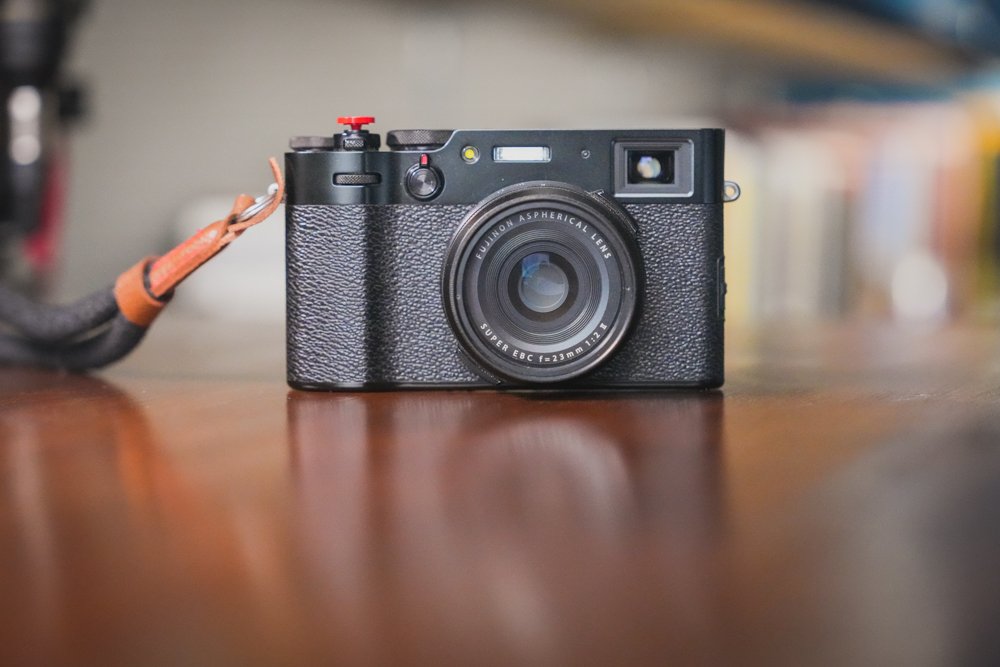
Fuji X100V - Amazing But Is It Worth The Hype?
Through more than a decade of evolution and gradual refinement, Fuijfilm's X100 series of cameras has continually impressed, especially despite their small form factor, and in the case of their latest X100V, it's a seriously excellent little camera.
Fujifilm's popular X100 series can be described somewhat as the camera world's Porsche 911. For over a decade now, they've been slowly iterating and improving upon what was already a pretty good base. As time has passed, so too has the X100, gradually gaining new features, fixing earlier drawbacks, refining things here and there, and keeping up with the times. But, is Fujifilm's X100V worth the upgrade?
Though it's been a couple of years since its launch, the X100V has recently seen a surge in popularity. That's mostly thanks to the influences of their appearances amongst social media circles such as Instagram and TikTok, among others. Due to this, the Fujifilm X100V is becoming ever harder to get your hands on. With soaring prices, second-hand examples are even more expensive than their original MSRP price tag.

PLEASE NOTE: I PURCHASED THIS WITH MY OWN MOMEY AND NO PAYMENT OR CONTROL WAS EXCHANGED FOR PUBLISHING THIS UNBIASED REVIEW
Video Source - Andrew Ethan Zang via YouTube
So, assuming you already have the older X100F, currently own a similar compact prime-lens camera, or if you want to delve into it as a first-timer, should you go through the hassle of scouring about increasingly scarce stock? In my experience... Absolutely! It's a great little camera for an everyday carry. With its ease of use and intuitive operation, the Fujifilm X100V is a joyous machine to have a bit of fun with.
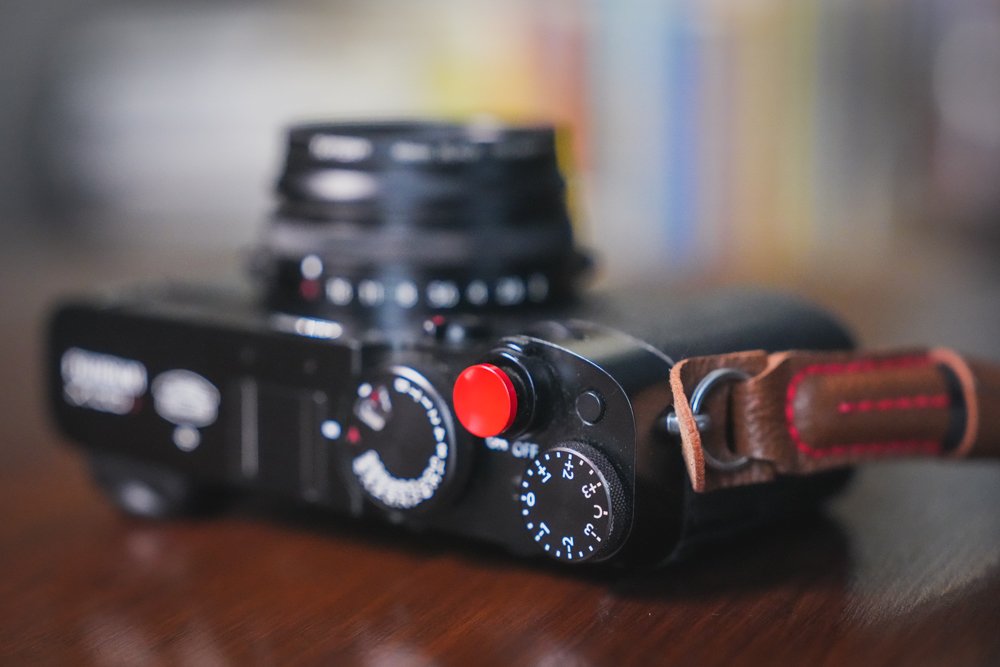
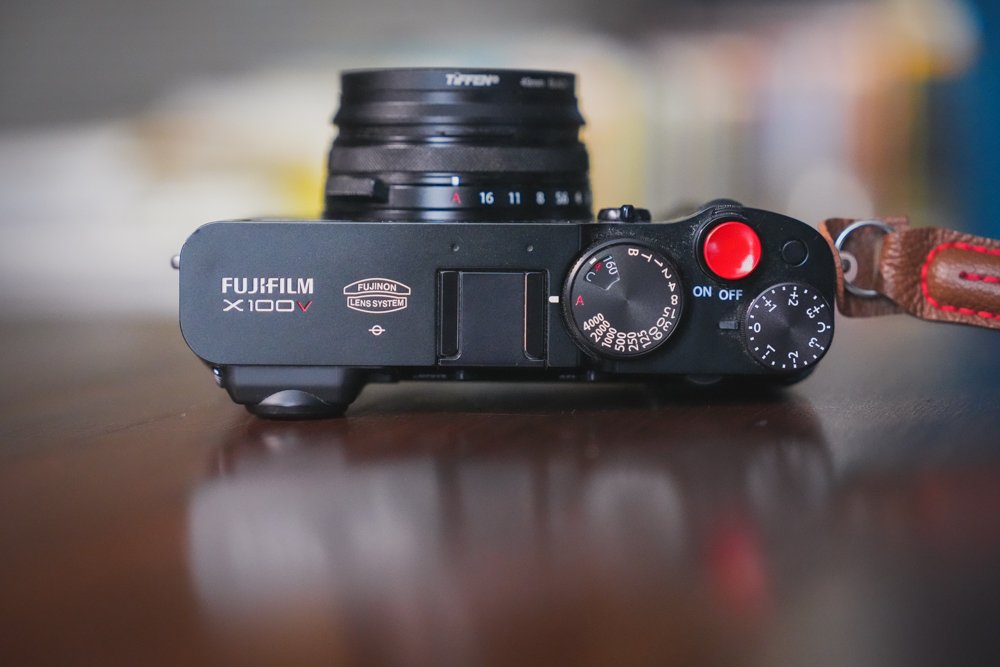
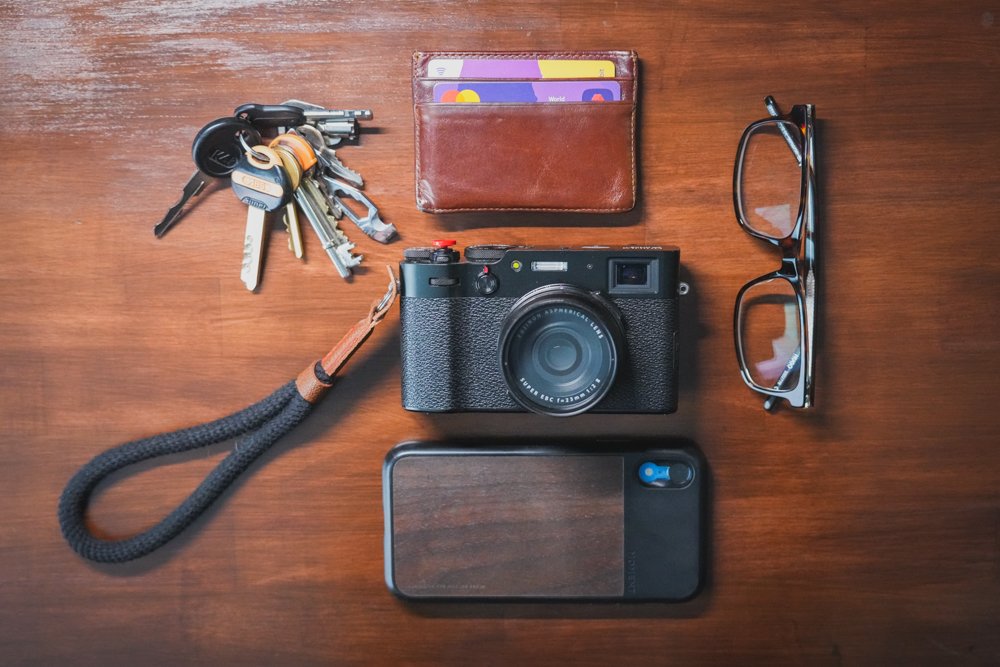

It takes great photos, with a noticeable improvement in all regards when compared to its predecessor. A robust build quality ensures that you needn't have to baby it too much. Furthermore, it'll now feature an abundance of upgrades and trickle-down benefits from Fujifilm's bigger, more professional-grade kit. It's a fine addition to the brand's venerated X100 series, so let's take a closer look at all this buzz...
🔨 Robust Build, Better Ergonomics
The old X100F wasn't really the most durable camera in the world. As an owner, you do have to be a tad cautious with how you use it, especially when it starts raining. But lucky for you and me, Fujifilm's latest X100V has the same-old solid build quality. And this time around, it's (almost) weather-sealed. Ideally, it might be a good idea to get a lens filter atop the built-in ND filter, for a bit more security.
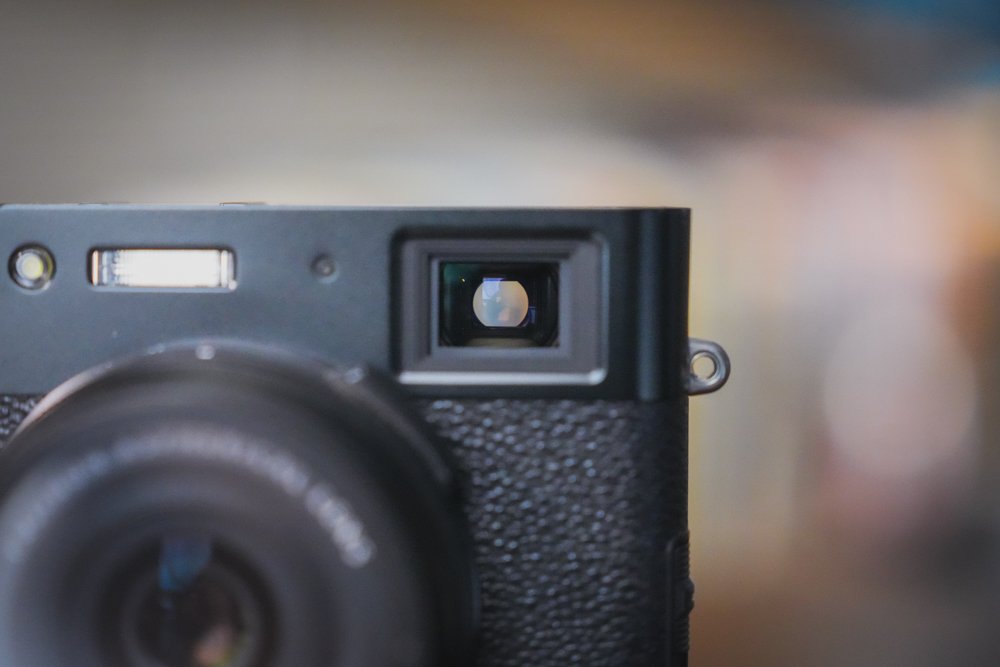

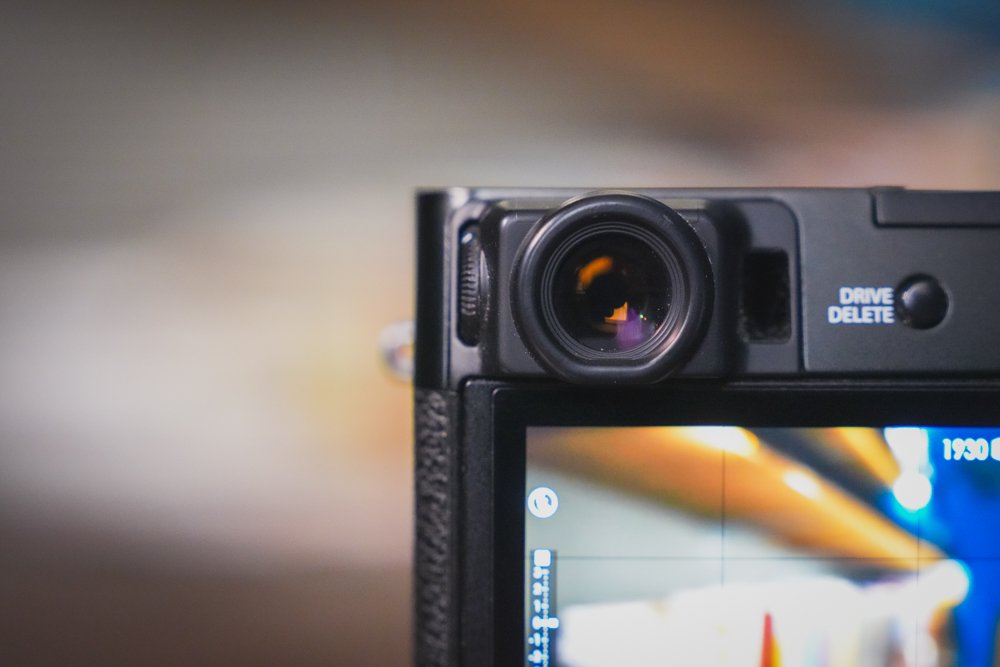

While you're there, you could even shell out a bit more for their optional filter ring adapter for additional water resistance... Just to make doubly sure that water ingress is a tad harder. It's just another thing that you have to invest in, especially if you're typically using an X100V for something like street photography. Now, I'd still recommend avoiding any contact with heavy rain. Or, accidentally dropping it into a drain!
Video Source - DP Review TV via YouTube
On top of the reinforced body, one noticeably major change between the old X100F and the new X100V is the ergonomics. There's a good feel and intuitiveness when using it. Even the little things, such as how the shutter speed dial has been reworked to allow better tactile feedback when adjusting the ISO, do make a difference. Not to mention, the added customisability of the dials, if you need custom controls.
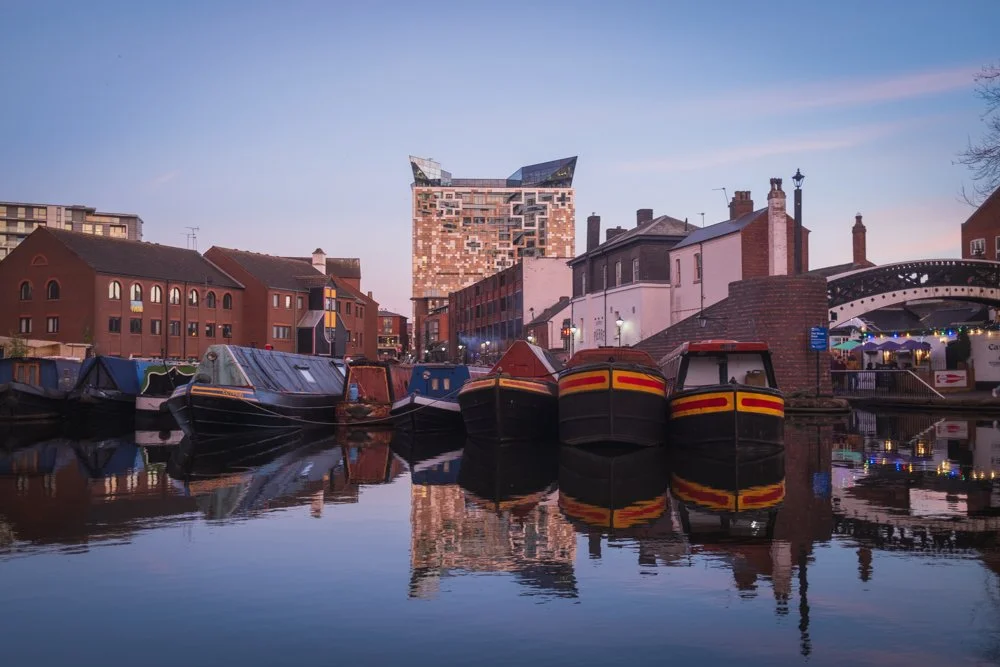
Image Quality is fantastic, see the gallery at the bottom of the page :)
Elsewhere, the already good viewfinder has been redesigned. It's bigger now, and comfier to use during long, extended photoshoots. It's a similar optical-electronic hybrid to the one you'd get in the older models. Yet, it still goes to show that even the most minute iterations matter. All in all, the Fujifilm X100V is nearly the ideal and perfect choice if you need a day-to-day camera. Then, there's the subject of the rear display.
“The X100V is the sort of camera that’ll make you fall in love with photography, all over again”
🔍 Attention To Detail That Matters
A noteworthy highlight in the long list of new stuff that came with the X100V is the screen. it now comes with tilting (which otherwise sits neatly flushed against the frame) and it's a touchscreen. Its touchscreen can be quite handy if you're trying to manually focus and navigate the menus with a simple swipe. While some might be hesitant to get rid of the old physical 4-button layout, it actually works pretty well.
No doubt, some of you might still prefer actual, clickable, tactile buttons. But, give yourself some time to get used to the touch functions, and it's surprisingly well-integrated. Additionally, the display now comes with a brighter backlight. So, glancing at the overlay under bright sunlight is a bit easier on the eyes. One other element of the Fujifilm X100V that's a big step forward is the new lens that it's packing.
Video Source - Benj Haisch via YouTube
The 23mm F2 lens might, at first, appear identical to its predecessor. Nevertheless, its innards have been slightly rejigged - though it remains a fixed focal length unit. On the plus side, images are sharper than it was before with the older models, especially at shorter distances or focusing in more closely. However, it does have a new bokeh signature that fans of the prior X100 series cameras may have to get used to.
Moreover, I noticed that the lens can be a bit slow to react to what you and the camera are seeing. It's nothing deal-breaking, but when you consider how well the autofocus performs (more on that later), you do need to account for it. As such, it can lead to some missed shots if you don't time them right. Hence, if you're trying to capture fast-moving objects, like passing cars, it can be a bit of a challenge.
📸 Small In Size, Mighty In Image Quality
Oh, and have I mentioned just how good the image quality is from the Fujifilm X100V is? In particular, given a relatively compact form factor. This is mostly thanks to Fujifilm's newest 26MP X-Trans APS-C sensor and processor combination. Which, if you're taking notes, is homologated from the brand's larger X-T3 and X-Pro3 cameras. In short, it features a BSI-CMOS sensor and Fujifilm's X-Trans colour filtering.

Low Light performance is excellent for such a small camera!
In addition, it has a lower native ISO value of only 160. Albeit, its maximum ISO value remains at 12,800. What you can expect are vibrant colours, with respectable noise suppression at higher ISO values. And, a smoother bokeh, though the effect is a tad distinct from older X100 series cameras. More specifically, it's got that onion ring effect, which does make images pop more, with a softer bokeh, overall.
Video Source - GxAce via Youtube
Using the X100V, I noticed that there's less of a haze effect at longer distances and greater improvement in image clarity and sharpness. Ah, and if you adore Fujifilm's film simulation modes, the X100V has you covered. You'll be able to choose between Provia, Astia, Classic Chrome, Pro Neg, Std Neg, Classic Neg, B&W, Eterna, and Velvia, among others. Plus, a variety of other custom effects that you can add to a shot.

While some might think these are gimmicky, they're actually a lot of fun to play around with. Now, aside from taking crisp images, the X100V also does so pretty speedily thanks to its electronic shutter. It allows you to take burst pics at speeds of up to 20fps when using the whole sensor. Or, up to 30fps with a 1.25x digital crop. Another interesting surprise with the X100V is its videography performance.
👀 Focusing On The X100V's Autofocus
Video is an unexpected (more or less) strong point of the Fujifilm X100V, especially given its size as well as physical constraints. You get neat highlights such as recording at 4k/30fps or 1080p/120fps. Or, you may like its F-log recording function, though it's only in 8-bit. Granted, the X100V isn't, by any means, an ideal Vlogging camera. For example, the camera lacks any sort of stabilisation, digital or otherwise.

As such, video-related work should ideally be done atop a tripod or gimbal, unless you're okay with shaky recordings. But, if you are using it for a bit of video capture every once in a while, it's pretty decent. You'd be able to easily bolt on a microphone into the 2.5mm jack. Or, you could instead use the USB-C port and adapt to a more conventional 3.5mm jack. While we're here, let's rejoice for the inclusion of USB-C.
No more micro-USB... Only USB 3.1 Type-C for charging the battery, or transferring files. Oh, and another bonus for videophiles; the X100V includes continuous autofocus with face detection. Speaking of, among the biggest inclusions for the X100V is a revised on-sensor phase detection autofocus. In practice, that'll translate to its ability to focus on key subjects a bit better, with improved facial and eye tracking.

The X100V is amazing for a bit of urban exploration!
It now has 425 autofocus points across the entire frame - up 100 points compared to the X100F. And, it's paired with a customisable focus range limiter. I found the autofocus to be really good, and it's a big step forward in the right direction. It'll focus in onto a subject quickly - slightly faster than the old ones. That's even in low-light settings, with good accuracy. Still, there are certain mentionable cons to the X100V.
❌ Some Of The Downsides To Account For
I mentioned earlier that the Fujifilm X100V comes with a fixed focal length. It's not bad, by any means. Yet, it does deprive you of some adjustability in a shot. In so doing, you ought to be prepared to crop that final image afterwards. All the while, simply needs to get used to the singular focal length that it offers. It's made more challenging given the fact that it's a fixed lens, so you can't interchange it.
Of course, that's not a major strike against the X100V, as fixed lenses are a mainstay among many other compact cameras, anyway. Another disadvantage of the X100V, and it's one that I noticed personally, is that it's not entirely pocketable. It's small enough that you can stuff it into a jacket pocket. Although, it's definitely not going to fit into a jeans pocket, forcing you to carry a bag to lug it around with you.
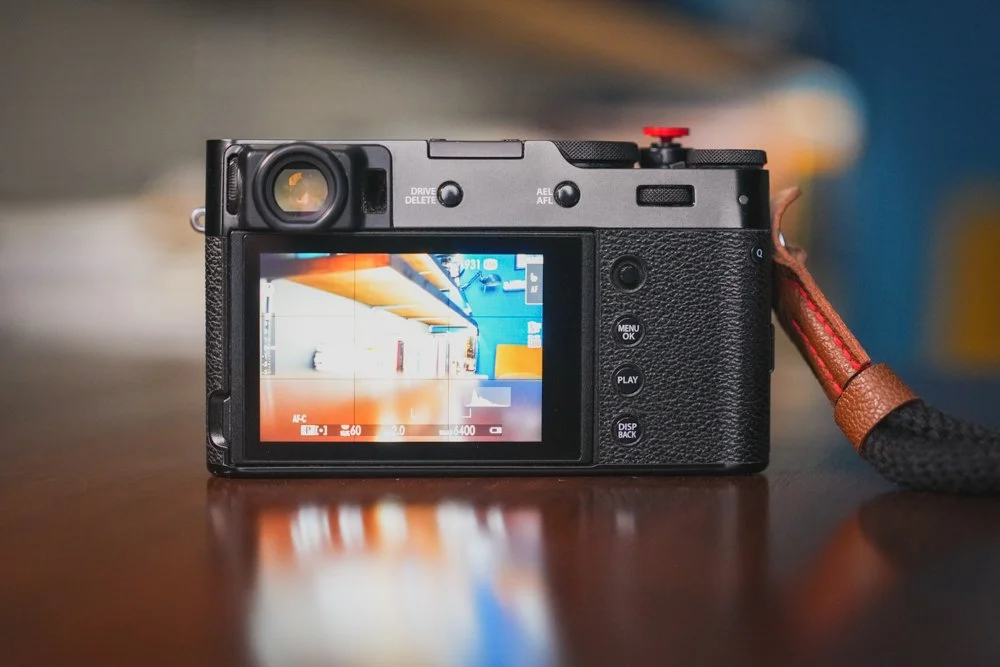
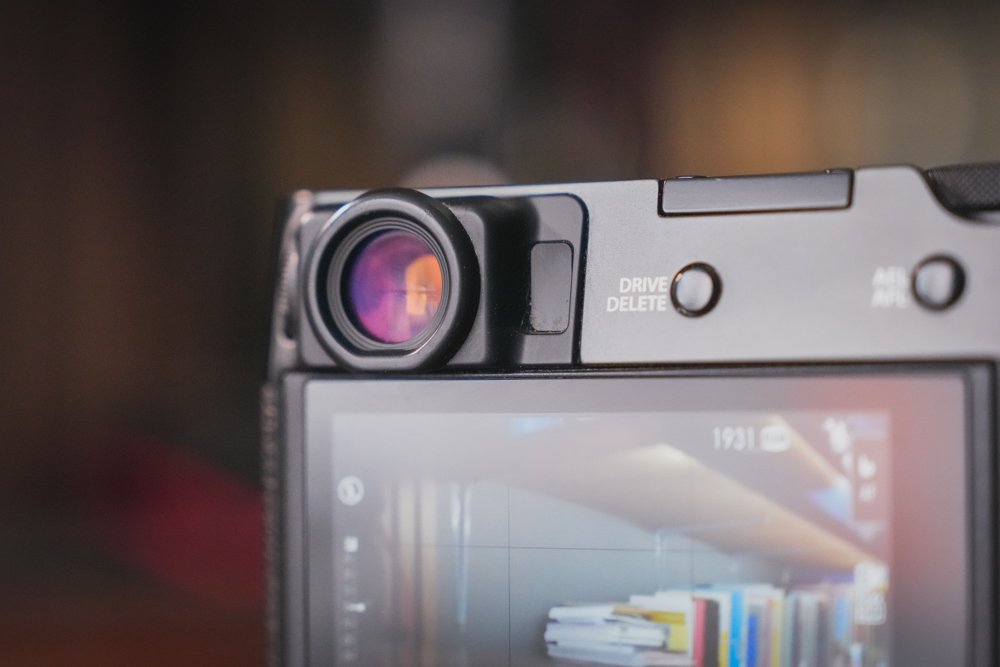

It's in that awkward middle ground where it's pretty tiny. Yet, too large to a point where you're not really able to discreetly bring it with you. And if I'm going to carry a bag, I might as well bring with me some of the bigger, more capable cameras, instead... Ones with interchangeable lenses, and could yield better photos. That's me being nit-picky, but it's still a bit of an unforeseen inconvenience, nonetheless.
As for how the market is right now, I suppose another slight catch for the X100V is its availability and cost. It was a fairly-priced compact camera, given its capabilities and feature set, when it came out. But nowadays, you might find trouble even sourcing one for anywhere close to MSRP. Your options include... Waiting until the market stabilises, paying the high markup, or simply opting to get the older X100F.
✅ Should You Upgrade To The X100V?... Some Closing Thoughts
Having mentioned the X100F, do check out my other review on that, if you need a more in-depth look at how it differs from the X100V. TL;DR, while it's an older model, it's still a pretty good camera. That does beg the question... If you already have the X100F, would it be worth upgrading? I mean, if you're happy with it, then there's not really anything here that'll make you rush out to get the later X100V.
With that being said, I simply adore the improvements that Fujifilm has put in place when updating their beloved X100 series. The Fuji X100V is an engaging, intuitive, easy-going camera that takes great photos in a pinch. Yet, offers a whole host of features... From a speedy and accurate autofocus system... To that capable sensor-processor combo, in addition to its enhanced video-recording functionality.
Video Source - YHMA via YouTube
The lens is sharper, the build quality is more durable, and the tech is more up-to-date. So, you might see why it's such a desirable little camera. There's a good reason why the X100V's market value has risen to levels where they're no longer as attainable as they once were. As a result, they're becoming tougher to find. But, should you locate one for a good price and in good condition, it's tempting to go for it.

I absolutely love mine, and it'll forever remain a part of my collection. Despite the high prices that it now commands, the X100V isn't one that I'll be selling off anytime soon. With smartphone cameras becoming ever smarter, and pro-grade cameras becoming more feature-packed, it's nice to go back to those simpler times. The X100V is the sort of camera that'll make you fall in love with photography, all over again.
FAQ (UPDATED IN 2026!)
-
Yes — if you want a genuinely enjoyable everyday camera that encourages you to shoot more. The X100V still delivers lovely files, great colour, and that “grab it and go” experience that phones and bigger systems don’t really replicate. The only time it becomes a harder sell is when the used price creeps too close to newer alternatives.
-
If you’re buying fresh (or the prices are close), the newer model is the sensible choice. But if you can get a fairly priced X100V, the shooting experience is extremely similar: same general vibe, same fixed-lens approach, same “take it everywhere” appeal. The real decision usually comes down to whether the newer upgrades matter to your style of shooting.
-
The fair price is the one that doesn’t make you feel slightly annoyed every time you pick it up. My rule: compare it to the cost of a newer alternative, then decide what you’re willing to pay for the X100V specifically (the experience, the form factor, the look). If the price feels inflated purely because of hype, be patient — there are always more used listings.
-
A quick checklist that’ll save you a headache:
Overall condition (dents near the lens, sticky dials, worn buttons)
Sensor dust / lens dust (shoot a bright wall at f/16 and check)
Focus performance (try close focus and mid-distance, see if it hunts)
Viewfinder and rear screen (dead pixels, odd behaviour)
Battery/charging and USB-C port (wiggle-test the cable gently)
If you can: ask for a few real sample images straight out of camera
-
It’s “weather resistant” in practice once you’ve sealed the front of the lens properly (without that, you’re leaving a weak point). I still treat it like any camera I actually like: fine for drizzle and real-world use, but I’m not giving it a bath, and I’m definitely not testing my luck in heavy rain.
-
For most people doing street, travel, family moments, and general “life stuff”, yes — it’s quick, accurate, and easy to work with once you understand how it behaves. Where you’ll notice limitations is fast, unpredictable action (kids sprinting at you, sports, dogs doing dog things). If you mainly shoot that kind of subject, you’ll want to be realistic about hit rate.
-
If you bought the X100V for the Fuji look, I’d say shoot RAW + JPEG. Use the JPEGs when you’ve nailed a look you love and want speed, and keep RAW there for the shots that need extra rescue (mixed lighting, tricky exposure, once-in-a-lifetime moments). The camera’s strength is that it can be both a “fun JPEG camera” and a serious file-maker.
-
The “boring” stuff is the best stuff:
A proper way to protect the lens (especially if you’re out in all weather)
A comfortable strap (you’ll carry it more if it feels good)
Spare battery (because you will get carried away)
A small bag/pouch that stops it getting bashed around
Everything else is optional and depends on how you shoot.
-
It can do lovely-looking video, but it’s not a “point it at yourself and walk around” vlogging setup. If video is a big part of your plan, you’ll want to stabilise it properly and think about audio. I treat the X100V as a stills camera first, with video as a bonus when I fancy capturing a few clips.
-
Two reasons come up again and again:
They realise a fixed lens isn’t for them (they miss zoom / flexibility)
The hype wears off, and they want something more practical for their specific needs
If you already know you enjoy a 35mm-ish field of view and you like a simple, distraction-free camera… you’re exactly the kind of person the X100V makes sense for.
📸 IMAGE GALLERY
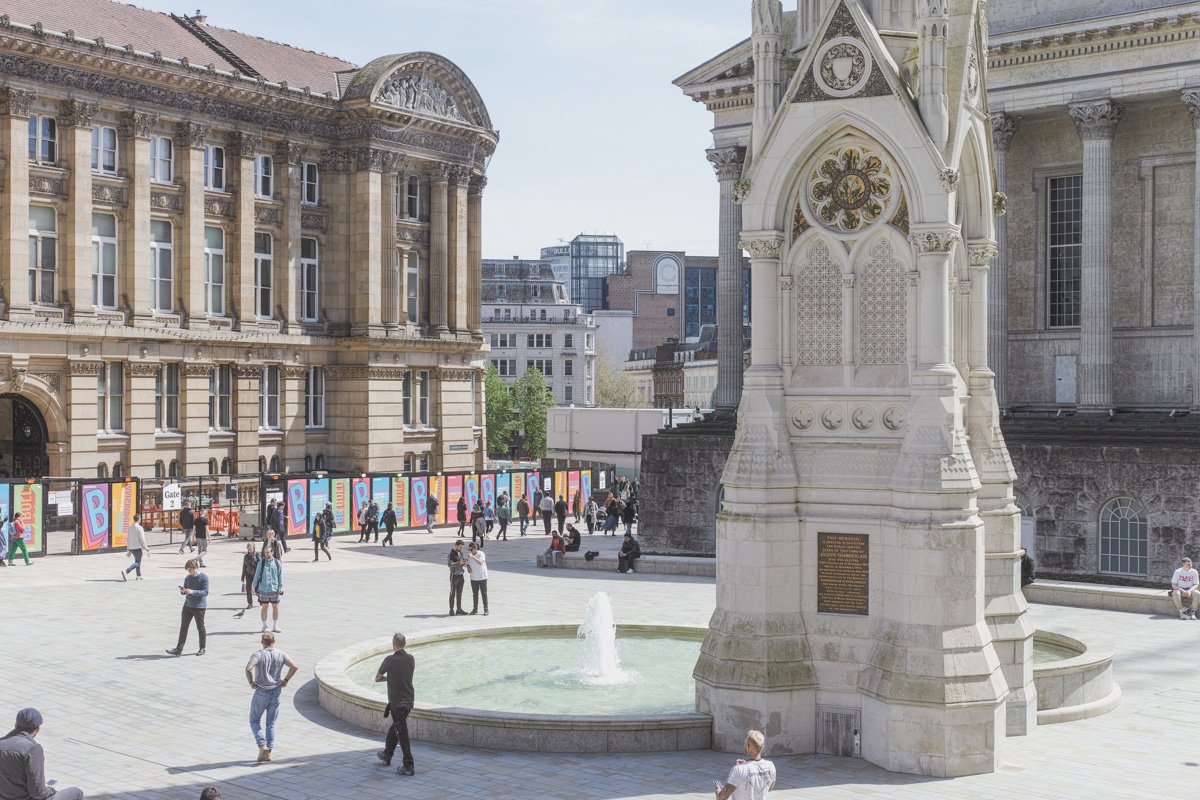
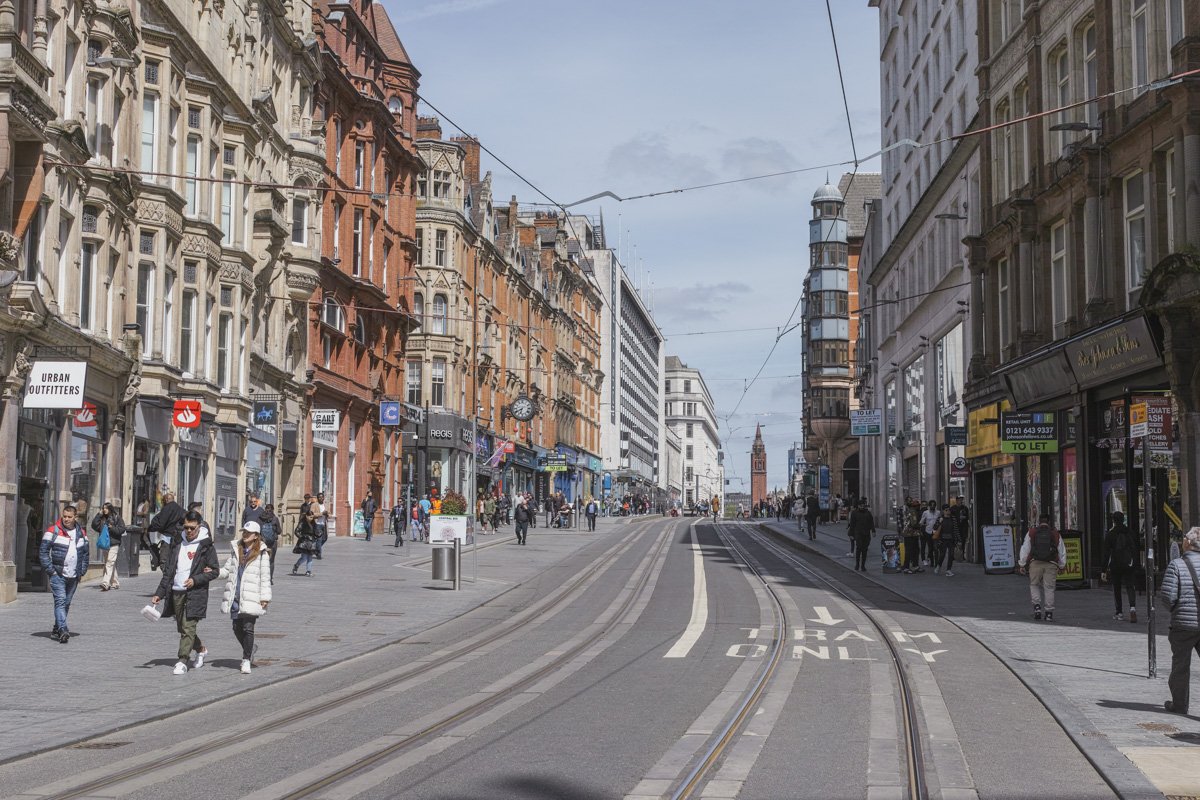
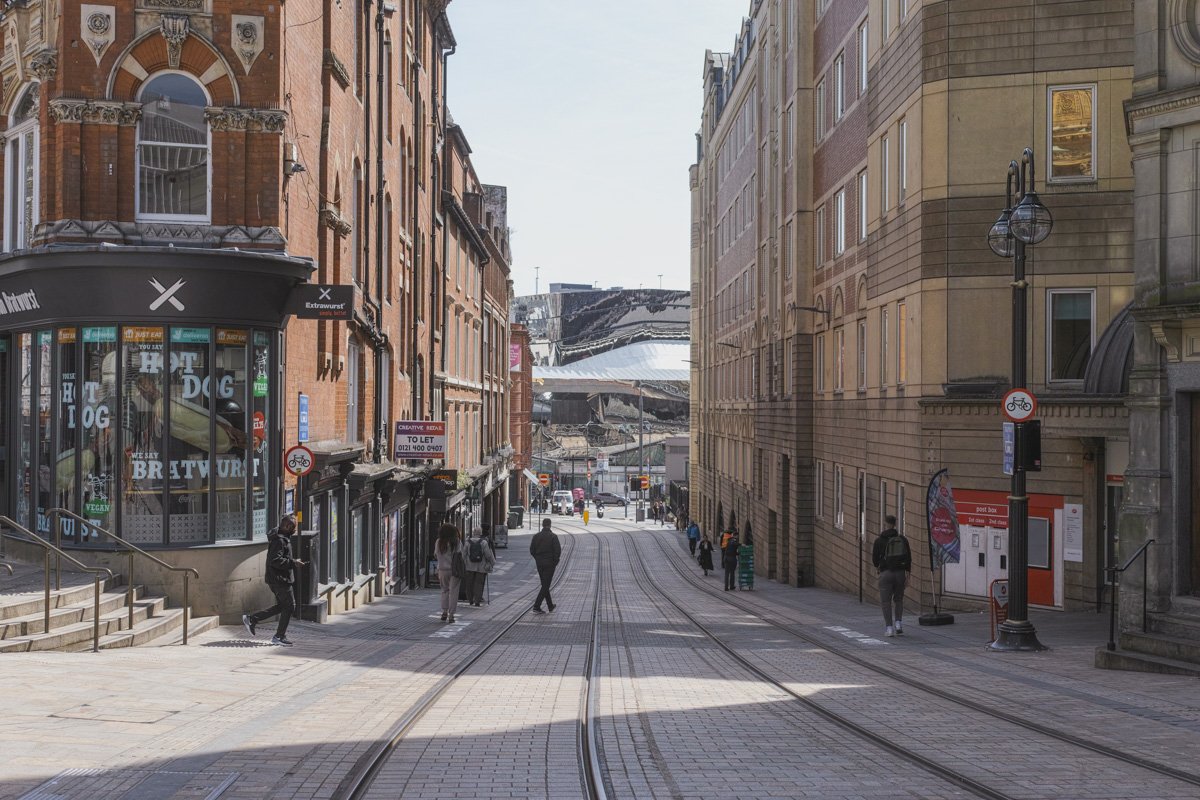
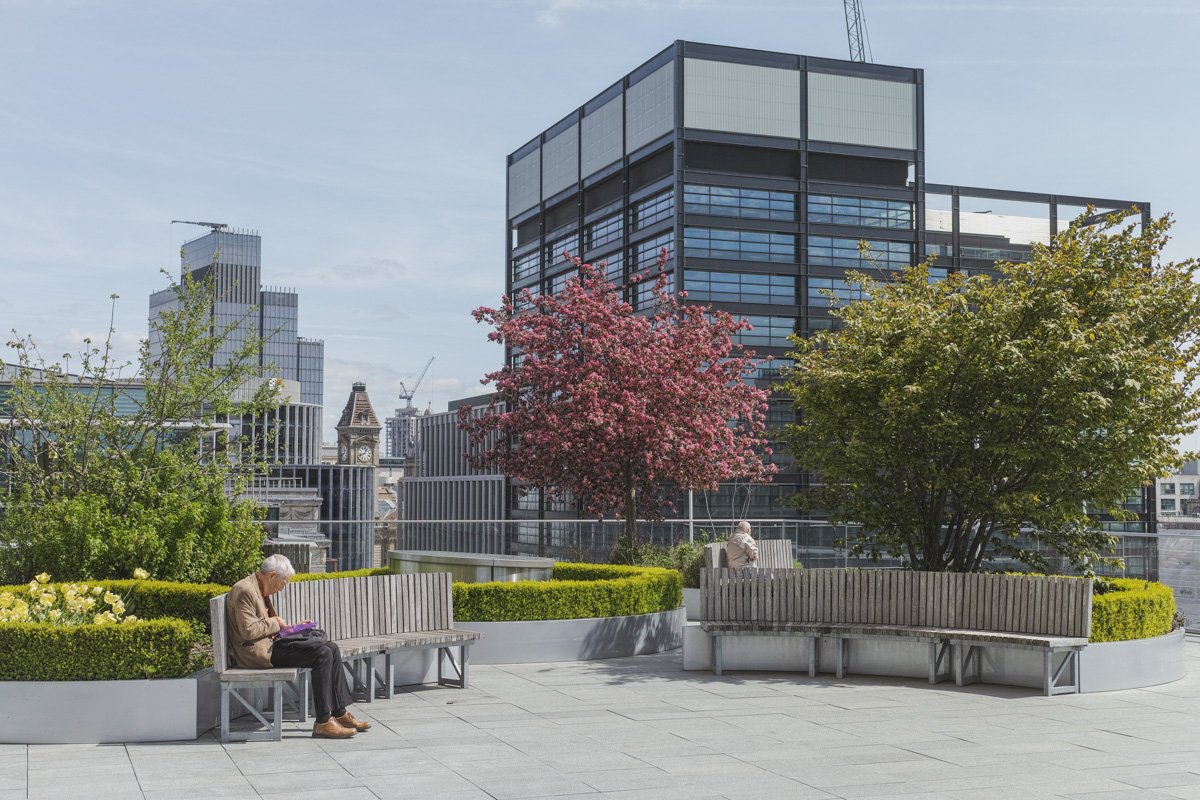
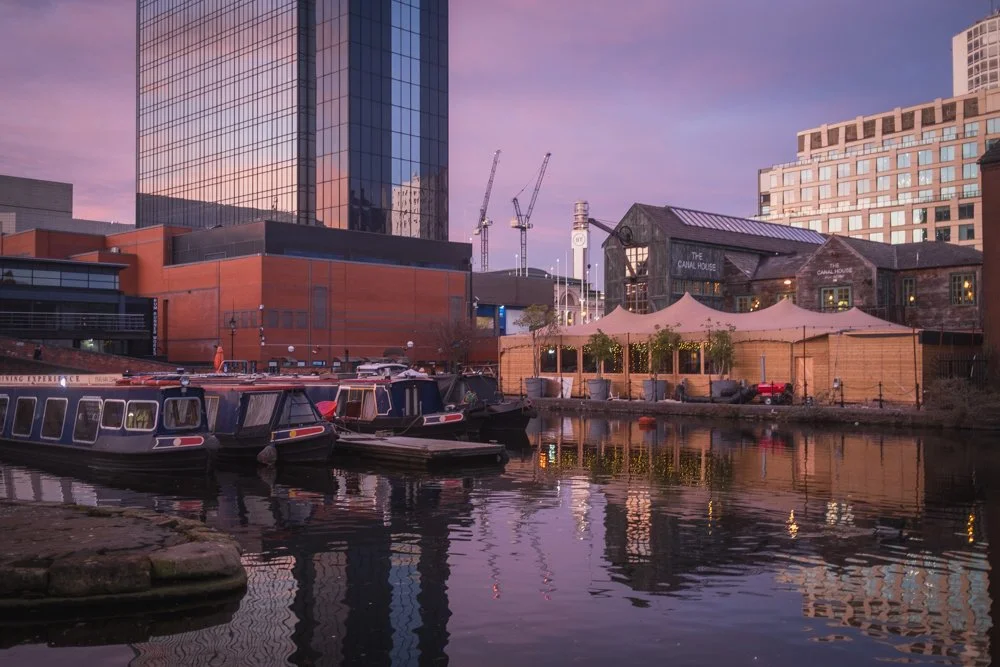
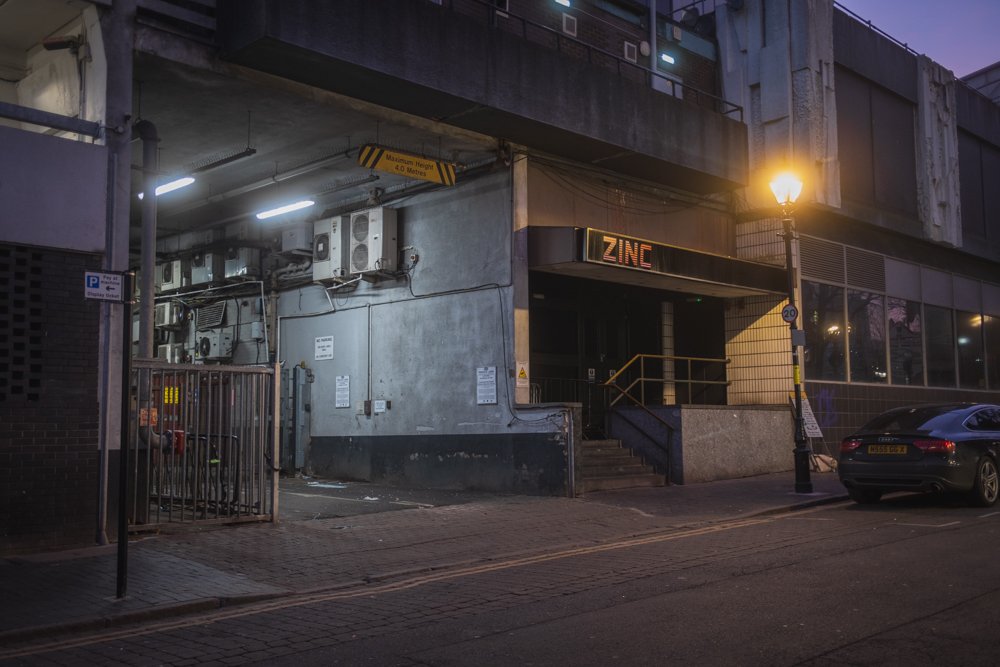
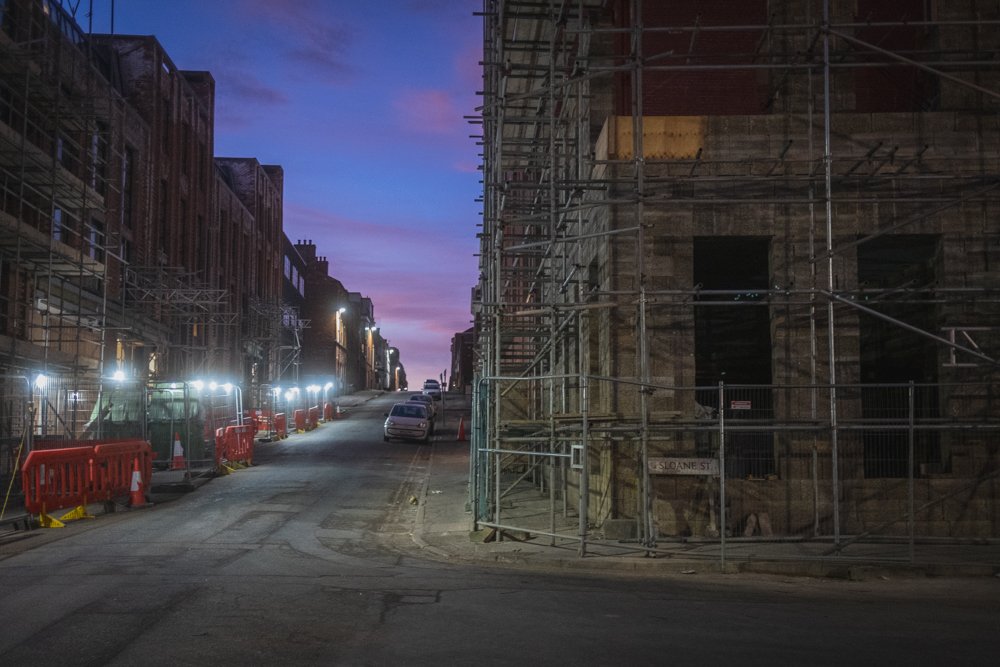
These images are intended to give you an idea of what the Fuji X100V can achieve. You might not like my particular brand of ‘urban’ imagery but it will give you a taste for what this camera is about. You will also notice, I took particular advantage of one amazing sunset! I shoot with a Black Pro Mist filter on the X100V to add to the cinematic/film like (ish) feel - but for me, this camera really comes alive in low light situations and is amazing as a ‘carry everywhere’ camera!








Specs And Details


About the Author - Ross Jukes is a professional Photographer and Videographer with over a decade of experience. Working in both Digital and Analogue formats, Ross has worked with international clients, had his worked published numerous times and exhibited his work extensively. With a passion for all things photographic, Ross combines his experience, enthusiasm and dedication to his art form to create engaging and educational content for the photographic community.
Disclaimer: All links to Amazon UK/US are affiliated links - you will still pay the same price but I will receive a small commission. All information provided in this blog is intended either for educational or entertainment purposes and is accurate to the best knowledge of the author. However, further research/professional advice should be sort before making purchases/implementing any advice given and no responsibility is taken by the author or parties mentioned here within.

Bronica GS-1 - The Most Underrated Medium Format Camera Ever?
I've been searching, yearning for a medium-format film camera like this for a long time. It wasn't easy to get my hands on it, and for some reason, its mere mention is but a hushed whisper floating from one forum post to another. Not a lot of people know about it, and one might argue that it's criminally underrated. In that sense, it's a good time to now introduce you to a new piece in my collection, the Bronica GS-1.

I've been searching, yearning for a medium-format film camera like this for a long time. It wasn't easy to get my hands on it, and for some reason, its mere mention is but a hushed whisper floating from one forum post to another. Not a lot of people know about it, and one might argue that it's criminally underrated. In that sense, it's a good time to now introduce you to a new piece in my collection, the Bronica GS-1.
Now, if you know anything about 6x7 format cameras, you may've heard of the Mamiya RZ67 and RB67, as well as the Pentax 67. So, why not the Bronica GS-1? Why was it side-lined in the pages of history? On top of that, why did I get the GS-1 instead of its more popular rivals? For starters, the GS-1 perfectly matched a set of criteria that I set out when I was on the prowl for a medium-format film camera.
PLEASE NOTE: I PURCHASED THIS WITH MY OWN MOMEY AND NO PAYMENT OR CONTROL WAS EXCHANGED FOR PUBLISHING THIS UNBIASED REVIEW
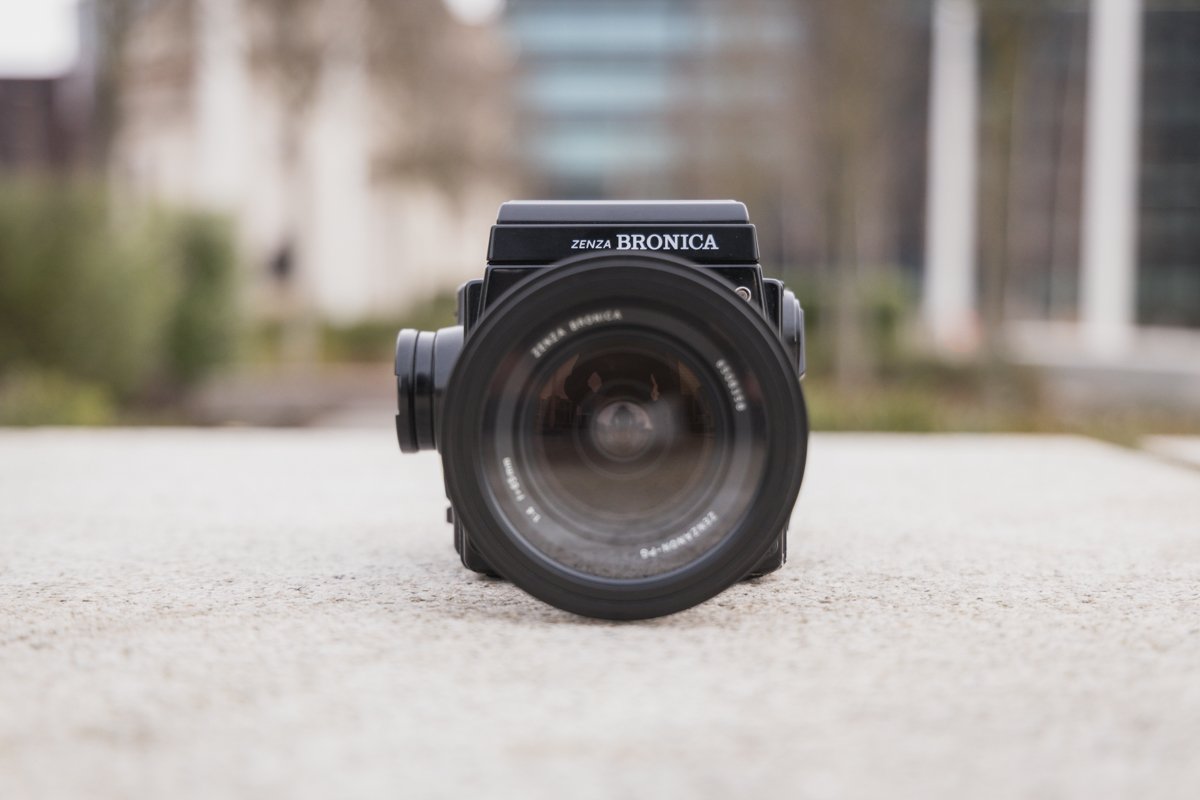


This being... a 6x7 aspect ratio, (relatively) compact sizing, good ergonomics, great image quality, good lenses and it could be had for a bargain price. The 6x7 format was, in particular, very desirable among other formats that I planned on shooting. Moreover, Bronica's GS-1 is smaller than either the Mamiya or Pentax cameras. The latter two are quite hefty and cumbersome to operate, which would be quite a hassle for day-to-day use.

Having previously experienced both the Mamiya and Pentax offerings before and now handling the GS-1 - I found the latter to suit my needs the best. For a camera that's no longer in production, and one that's been left under-appreciated and under-mentioned amongst photographer and mainstream circles, was choosing Bronica and its GS-1 a mistake? Not at all. In fact, it's time that the GS-1 gets its own, silent revolution.
The Ideal Ergonomics For A Comfy Experience
So, about my particular GS-1... I bought it with a pop-up waist-level viewfinder. I consider it a bonus find for me since it’s my preferred way of shooting! Otherwise, the Bronica GS-1 could be coupled with other finders. That includes a 90-degree rotary prism (more on that later), as well as a metered and non-metered prism. The customisability is thanks in no small part to the GS-1's incredibly modular body.
That is further improved thanks to the excellent ergonomics when handling the GS-1. Therefore, most of the controls that you need... Be it the flash sync, lens disconnect switch, shutter speed, and the film back release button... Are all positioned within easy reach. This litany of switches and knobs also includes the mirror lock-up (MLU) button and double-exposure settings. These two are crucial for night-time and experimental shots.

You'll usually have to fiddle around with the exposure and MLU switches when the sun goes down if you want the best low-light experience possible. It's not the most intuitive system in the world. But, once you get used to it, night photography with the Bronica GS-1 can yield great results (be sure to source the correct shutter release cable for it!). Meanwhile, there's the other key talking point of the GS-1 over its period contemporaries - the build quality and packaging.


The body of the GS-1 itself feels solid, robust, and well-built. Granted, while it's slightly smaller than the Mamiya or Pentax that we mentioned earlier, Bronica's entry into the field is still rather large and heavy. As such, you'd better be prepared to lug about that excess mass with you wherever you go. On the plus side, you do have an interchangeable film back system, and Bronica even sold a Polaroid film back for it.
Video Source - Worldwide Camera Exchange via YouTube
“Has the heart and soul of a film camera, but paired with the conveniences and aspirations that bring it up to par with modern digital cameras”
Modular And Customisable To Your Heart's Content
Speaking of, the modularity of the GS-1 means that exchanging an accessory for another is a breeze. One great example would be the lenses. Personally, the lens that I gravitate to the most with it, and given my use case, is a 100mm lens. From time to time, I will vary between it and a 50mm or 65mm lens. This does bring us to the first significant point of consideration (and downside), if you're thinking of getting one.
Bronica themselves only made 9 different lenses for the GS-1... A 50mm, 65mm, 80mm, 100mm, 110mm micro, 150mm, 200mm, 250mm, and a 500mm super-telephoto lens. Given limited aftermarket support, this does limit your usability quite a bit, seeing that there are only so "many" lenses to choose from. It's not something that I need to worry about with how I intend to use my GS-1, but you may feel otherwise.
Video Source - Brae Hunziker via YouTube
Still, the native lenses are pretty good. So good, in fact, that Bronica later re-used the lens formula and coatings from the GS-1 lenses, and adapted them to the rest of their camera line-up. Elsewhere, it has a healthy mixture of both mechanical and electronic elements. For instance, the GS-1's shutter speeds are electronically-controlled. Hence, allowing you to vary from 16 seconds to 1/500 seconds (and Bulb mode).
Additionally, you get a flash sync across all available shutter speeds - another huge plus point! Moreover, the GS-1 can be had with two teleconverters, a 1.4x and a 2.0x. And, two extension tubes, an 18mm and its 36mm counterpart. Some may say that the Bronica GS-1 has the heart and soul of a film camera but paired with the conveniences and aspirations that bring it up to par with modern digital cameras.
Some Good, Some Bad, And Some Ugly
Although, those very same electronics which distinguish the GS-1 are also a double-edged sword. It's worth mentioning, as well, that the GS-1 is battery-powered. In other words, you'll have to rely on its battery for everything from the shutter and even the cable release. With that in mind, if that singular PX28 battery is on the verge of dying, or if the electronics go kaput, you'll be deprived of using your GS-1 entirely.
When put side-by-side with other comparable older cameras, they at least have a few mechanical tricks and functions that could still work without electrical support. Meaning that even if their electronics give way, you can technically still use them, unlike the GS-1. To be fair though, many owners of the GS-1 can agree that thus far (given its old age), the electric circuitry is somewhat comparatively reliable.
Video Source - Brae Hunziker via YouTube
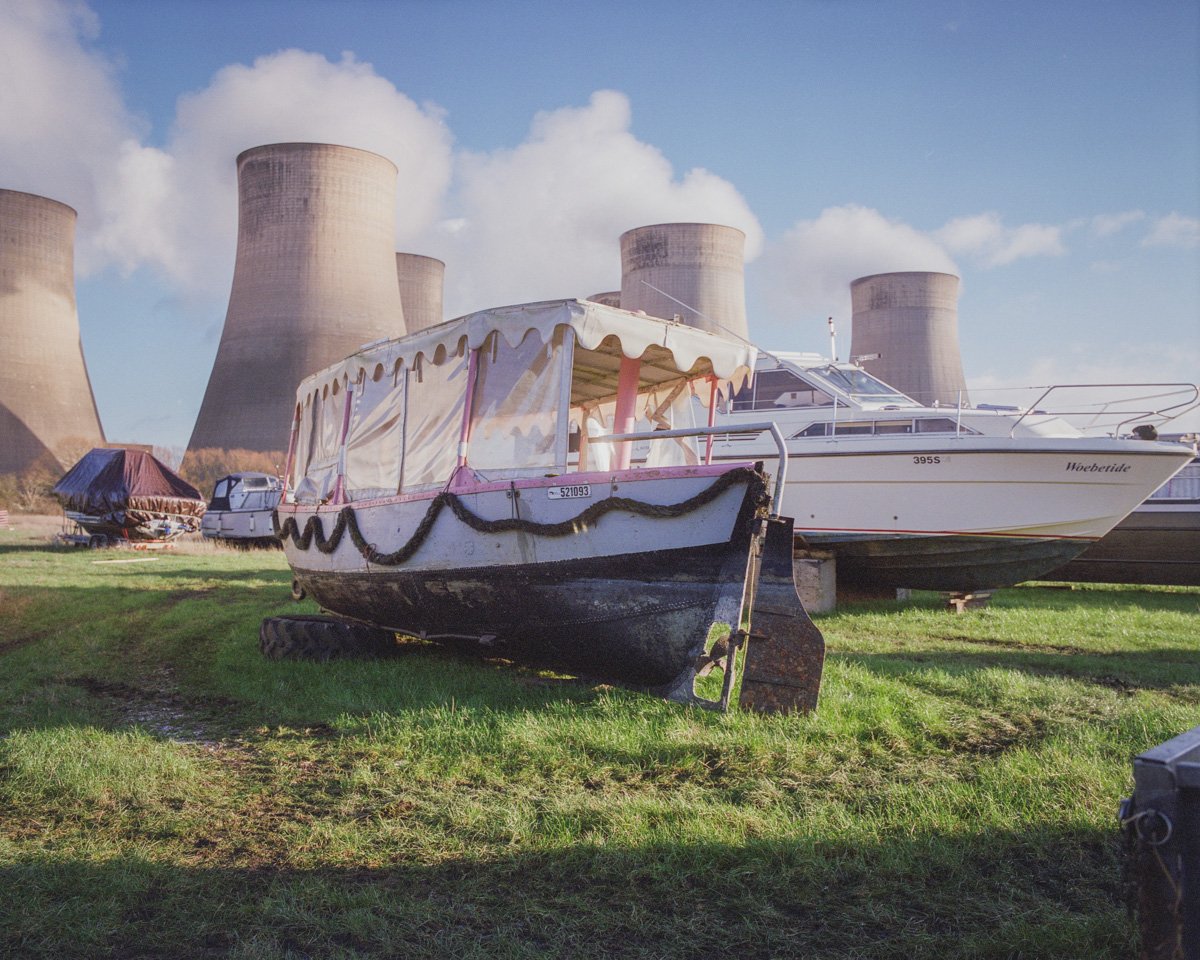
Still, you ought to be cautious if you're buying an old GS-1. I'd recommend checking the electronics more diligently than you'd otherwise do. Regardless, with all this talk of the GS-1's build, how well does it take actual photos? Well, it turns out, really fantastically so! The images that come out of it are very crisp and clear. I personally have no issues with the image quality at all - it's a silver lining with all big cameras.
A larger frame means more image. The large 6x7 negative means I'm able to extract more detail out of a typical shot. Furthermore, it emphasises the shallow depth of field, and is similar in quality to many digital cameras of today (with the right technique), but inside the form factor of a film camera. Overall, this makes the Bronica GS-1 a very satisfying hardware to shoot with.


Some Of The Compromises To Look Out For
The experience is even better if you're willing to shop around a bit harder and find the optional AE (auto-exposure) prism viewfinder, mind. However, it's not all sunshine and rainbows, as there is one aspect of operating the GS-1 that's less than ideal. More specifically, you'll need to use a bit of elbow grease when you're shooting in portrait. This is because Bronica made one small oversight compared to its rivals.
Mamiya, on the other hand, had rotating film backs (That’s the ‘RB’!) that let you switch from landscape to portrait in a pinch. Meanwhile, the GS-1 doesn't have this. So, you'll either have to manually rotate your camera 90 degrees anytime you're shooting in portrait, which is no doubt a pain if you've mounted it onto a tripod. Or, you could shell out a bit more to get one of Bronica's rotating tripod adapter accessories.

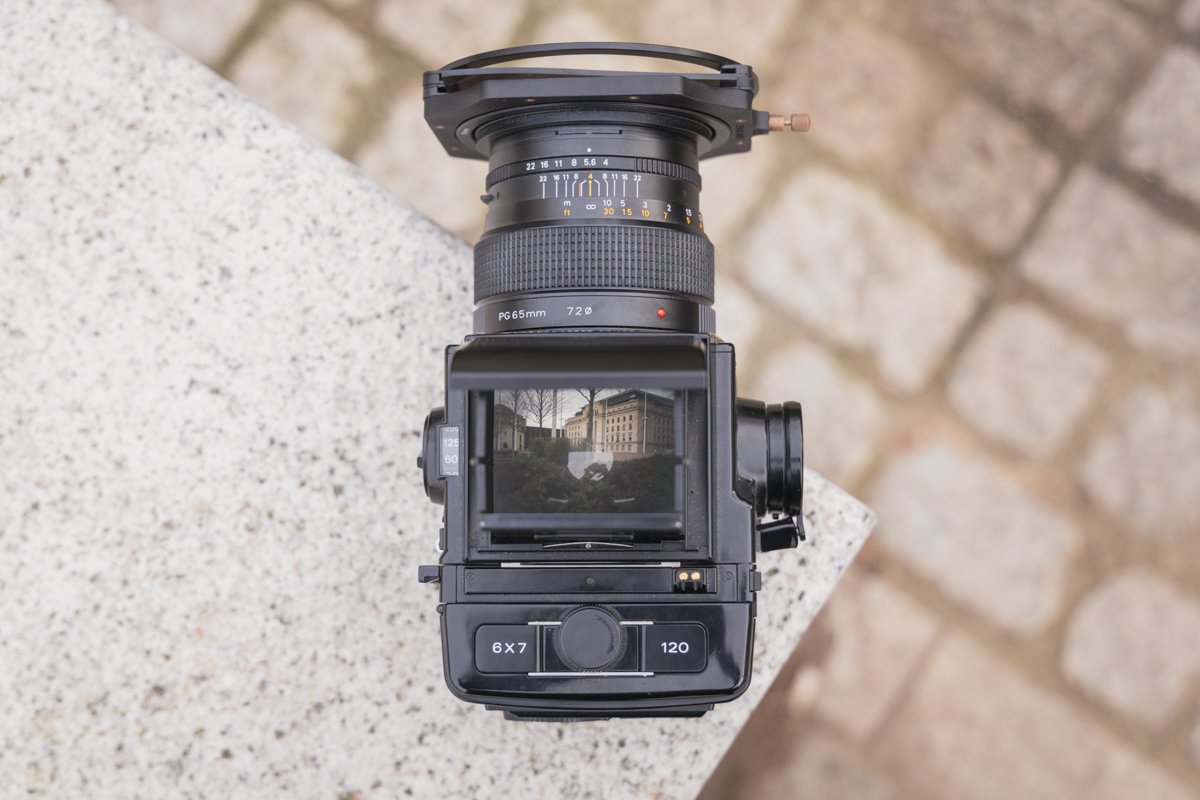


In short, it's probably better to keep the GS-1 as a handheld camera rather than one that you'd regularly pair with a tripod or fixed mount. Another huge downside with the GS-1, as with all older cameras, is the accessibility to spare parts. The older it gets, the tougher it'll be to source spares, should they break. And, it's just as challenging to find shops or people who know how to work on it, if you need repairs done.
It's something that you have to live with once you delve into the rabbit hole of owning and using any old, out-of-production photography gear. Then, going back to those electronics, the GS-1, remember, isn't an all-mechanical being. Having experienced how iffy electrics can be with these older cameras, if they ever go awry, it's likely a lot easier to simply replace the entire camera, rather than trying to fix it up.
Is The Bronica GS-1 Worth It?... Some Closing Thoughts
Not too long ago, the arrival and incredible growth of digital cameras brought and end to the dynasty of film. It meant having to say goodbye to the Bronica GS-1, as well as its compatriots. It's a shame too, since that bulky hunk of metal and plastic is one that I very much enjoy using. Every time I go out, I try to bring the Bronica GS-1 with me as often as I can. For a medium-format camera, it's a perfect package.

In summary, it's a great choice for either rookie photographers, or even experienced veterans like myself, who are looking to get the perfect medium-format camera. In terms of maximal ‘bang-for-buck’ it’s difficult to look beyond the GS-1. When compared to those Mamiya and Pentax 6x7 pickings, the GS-1 is relatively more ergonomic and compact for those busy shoot-and-scoot sort of days. If that's not convincing enough, the GS-1 is also a steal!
With a bit of searching, you could walk away with a good GS-1 for around £500 or so. I suppose that's the prime benefit of being so underrated for so long, yet delivering a great camera that'll capably ro capture amazing images. By contrast, you'd need to spend a couple hundred more at least (if not thousands!) on an equivalent Mamiya or Pentax. In which case, you might as well spend that on accessories.

Though, trying to source the GS-1 body, lenses, and the rest of the optional kits from used marketplaces can be a bit of a challenge. In some cases, you may even be able to walk away with 6x7 lenses for under £150 apiece. But, looking for intact and reliable ones is akin to finding a needle in a haystack. Most GS-1 owners seem to have much better luck shopping for mint GS-1s and their accessories from Japan - which can have it’s own problems, as well as import taxes.
For me though, the GS-1 is as close to the perfect medium format camera as I’ve come so far. Considering, it doesn’t look like there will be any ‘new’ film cameras for a while (outside of toy cameras and technical offerings) it seems that the GS-1 will be my ‘go-to’ for quite some time, and I am perfectly fine with that…
Specs And Details


About the Author - Ross Jukes is a professional Photographer and Videographer with over a decade of experience. Working in both Digital and Analogue formats, Ross has worked with international clients, had his worked published numerous times and exhibited his work extensively. With a passion for all things photographic, Ross combines his experience, enthusiasm and dedication to his art form to create engaging and educational content for the photographic community.
Disclaimer: All links to Amazon UK are affiliated links - you will still pay the same price but I will receive a small commission for providing the link. All information provided in this blog is intended either for educational or entertainment purposes and is accurate to the best knowledge of the author. However, further research/professional advice should be sort before making purchases/implementing any advice given and no responsibility is taken by the author or parties mentioned here within.

Trying Three Lomography Films!
When it comes to film, I have a pretty simple palette. My ‘go-to’ film of choice has always been Portra 400. Recently, I’ve had a brief love affair with Fuji Pro 400H but falling in love with a discontinued film is a bad idea!

When it comes to film, I have a pretty simple palette. My ‘go-to’ film of choice has always been Portra 400. Recently, I’ve had a brief love affair with Fuji Pro 400H but falling in love with a discontinued film is a bad idea!
As you can probably tell from my Vanilla film choices (and Vanilla happens to be my favourite Ice Cream - my middle name is definitely not ‘Danger’!) I tend to keep things simple. Every now and then I might experiment with an expired film if I’m feeling particularly adventurous! However, in my instant hunt for reasonably priced film, I stumbled across Lomography.
If you’ve even stepped foot in the film world, you will have come across Lomography. Their dedication to analogue photography and commitment to quit is pretty much unmatched! Despite having a great range of affordable cameras to explore (I myself had a Dianna-F for many years and in part, it was that camera that got me back into shooting film!) they also have an amazing range of film!
PLEASE NOTE: I WAS SENT THESE ITEMS FOR REVIEW BUT NO OTHER PAYMENT OR CONTROL WAS EXCHANGED FOR PUBLISHING THIS UNBIASED REVIEW

My ‘typical’ film look and feel…
It was their more experimental offerings that got me interested though and after exploring the options, it was time for me to ‘Break Bad’ and ditch the Portra for something a. Little more exciting - I was going full Rum Raisin!
There were a couple of caveats, I pretty much only shoot Medium Format and it must be C41 development so that I could develop the film myself. Fortunately, Lomography had me covered with a great range of 120 colour negative film. The three I would be shooting with were Metropolis, Lomo Purple and Lomo 800.
“If you’ve even stepped foot in the film world, you will have come across Lomography.”
The only real stipulation that I put on myself was that I was going to shoot all of the films on the same camera and lens setup. It’s not that I would be drawing a direct comparison between the films, we’’re dealing with three very different beasts here! It was more to keep the process straightforward. So the Bronica GS-1 and 65mm lens were my weapons of choice!
My developing would all be done at home so your results with these films may very, but I tried to be as consistent in my approach as possible! That included editing the images - all images have only had a very light edit and I have tried to keep the colours/tones somewhat representative of how the film looks. The only slight caveat being the Lomo 800 were I did use a Black Pro Mist ¼ filter - just to soften the lights at night.
LOMOGRAPHY METROPOLIS
Metropolis is probably most famous for its muted, desaturated look with a good kick of contrast. As a Portra shooter, the desaturated look sounds like it should be right up my street. However, this was probably the film I was most suspicious of. I tend to go for warmer, more wholesome tones and this felt like it might be a little, dystopian…
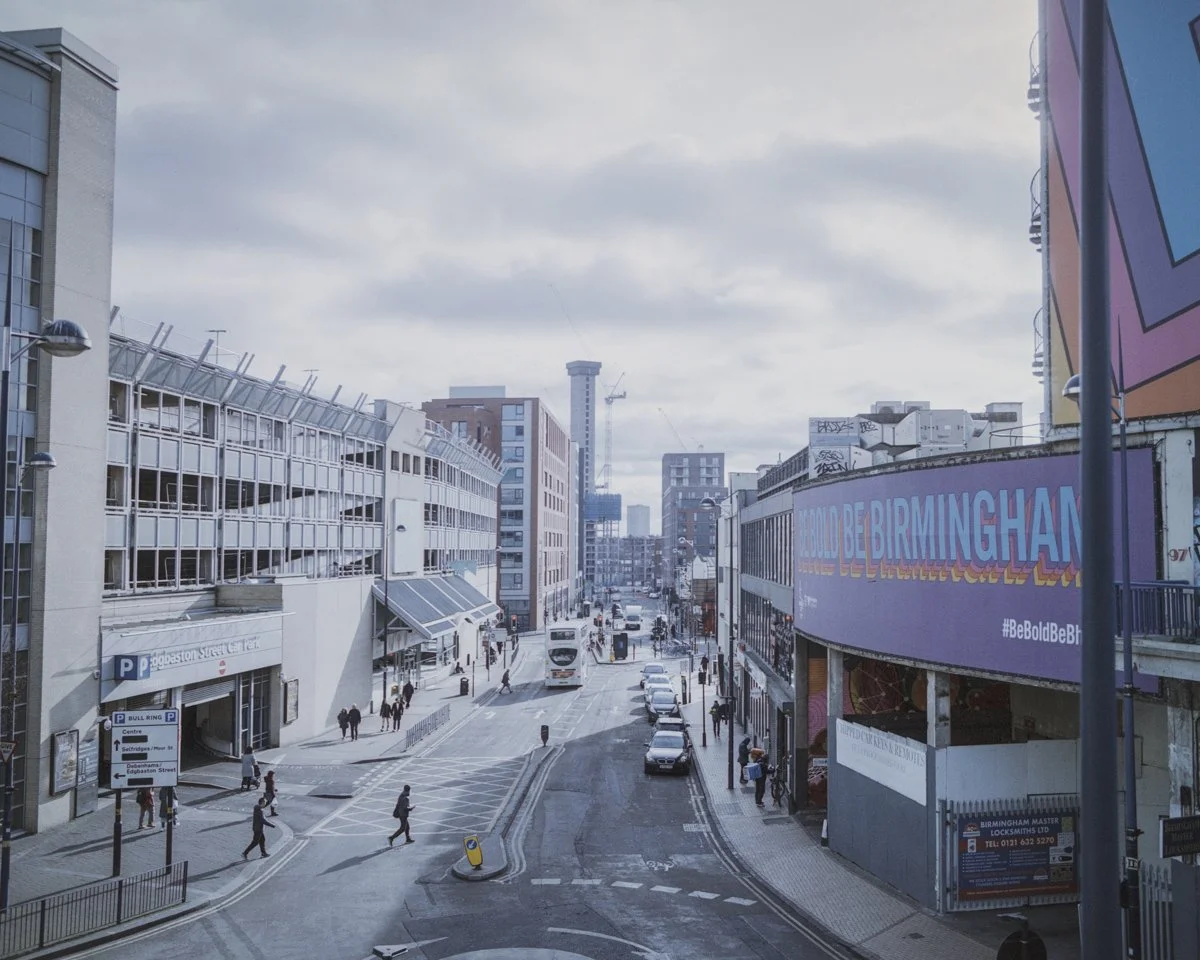
However, when I saw the results, I was pretty impressed! This is probably more a reflection of my shooting style but the film renders a lot different to what I would normally go for. But it was a pleasant surprise and I could certainly see myself using it more often and certainly the kind of film that would be useful for certain projects or even entering photography competitions with a more urban feel!

I personally think it looks better when you have a bit of strong, directional light. If you shoot more urban scenes then this is certainly a great film for you. It has a little punch of colour that pops through and draws the viewer into the image. The contrast is great and gives it a gritty feel, without being too overdone.
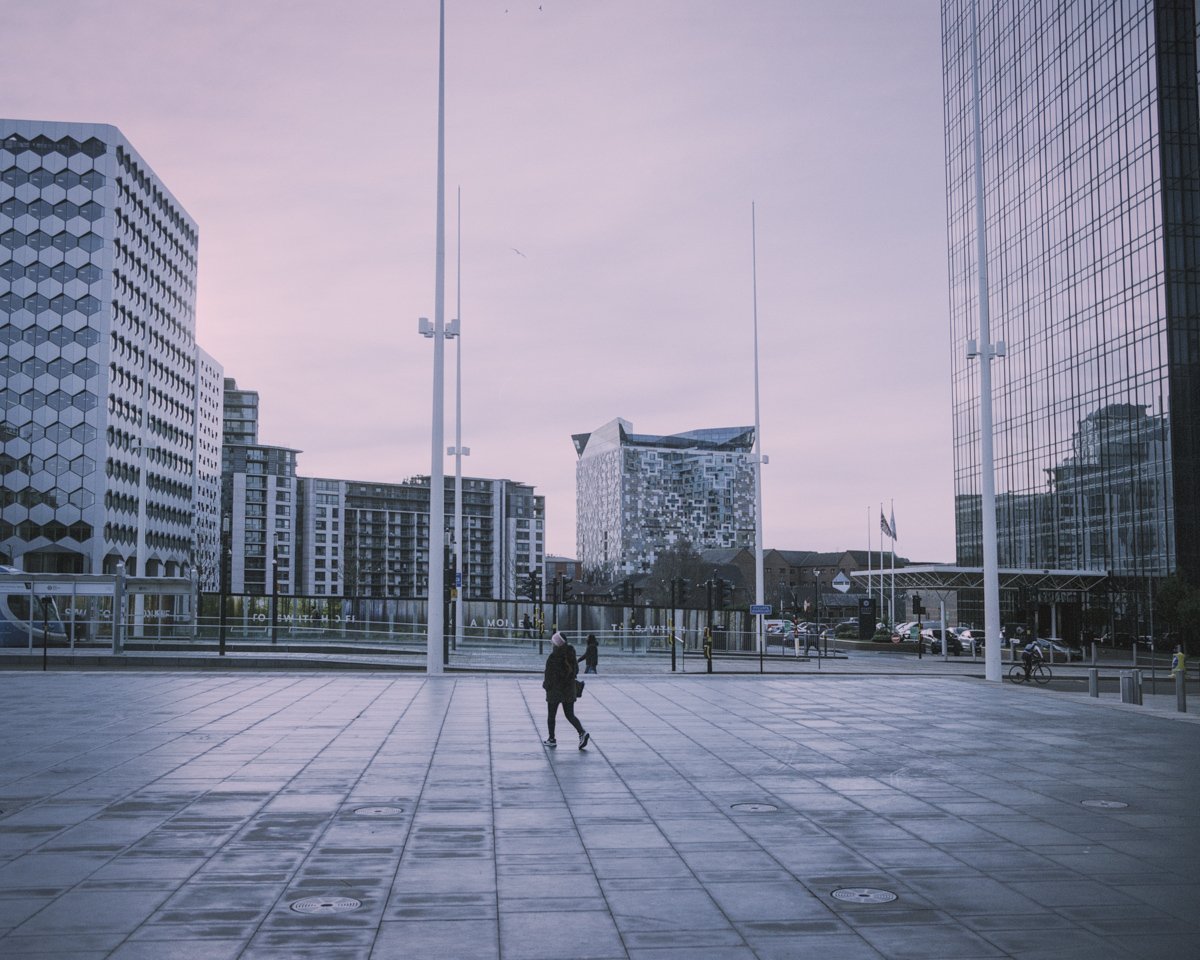


As with all films, choosing what speed to shoot it at is really a personal choice. I shot this film at 200 to give the film a little extra light and I’m glad I did. That said, I also think this film would look cool and underexposed a little, it would certainly render shadows deep and black thanks to that strong, contrasty look.

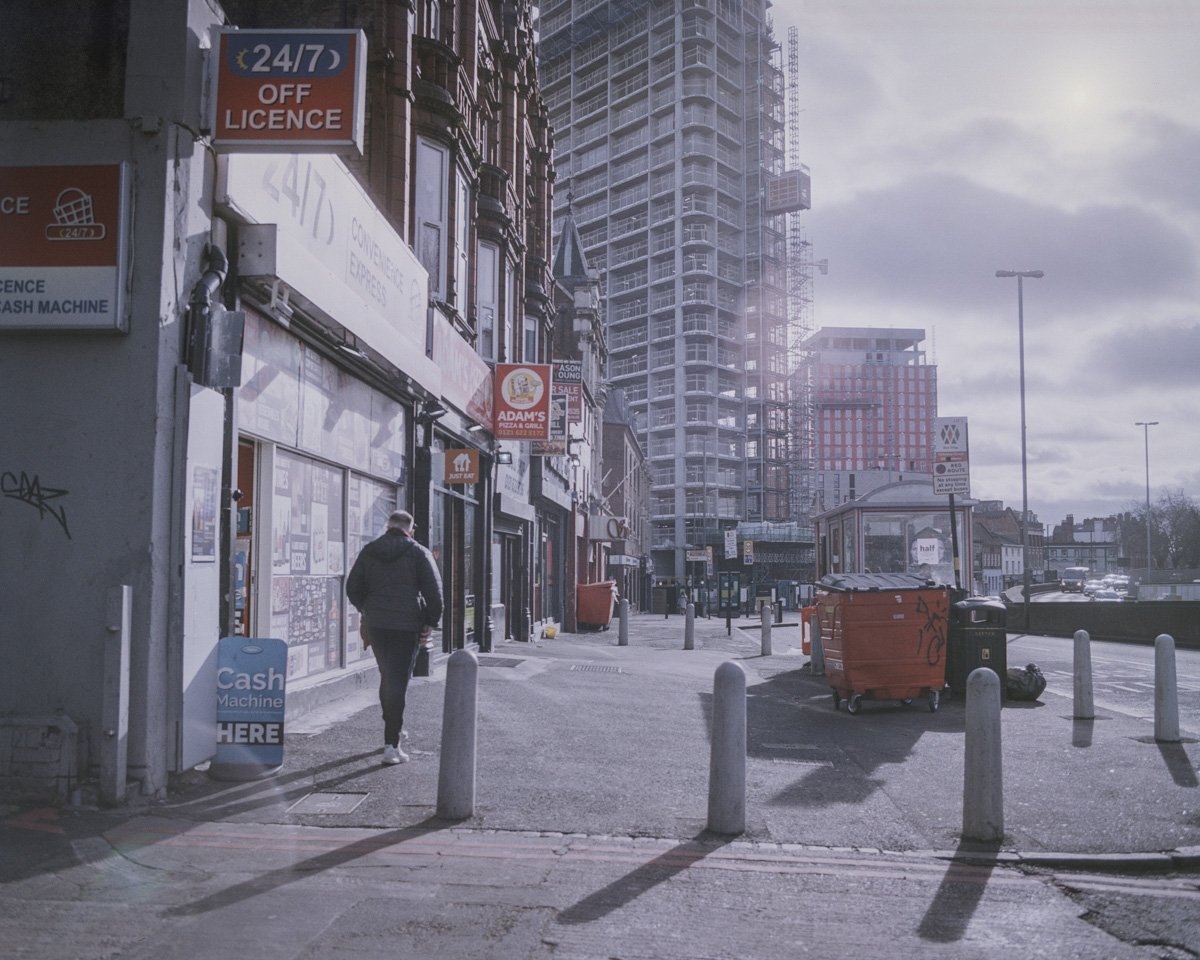

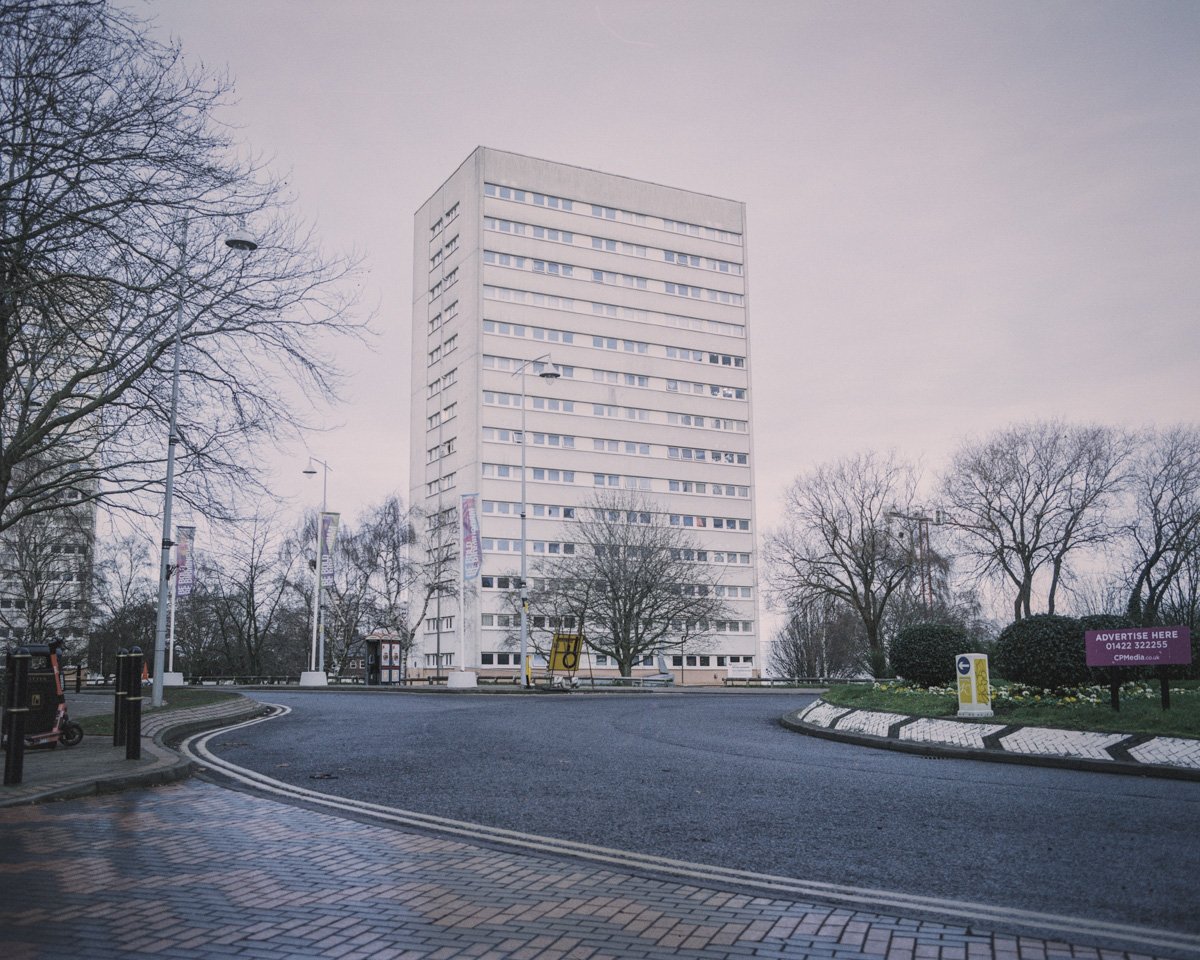
LOMOGRAPHY LOMOCHROME PURPLE
OK, I’ll admit I had no idea what to expect from this film! I’d done a little bit of Googling to see what it was all about but didn’t think it would be my cup-o-tea! I was wrong, I loved how these images came out! But there was one big problem with this roll of film, me… Let me explain.
I used the same camera/lens combo for all the films I tried - the Bronica GS-1. Whilst I was loading the Purple - I noticed the film leader and distance to the ‘Start’ markers on the backing paper was quite short. As I wound the film on to get to ‘shot 1’ - I was convinced the film was not being collected by the pick-up spool!

I hastily opened the back of the camera (believing the film would still be unwound) only to find the film had been collected correctly and I’d just exposed the first shot - what an idiot… but it gets worse. When I close the film back, it obviously resets the shot counter as if it’s loading a new film!

I quickly applied a bit of logic and switched to multiple exposure mode (thinking this would move the film counter on but not advance the film) - again, I managed to mess that up and what’s the result of all this stupidity - I wasted about half the roll of I’ll! There is a price to pay for this level of stupidity and when you shoot film, that price can quickly add up!

However, I did manage to get a few shots on the roll and I’m glad I did because I love how this film looks! This is the answer to all of my 'Vanilla’ Portra shooting and is so far removed from my normal style! It really did put a smile on my face as I was scanning the negatives and seeing those bright, bold colours shine through!

I’ll admit, I’m sure this film won’t be for everybody and I certainly preferred the way it renders vegetation/sky rather than what it does in urban environments. However, it was great fun to shoot with and I wouldn’t hesitate in shooting with it again! Sure, you can adjust hue in Lightroom to get a similar look but where’s the fun in that and the one thing this film stuck is, is fun!
LOMOGRAPHY LOMO 800
So on a more serious level, this film is one that I was very excited to shoot with. Not because it has any weird or wonderful quirks but because it is probably most similar to a ‘standard’ colour negative film - albeit an 800 speed film. This film wouldn’t give me anything strange or peculiar, but if it was a decent alternative to Portra 800 then I’m here for it, as the kids say…

Shooting the film raised one important question - do I shoot in the day, or in the night. Obviously, ISO 800 lends itself to slightly lower light conditions but I thought I’d fire off at least one late afternoon shot, just to see how it does. I wish I’d shot a lot more in the daylight! I think this film looks awesome in a sunset/soft light scenario! The soft pastel tones, beautiful grain structure and slightly warm feel make this film ideal for these kinds of scenarios!

However, I’d banked on it being a film I could use at night and guess what, it excelled in that department too! The 800 speed meant that my exposures didn’t need to be super long! I overexposed by about a stop and the longest exposure I was getting (in normal shooting conditions) was around two seconds. For a couple of shots, I did choose intentionally to stop down a little and get a bit more movement in the light trails.


This film worked wonderfully in the dark and I’m very impressed by the results. My only slight concern is the warmer base tone that comes through - but this is obviously easily corrected in post. If I was to have another, very mild criticism of the film it’s that the negatives themselves felt a little bit thinner than normal and therefore, were prone to curling. I honestly don’t know if this is me being super sensitive or if most 800 speed films are like this, but it’s something to be mindful of.


That said, I would have no problem buying a whole bunch of this film as my go to low light option. More so, I would also buy a load to shoot in the day/dusk as I think this would be a fantastic option. I’ve often heard good things about Lomo 800 and I can say that I am a well paid-up, ticket holding member on that particular band-wagon!
MY FINAL THOUGHTS…
I had so much fun shooting these films. I have felt for a while that I need a change of speed with my film photography and shooting these stocks has highlighted that there is so much more to film photography than the old favourites! Would I use these films on a daily basis, possibly not but I can argue a good case for projects shot in each of these films and that is something that I’m sure I will do!

Lomography is more than just a retailer though and this is the message that I really wanted to get across. Brands like Lomography are at the heart of film photography and are opening up a world of possibilities to people like me and hopefully, you. From their cameras and films to their absolute enthusiasm about the community, it’s great to see brands not just trying to ‘sell’ us something, but genuinely caring about the people that matter, the creative process and the end results! Long live Lomography…
About the Author - Ross Jukes is a professional Photographer and Videographer with over a decade of experience. Working in both Digital and Analogue formats, Ross has worked with international clients, had his worked published numerous times and exhibited his work extensively. With a passion for all things photographic, Ross combines his experience, enthusiasm and dedication to his art form to create engaging and educational content for the photographic community.
Disclaimer: All links to Amazon UK are affiliated links - you will still pay the same price but I will receive a small commission for providing the link. All information provided in this blog is intended either for educational or entertainment purposes and is accurate to the best knowledge of the author. However, further research/professional advice should be sort before making purchases/implementing any advice given and no responsibility is taken by the author or parties mentioned here within.

My Top 10 Cameras of 2022!
As the year comes to an end, I thought it would be interesting to take a look at some of my favourite cameras that I have used in the last 12 months. I use a camera every day for work, but I also take a huge amount of pleasure from just picking up a camera and going for a walk.
my favourite cameras in 2022
As the year comes to an end, I thought it would be interesting to take a look at some of my favourite cameras that I have used in the last 12 months. I use a camera every day for work, but I also take a huge amount of pleasure from just picking up a camera and going for a walk. This means that cameras do different things for me, some are work horses for specific jobs, some are purely for the user experience!
As I shoot more and more film, I’ve learnt that I really enjoy the slower process. Taking time to compose images, check exposure and the mystery of how it will come out is thrilling. With this in mind, you can probably guess that if I could only use one camera, it would probably be film (and medium format at that!).
That said, I have had to upgrade my camera this year and the new ‘daily driver’ has been interesting to say the least! However, I have also found myself exploring digital cameras for everyday use and have been really enjoying the journey. Film prices have made it difficult to justify taking an analogue camera out every time so finding a digital camera with an analogue feel was essential! Let’s get into the list…
PLEASE NOTE: I PURCHASED ALL OF THESE ITEMS WITH MY OWN MOMEY AND NO PAYMENT OR CONTROL WAS EXCHANGED FOR PUBLISHING THIS UNBIASED REVIEW

10 - Koni Omega Rapid M
Coming in at ten but by no means a bad camera os the Koni Omega Rapid M. This was a bit of a random purchase for me and not really something I had spent a lot of time researching. The only thing that really stood out to me was the 6x7 aspect ratio. I knew that I was never going to afford a Mamya 7ii or the like so when I found out about the Koni, I was intrigued.

The Koni Omega Rapid M is capable of some really sharp images
However, when I saw the prices, I was immediately sold on the idea. Coming in at a fraction of the prices of the trendy Mamiya, it almost seemed silly not to at least give it a go. My major concern was finding a decent example. My eBay searches were mainly bringing up cameras located in Japan. I wasn’t concerned about importing one but as luck would have it, one popped up in the UK and I quickly snapped it up!
The camera is simple to use (with one of the coolest shutter advances I’ve ever seen - imagine cocking some kind of vintage gun!). The ergonomics of the camera are not great, it’s bulky, heavy and a bit of a pain to carry around. However, the results are fantastic and certainly make me wonder why anyone would spend more for the Mamiya (apart form maybe the weight and user experience!).

9 - Fuji X10
Next up is a very recent purchase and I’ve recently posted a review about this camera, so I won’t go into too much detail here. The more I use it though, the more I enjoy it. This little camera fits so well in a pocket and for me, the results are certainly good enough that it justifies living in my pocket.

Need I say more about the little Fuji X10?
Possibly my biggest wish for this camera would be the low light performance. Whereas it is perfectly capable of getting a good image in darker conditions, it takes work. Given the age of the camera though, I really am nitpicking and this is a great little camera to use in most other circumstances.

8 - Fuji X100V
For many, seeing the mighty X100V languishing down in eighth might seem completely foolish. However, I have really had to try to love this camera. It is probably the closest thing to the perfect pocket camera out there in 2022. However, my main gripe is it’s barely pocketable!

The Fuji X100V can produced super rich and vibrant images
I love the images that can be had from this camera and the looks, ergonomics and user experience are all fantastic. Trying to fit it in a pocket is not such a good experience. In the winter months, when big coats are a must, it’s a great camera to carry. In the summer though, if you’re going out in jeans and a T-shirt, you’re going to need to bring a bag!

7 - Canon Eos R
Many people may assume I’ve completely lost my mind to see the Eos R even on the list, let alone ahead of the X100V. However, this camera has been a complete workhorse for me and even though it may not be my ‘main’ camera anymore, it still makes for a fantastic second camera.

The Canon Eos R once again proving why I can’t let it go…
When it was released, the ‘R’ got a lukewarm reception to say the least. For me, the ergonomics are great, it’s reliable in most circumstances and my style of work, the results are more than acceptable. With decent video quality and a pretty snappy autofocus system, this camera has been rocksolid and still earns a place in my camera bag.

6 - Yashica Mat 124 G
The Yashica Mat 124 G is a pretty legendary camera. An affordable alternative to the Rollei counterparts, this is a common starting point for the entry to the world of TLR’s. I picked up a very clean example at auction and even at the time, I knew I was paying over the odds but I’m glad I did!

The Yashica Mat 124 G is a much loved camera for a reason…
It’s a super simple camera to use and TLR’s by their very nature are just a joy to use! I’ve had so much fun using this camera and produced some of my favourite images from this year on it. If you’re in the market for a TLR and find a good example at the right prices, I wouldn’t think twice about grabbing one!

5 - Canon P Rangefinder
The Canon P was probably the 35mm camera that really got me interested in analogue photography, I think the camera is beautiful and is an absolute joy to use! I can’t really compare this to the Leica alternatives but considering you’ll be paying over ten times more for a Leica, I’m certainly happy with the P!

The Canon P Rangefinder is such a funny camera to carry…
The biggest downside of the P for me personally is that it’s not medium format. I simply prefer the image quality and detail from the larger negative and I would almost always pick up one of the bigger cameras over the P every time. It’s such a shame though as this is a beautiful camera and I would absolutely recommend it if you’re not interested in film size!

4 - Mamiya 645 Pro TL
Ok, so this camera being so high up on the list is quite a surprise to me! It’s a great camera and having owned the ‘Pro’ - I picked up a ‘Pro TL’ as it was such a good deal! However, the 645 negative size never really did it for me and I found myself leaning towards other cameras.

The Mamiya 645 Pro TL can produce images to rival almost any medium format camera…
That was until film prices went through the roof in 2022 and I have to admit, I’ve found myself using this camera more and more. It’s a fantastically versatile camera and produces great results. I always class it as more of an ‘entry level’ medium format camera but I admit, that’s complete rubbish - this is a very capable camera one that I will be shooting with more next year!

3 - Leica M8
OK, so I admit that this camera was a complete indulgence and you can find out more about it in my first impressions. That said, I absolutely love this camera and once you get past the price tag, it actually suits many of my wishes from a camera! The shooting experience is great, it feels solid in the hand and the results that you can get from it are incredible.
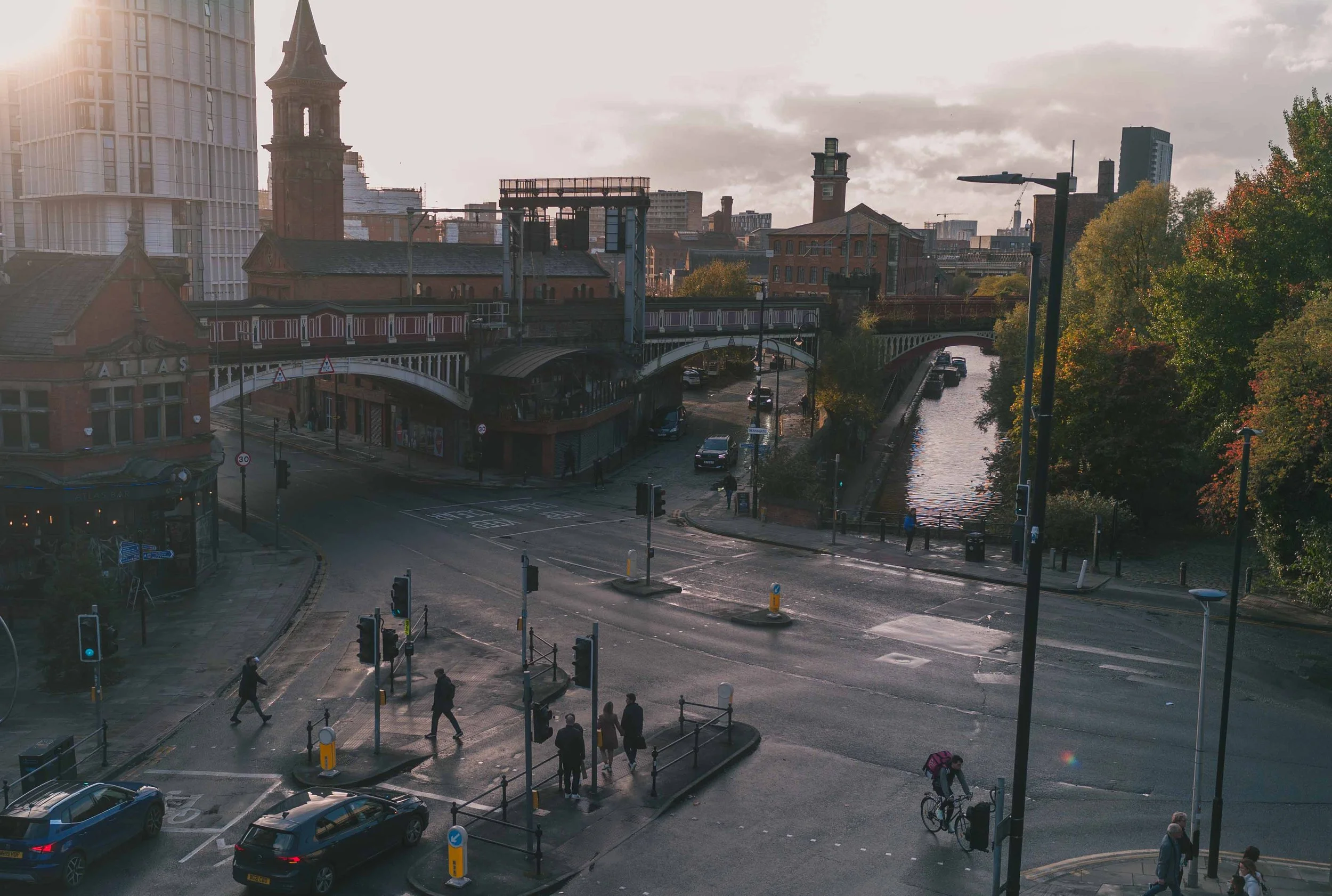
The Leica M8 has a truly ‘film’ camera feel with most of the benefits of digital…
Obviously, it’s completely perfect. It’s practically useless in anything other than good light and can feel a bit chunky at times (though that is the ‘classic’ Leica feel). More concerning though is the potential for weird artifacts in the image and knowing that the M9 had a bit of a sensor issue, it’s always nagging in the back of my mind that it could just die!

2 - Canon R5C
Right, so this is the big one! This is the camera that I upgraded too and I’m so glad that I did. I will be doing a review of it but needless to say, I love this camera. The results that you can achieve from this thing (both in photo and video) completely justify the hefty price tag!

The Canon R5C is a remarkable camera and I will do a full review soon…
However, this is a complete ‘tool’ and it is only used that way. In fact, I don’t think I’ve take it out once to shoot for pleasure. The main reason being that this camera is not one camera, it’s two! It has two separate operating systems for photo and video. The ergonomics for a photo camera are not the greatest and there are a few cameras I would rather pick up ahead of this.
With all that said though, this is a fantastic camera though and hasn’t missed a beat when it comes to commercial work. In an ideal world, I would probably have separate photo and video cameras but with all the features this camera packs in, I’d be spending a lot more money for that privilege!

1 - Bronica GS-1
Well, this is quite the turn up for the books… I spent a long time looking at the Mamiya RB67 and the Pentax 67 to fulfill my six by seven desires. The more research I did, I kept coming across the ‘underrated’ Bronica GS-1. According to all of the reviews, the size, weight and usability of the ‘Bronnie’ were all better than the aforementioned options!

The Bronica GS-1 is a special camera and I will do a full write up very soon!
However, having now used all three, I can honestly say I am happy with my choice and I absolutely love this camera! The waist level viewfinder is beautifully clear, the shooting experience is a pleasure and I can walk around with this camera all day and not feel too concerned about weight!
The thing that really got me though are the results that can be had with this camera! I have picked up a few lenses and keep finding myself gravitating back to the 100mm. Given the choice of all the cameras I own, this is the one that I would be picking up if I could only use one camera!
So there you have it, that’s pretty much my year in cameras and unless anything major happens, these are the ones I will be using the most in 2023 as well! I’d love to hear your thoughts on the list though and what would you pick? Happy shooting in 2023!
Disclaimer: All links to Amazon UK are affiliated links - you will still pay the same price but I will receive a small commission for providing the link. All information provided in this blog is intended either for educational or entertainment purposes and is accurate to the best knowledge of the author. However, further research/professional advice should be sort before making purchases/implementing any advice given and no responsibility is taken by the author or parties mentioned here within.

Leica M8 - My First Impressions...
I'm not going to justify this camera as anything other than a very, very expensive indulgence. For the same money I could buy a modern offering from Canon or Sony that would blow the M8 out of the water in every single department. But that's no the point here. This camera is as much about the process as it is the somewhat sketchy results.

Finding the Perfect Camera
For the last few years, I have been on the hunt for the perfect camera. I have a pretty simple criteria, it must be small, fun to use and produce stunning images! Easy enough then, right?
Watch the video for my thoughts on the Leica M8 in 2024!
Well judging by my purchase history, I have been struggling. That was, until I came across a video from the excellent One Month, Two Cameras (Ali) - a channel seemingly dedicated to the exact struggle of finding the perfect camera.
PLEASE NOTE: I PURCHASED THIS WITH MY OWN MOMEY AND NO PAYMENT OR CONTROL WAS EXCHANGED FOR PUBLISHING THIS UNBIASED REVIEW
Video Source - One Month Two Cameras via YouTube
Ali superbly explains why the Leica M8 is her (almost) perfect camera and it had me hooked. I just had the small task of raising the funds and hunting down a good condition M8. Over the coming weeks, I sold a bunch of cameras that simply were not being used and then trawled the internet for a good condition M8.

Grey days in Birmingham are a challenge for any camera…

Leica M8 making all trees look Autumnal…
Finally, I stumbled across a great condition M8 on MPB - a site dedicated to secondhand camera sales. At £1250, the little Leica was a little more than I'd planned to spend but it seemed to be around the average so I plucked up the courage and pulled the trigger! A few days later, I was in the Leica club and ready to go shoot!
First Impressions...
I was super excited to get the camera out of the box and my first thought when I picked the camera up was 'this thing is heavy!' Not so heavy that it's uncomfortable, far from it but it's definitely got some heft to it! It feels solid and all dials and buttons have a reassuring sturdiness to them.

The body itself is very simple. It has the unmistakable Leica shape. The shut release and shutter speed dial and perfectly located on the top plate. There is a small but very useful LED display on the top for shots remaining and battery life, two delicate subjects that we'll talk more about later.


“The body itself is very simple. It has the unmistakable Leica shape.”

On the rear of the camera, there is a small and underwhelming LCD screen (keep in mind this is a camera from 2006!). Next to the screen is a small d-pad for navigating the menu. On the bottom of the camera is the familiar Leica style plate that must be removed to access the battery and SD card slot.

I quickly grabbed a Canon 50mm lens and an adapter so that it would fit my new Leica and started grabbing shots. The first thing I noticed was the big, bright viewfinder. I'm pretty familiar with using rangefinder cameras these days and this is the best viewfinder I've used by some distance. The frame-lines are clearly visible and accurate. The rangefinder patch itself is bright and contrasty enough to make focussing simple.

I fired shot after shot (mostly of the cat!) and instantly fell in love with the sound of the shutter. It is not discreet! It has a significant clunk to it which more than satisfies my 'digital camera that feels like a film camera' needs. In fact, short of a manual advance lever (and maybe scrapping the LCD screen etc) this camera basically feels like a Leica M6 - one of the most coveted 35mm film cameras out there.
A Rocky Start...
It's safe to say that my first impressions were overwhelmingly positive. I quickly bagged up my new baby and hit the streets. I was keen to see what the real world performance of the camera was and to overcome some of the issues I knew that I was going to have, and they were some biggies!

I knew going into this purchase that there were two main problems that the M8 had. Firstly, there is basically no Infra-red filter on the camera. This helps keep images sharp, and they are! But it also does funny things to the colours. Greens take on a yellowy burnt kind of look and synthetic blacks just come out purple.
This caused such an uproar on release that Leica had to send out IR Cut filters to all new owners to overcome the issue. I thought I could live with it. I very quickly realised I couldn't and a costly filter would need to be purchased. This was an easy fix, the next issue was not so simple to overcome.

This camera, as with many of its age is just not great in low light. I really wanted to be pleasantly surprised and in certain circumstances, I was. But it's safe to say that shooting at anything past dusk can have major limitations. More worryingly, the sensor is prone to some very strange artifacting - more-so in low light. I thought it might be infrequent, but already I was seeing some worrying signs.
The Sensor...
Now is probably as good of a time to talk about this cameras major strength, but also its biggest weakness. The sensor is an ASP-H size CCD sensor from Kodak. What does this mean? It has great colours. In the most simple sensor, the colours out of this camera have a very film like feel that nostalgia junkie like me go crazy for. This comes at a cost though.

That’s a worry from the M8 :(
Apart from low light performance not being great, there is also the small issue of this sensor just doing really strange things with no real indication of when it's going to happen. This makes it very difficult to account for. It seems more prominent in low light conditions but also scenes with difficult contrast. Either way, it is a major flaw.

Low light can be a challenge, but it can work!
It's important to remember that this is a 10-megapixel camera from 2006. Setting expectations is key to building a relationship with this camera. That £1250 price tag does make it a pretty difficult pill to swallow when you are not 100% sure that your image will come out clean or not. As a film shooter, this level of disappointment is something I've learnt to live with.
Getting to grips with it...
With some of the major issues out of the way, it's safe to say this camera is a beauty to use. One of the only potential issues I would note is the camera can be a bit difficult to carry. I have added a wrist strap and have ordered a grip for the camera. For such a costly camera, I thought it best to add something a bit more grippy!

Those colours though…
Talking of additions, the other 'elephant in the room' is lens choice. It won't come as any surprise that Leica glass is just as expensive as the Leica bodies. With that in mind, I wanted a wider field of view than what the Canon 50mm was giving me (with it's 1.33x crop on the ASP-H sensor, this feels more like 66mm). After some research, a happy middle ground of cost and performance was the Voigtlander 28mm Ultron Type II.
I've been really impressed with this little lens and will do a separate review soon. It's important to remember when getting into a system like this, there will always been things you need to add. I'm sure this lens will be the first of many additional items and IR Cut filters to go with any additional new lenses - this could get costly.
Video Source - Mattia Burling via YouTube
Final Thoughts...
I will do a full review in the near future but its pretty safe to say that I am very happy with the Leica M8. I've been really pleased with the files coming out of this camera. The images are sharp with great colours and enough of a vintage feel to them to satisfy my film-shooter tendencies.
The handling of this camera is great. It feels like a film camera and if it had a manual advance (like the Epson RD-1) it would be almost the perfect middle ground between film and digital! If nothing else though, it looks great and certainly turns heads when you're using it in the street - you may want to make sure it is insured!

This camera is not for everyone though. It pays to think of it as a film camera as it involves a lot of manual intervention to get good image out of it. You will definitely need to be present in the photography process and it is not a simple 'set and forget' shooting style. When it hits though, when the light is just right and plays ball, it is fantastic.
I'm not going to justify this camera as anything other than a very, very expensive indulgence. For the same money I could buy a modern offering from Canon or Sony that would blow the M8 out of the water in every single department. But that's no the point here. This camera is as much about the process as it is the somewhat sketchy results.

Obligatory mirror-selfie… Sorry…
All-in-all, I already love this camera! If you have been looking at one to purchase for yourself and you’re on the fence (and can afford it!) Do it! You’ll certainly have a lot of fun with it. It has some major flaws, but if you can look beyond the potential downsides, this is an amazing way into the world of Leica! Be warned, it’s a bad habit to get into though! :)
Disclaimer: All links to Amazon UK are affiliated links - you will still pay the same price but I will receive a small commission for providing the link. All information provided in this blog is intended either for educational or entertainment purposes and is accurate to the best knowledge of the author. However, further research/professional advice should be sort before making purchases/implementing any advice given and no responsibility is taken by the author or parties mentioned here within.

K&F Concept Tripod - The little tripod that can!
I have been in the market for a small, lightweight tripod for some time now and after trying a few different options, nothing seemed to be working for me. So when I received an email completely out of the blue, from K&F Concept asking if i would like to try one of their tripods, I jumped at the chance!

I have been in the market for a small, lightweight tripod for some time now and after trying a few different options, nothing seemed to be working for me. So when I received an email completely out of the blue, from K&F Concept asking if i would like to try one of their tripods, I jumped at the chance!
I’ve long been a fan of K&F Concept as a brand and had used their filters in the past. So I was very excited when the tripod arrived and as with all of their products, it was nicely packaged. I quickly unwrapped it and the first thing that struck me was how light the tripod was, it barely felt like i was holding anything - but more on the specs later!
“If you’re looking for a small, lightweight travel tripod that’s well built and versatille, they really don’t get much better than this”

WHAT’S IN THE BOX…
For a small, budget friendly tripod - K&F very generously provide you with a sleek bag to transport your tripod in, which is a great addition. Another bonus for me was that the tripod includes a ball-head, so no additional costs there and and Arca-Swiss style mounting plate, which matched my setup perfectly so that I could just leave the plate on my camera and use it on any of my tripods.

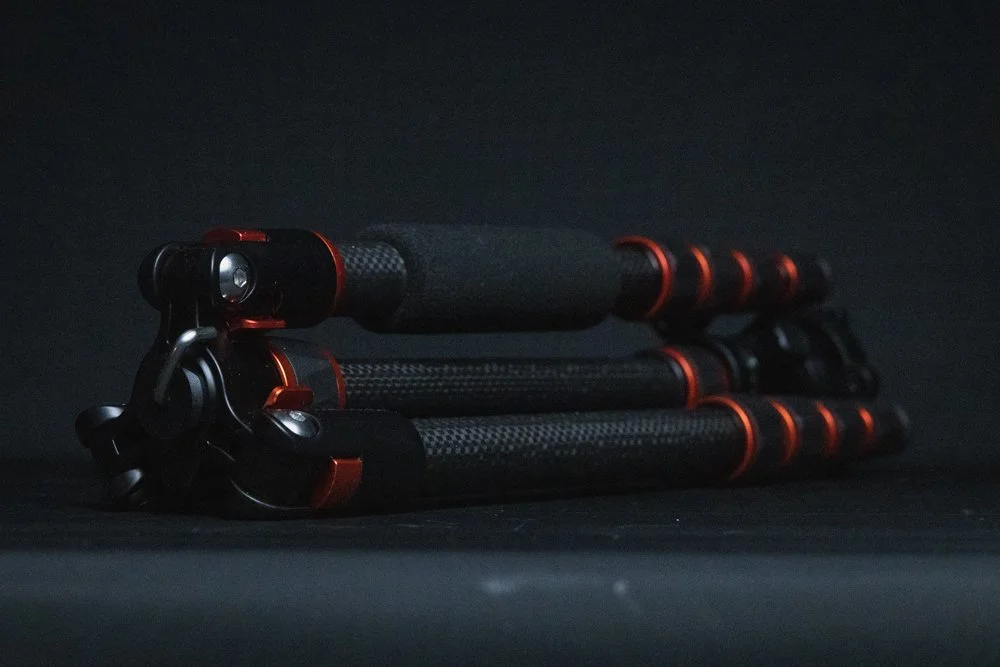


SIZE & WEIGHT
The tripod is very compact and is comparable to a 1 litre drinks bottle in it’s folded down state. One thing that always puts me off small tripods is that when they are folded down, they sometimes have awkward parts sticking out that can make it difficult to transport them. however, K&F have clearly put a lot of thought into how well it can be transported and I’m pleased to say, it folds down very compact and easy to handle.
Equally, there are no concerns on the weight front. I’m use to carrying a large tripod with a big geared head and it very quickly becomes a chore on long hikes! It was a genuine relief to be able to carry something that is barely noticeable that can be attached easily to the side of a bag or if you have enough space, inside a bag itself!


BUILD QUALITY
One thing that I have found with smaller tripods is that there is always a compromise when it comes to weight vs build quality. However, I’m pleased to say that this thing feels tough! The locking mechanisms all feel solid and the ball-head seems to stay in position with no movement, even at angles where I thought the weight of a camera might cause it a few problems. More importantly, the images that I have captured when using the tripod have all been sharp with no signs of movement of micro-jitters!
One thing to keep in mind is that this is still a small tripod with the main focus being on portability. The legs will flex with heavier cameras and longer lenses but in truth, you really should be using a larger tripod for bigger setups anyway. That said, I’ve still used my Canon Eos-R with 70-200mm EF lens & adapter and the tripod took the weight - I just used a two second timer to allow the camera to ‘settle’ after I pressed the shutter button and still got perfectly sharp images.
However, this tripod (for my use case anyway) is more for use with my analogue cameras when shooting at sunrise/sunset in lower light conditions can be more challenging. For that purpose, this tripod is fantastic and the build quality offers all the stability that I need!


KEY FEATURES
LOAD CAPACITY - 8kg/17.6lbs
MAXIMUM WORKING HEIGHT - 1520mm/59.84”
MINIMUM WORKING HEIGHT - 460mm/18.11”
FOLDED LENGTH - 350mm/13.78“
WEIGHT - 1013g/2.20lbs
MATERIAL - Carbon Fiber


USE CASES…
So by now, you’ve probably got a really good idea of what this tripod is all about. It really is designed to be the perfect travel companion. The light weight, compact nature of the tripod makes it ideal for those who need to be mobile and might not need a tripod on a regular basis - but as we all know, it’s better to have one and not need it, than to not have one at all!
If you are using larger cameras or doing particular technical work, such as architectural photography, you may benefit from something a little sturdier. However, for most use cases, this little tripod can get you through most situations. Even in stronger winds, you have the option to add weight to the tripod via the cleverly thought-out hook system and lowering the centre column will help with the balance of the tripod.
The overall versatility of the tripod makes it an ideal companion for those who aren’t quite sure what conditions they may come across. The leg sections articulate well and the brilliant little ballhead ensures that making quick adjustments to your composition is a breeze! I even think video shooters would see some value in having a lightweight tripod like this in scenarios where larger, fluidhead tripods may slow you down!


CONCLUSION
I’m sure you can probably tell by now, I love this little tripod. I think as long as you are fairly realistic with the weight of the gear you will be putting on it and the kind of conditions you plan to use it in, then this tripod will have you well covered!
From personal experience using this tripod, it has surpassed my original concerns and proved invaluable in many situations. As a film shooter, who needs to rely on a tripod in lot’s of different circumstances, it has been great having a tripod that is both easy to carry and quick to set up/take down.
This excellent option from K&F Concept ticks a lot of boxes and even though there may be sturdier tripods out there, many of them will come with a sacrifice of either size or weight. As a photographer that likes to travel light, setup quickly, grab my shot and then move on - this tripod is the perfect companion and one that many photographers should be checking out!
LINKS
GALLERY


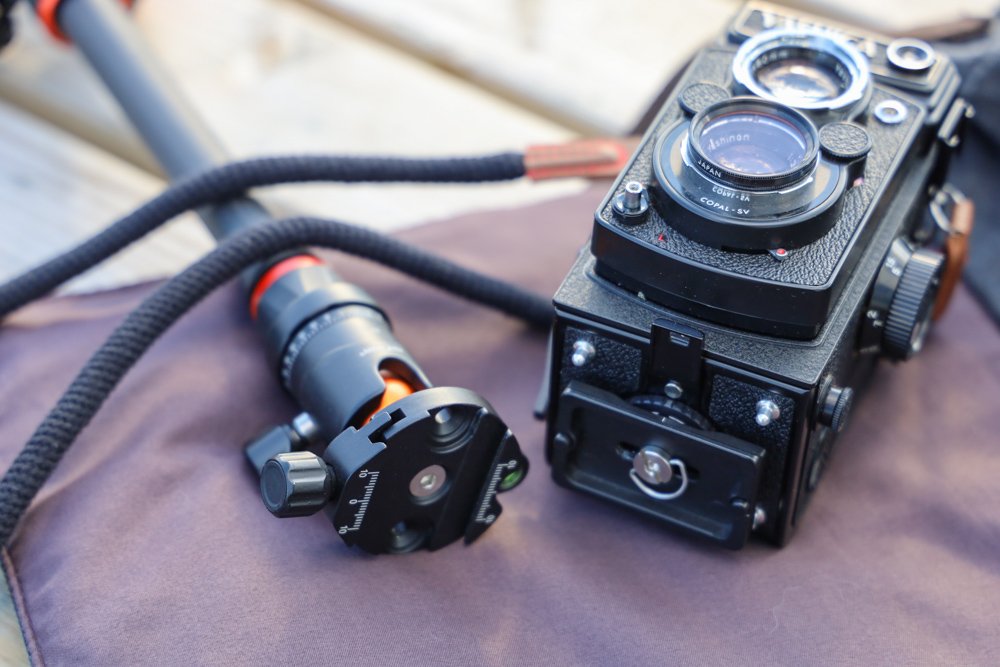


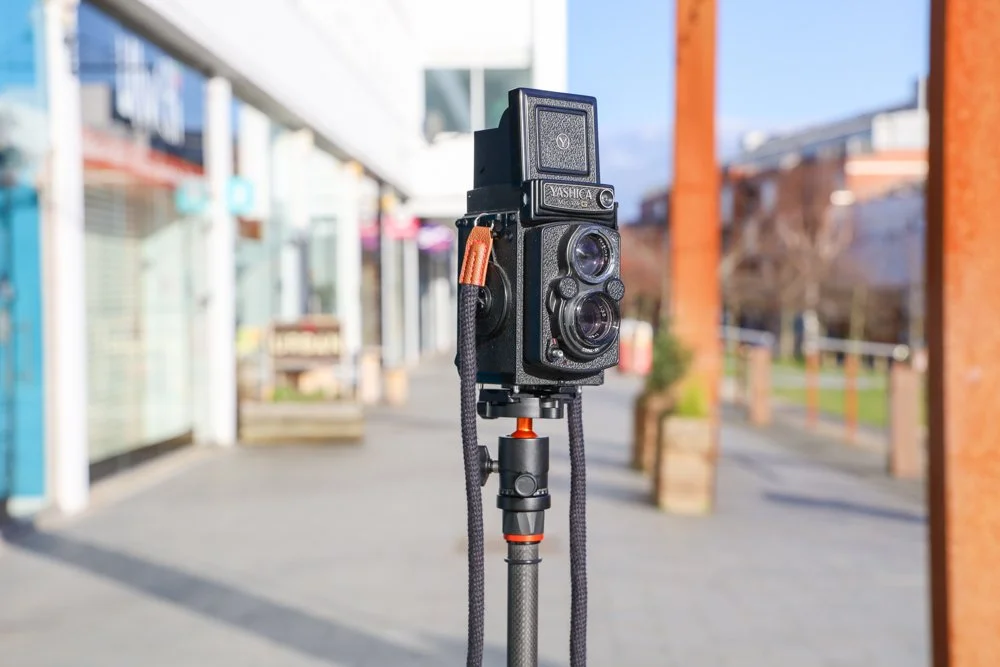


I provide all of this content for free, so if you’d like to support me, please consider making a small donation ;)


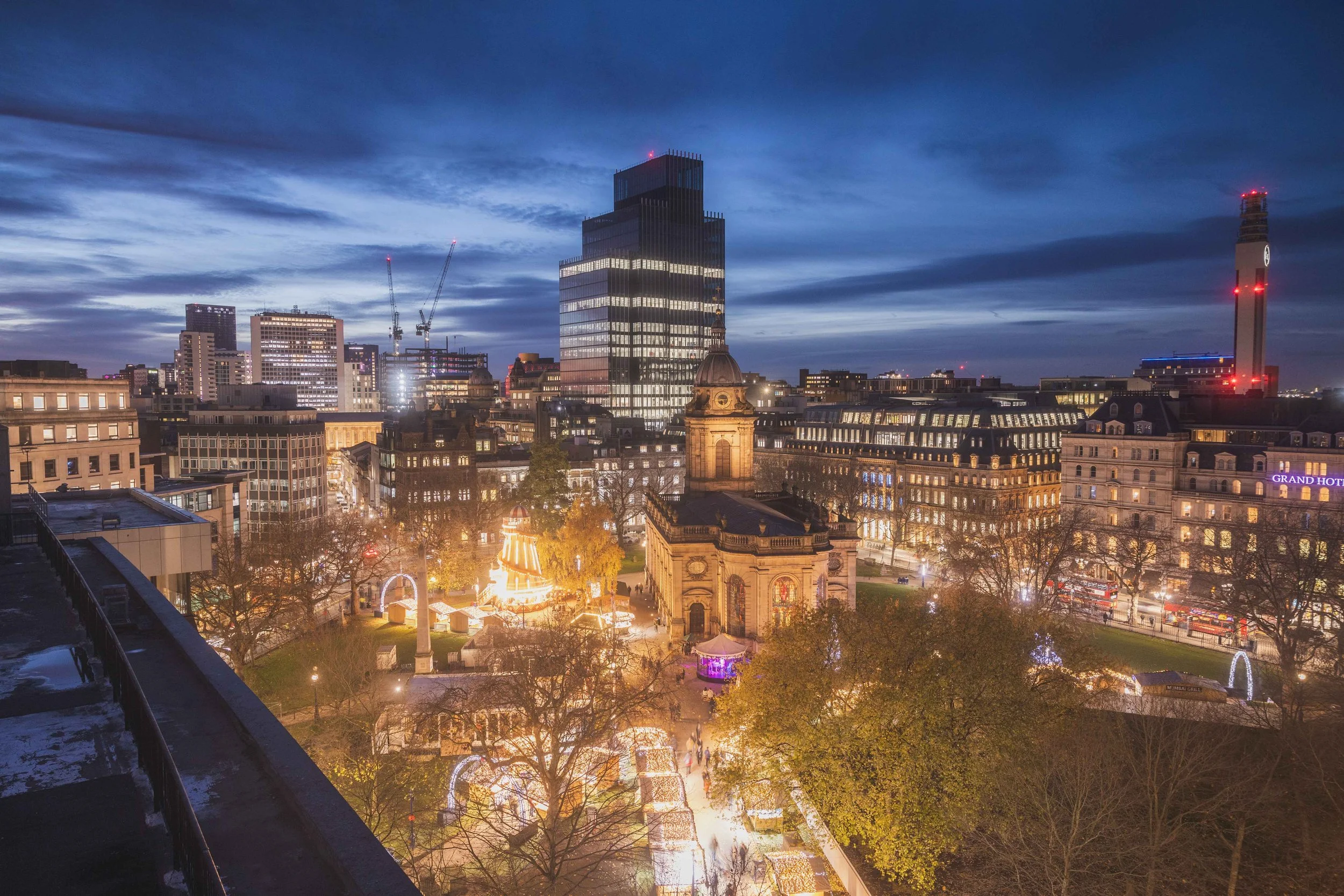


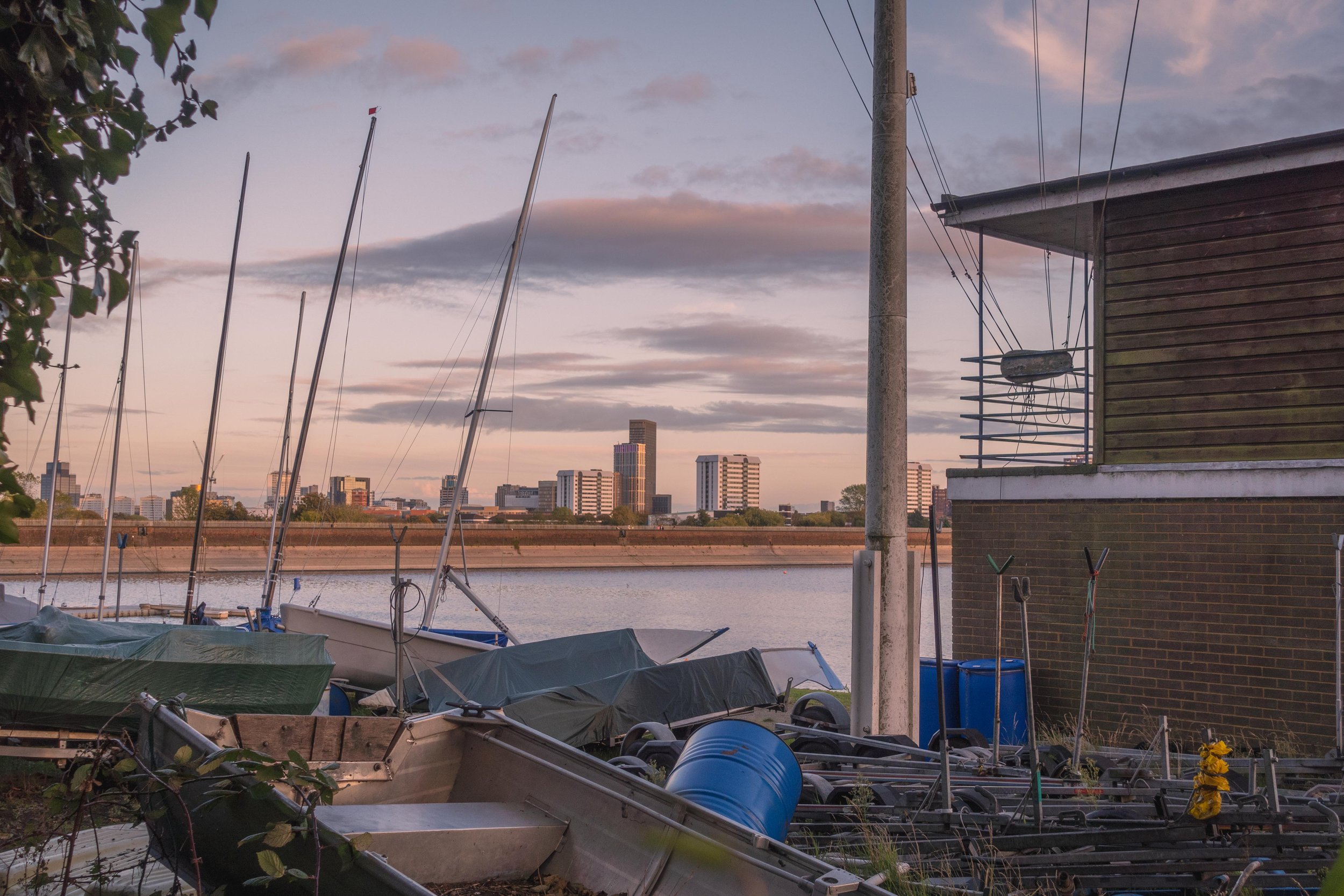

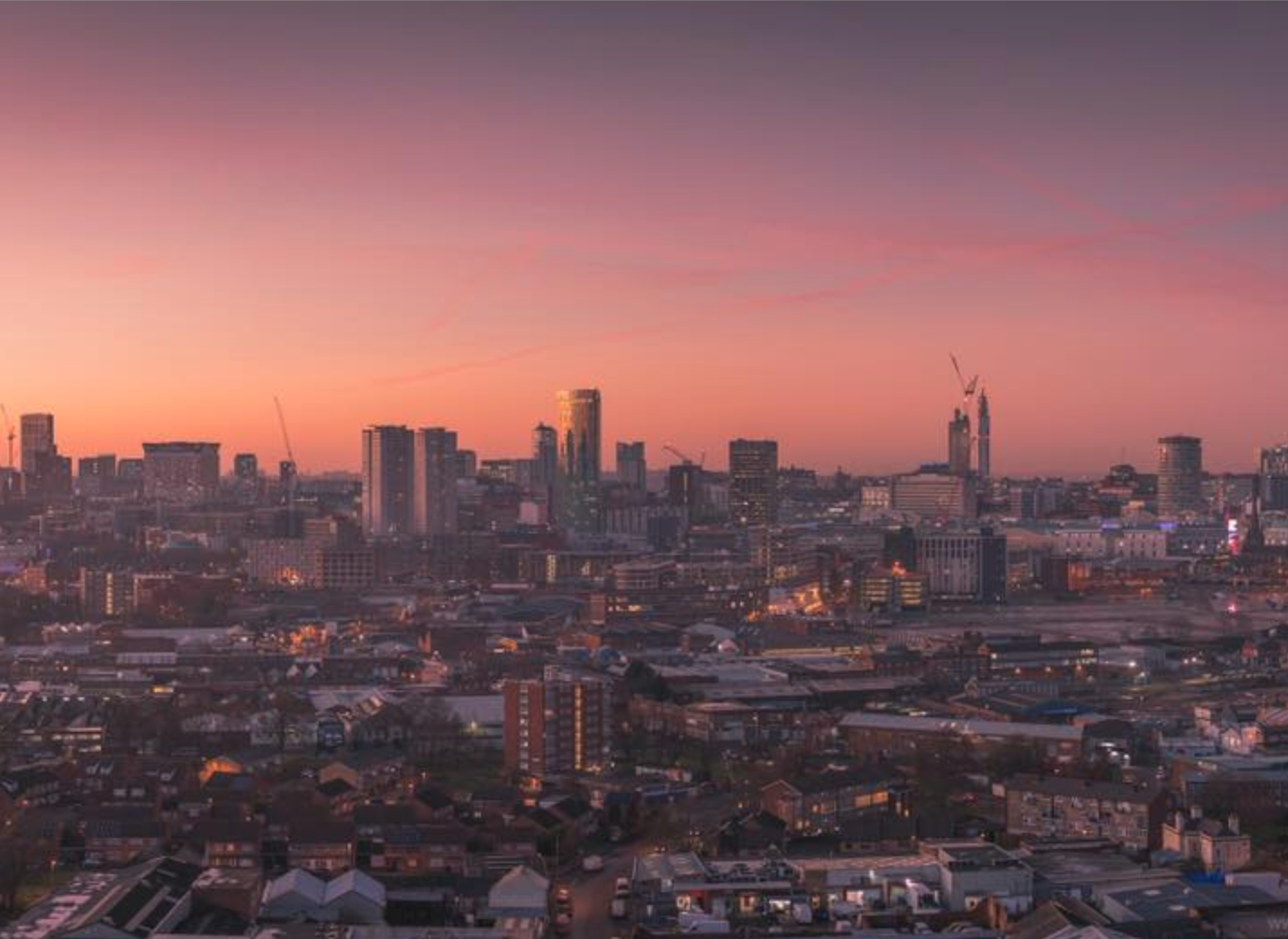


Disclaimer: All links to Amazon UK are affiliated links - you will still pay the same price but I will receive a small commission for providing the link. All information provided in this blog is intended either for educational or entertainment purposes and is accurate to the best knowledge of the author. However, further research/professional advice should be sort before making purchases/implementing any advice given and no responsibility is taken by the author or parties mentioned here within.
My Camera Collection for 2021! Film and Digital!! Have I wasted my Money??
If you’re anything like me, you love cameras! If you have an interest in Photography then you more than likely enjoy looking at and holding cameras, well at least I do… It recently struck me (after finally receiving a couple of my late night eBay purchases in the post!) that I had covered all the major bases with my camera collection so thought it would be fun to share them and to see if you think I’ve got it right, or I should sell up and start again!
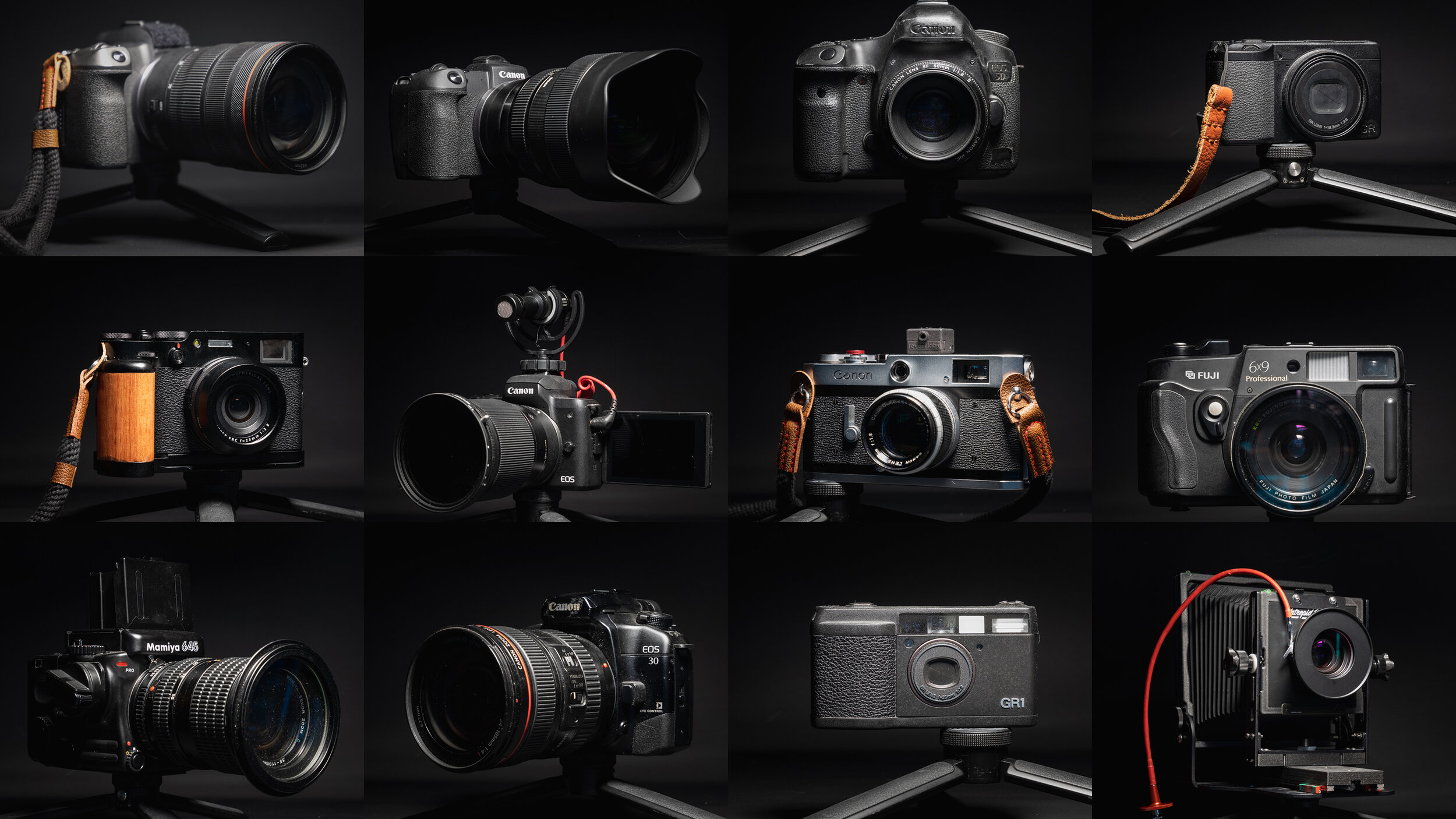
WATCH THE VIDEO
If you’re anything like me, you love cameras! If you have an interest in Photography then you more than likely enjoy looking at and holding cameras, well at least I do… It recently struck me (after finally receiving a couple of my late night eBay purchases in the post!) that I had covered all the major bases with my camera collection so thought it would be fun to share them and to see if you think I’ve got it right, or I should sell up and start again!
Now this isn’t a flex, it’s not a ‘look how much stuff I own’ kind of thing. This is the result of years of hard work, saving and sacrificing many other luxuries to buy the ‘tools’ that I use on a regular basis. In fact, I have a very simple criteria when buying it camera, it must do one of the following:
Fill a purpose: Have features and functions that are necessary for me to complete the work that I need to do - basically to be a tool.
Bring me joy: To make me ‘want’ to go out and shoot with it and therefore to further my photography experience.
Film Vs Digital
Around 18 months ago, when the world was a much brighter place and we could leave the house, I decided to start shooting film again. Like many others, the process appealed to me more than the results and what some would consider a waste of money when digital does everything you need it to do, I threw myself back into the format.
In this list you will see that even in that relatively short time, film cameras seem to be dominating my ‘collection’ - I make no apologies for this and in fact, plan to add many more - more on that later. However, it is worth noting that I do see the digital cameras very much as ‘tools’ and the film cameras ‘things of joy’ - almost like the daily driver vs the weekend treat. With that in mind, let’s start with the digital cameras, smallest to largest…
DIGITAL CAMERA COLLECTION

Ricoh GRiii
This little camera is an absolute street photography beast. The tiny form factor allows you to be stealthy in most situations and the virtually silent shooting won’t draw attention. Most importantly for me, it fits easily in a pocket meaning it is really easy to carry it everywhere - and that means more chance of taking photos!
I’ve owned a few of the older generations and always had issues with the lens motors. The build quality of the ‘iii’ seems a lot better but I do worry how it will hold up over time. It really is a great little camera that produces beautiful images and a camera is very easy to fall in love with.

Fuji X100V
One of my more recent purchase, the ‘V’ comes from a great heritage of Fuji’s X-Series cameras and is pretty much the pinnacle of form and function - I mean, it’s great to use, produces stunning images and look at it! It’s a beauty!
Not quite a s pocketable as the Ricoh, it is still easy enough to carry as an everyday camera and as long as you can cope with a fixed focal length, it has all other major functions covered. If I was being picky, I would love in body stabilisation, but I’m not sure what that would do to the form factor. However, it’s an absolute joy to shoot with and I find myself far more likely to reach for this than all of my ‘better’ cameras.

Canon M50
This little Canon is purely here for one thing, vlogging. The small form factor, great autofocus and flippy screen make it perfect for filming yourself when out and about. When pairing it with the right lens, it produces wonderful 1080p video - though I wouldn’t use it for 4k. Canon’s colours always look great and you really don’t need to do much in post to get a good image.
One thing that I feel always get’s overlooked with these cameras are it’s ‘stills’ mode - it takes pretty decent images. I have been in many situations where I wanted to grab a quick shot and have been perfectly fine with using the ‘vlogging’ camera, rather than unpacking my camera just to get to the ‘big boy’.

Canon Eos RP
Like the M50 - the RP serves a purpose - this is my ‘studio’ camera or B camera on bigger shoots. The RP is the ‘lite’ version of the Eos R but like most modern mirrorless cameras, is very capable in most situations. The video looks good and as with all Canon’s, it’s so well laid out and easy to use that shooting with it is never a chore.
This particular camera is most often permanently mounted to a tripod so that I can quickly go into video mode and start filming. However, it’s smaller form factor also makes it great for pairing with a gimbal and grabbing some juicy B-roll - though many will overlook it due to it’s mediocre 4k and slow motion features. For what I need, it does the job.

Canon 5D Mkiii
The camera I’ll never sell… I class myself as a photographer first, then a ‘YouTuber’ or whatever you want to call me… And this is the camera that really elevated my photography from a hobby to a career. I moved up from my first camera, a Canon 650D to the full-frame 5D and never looked back.
Even to this day, in the right hands this is a more than capable camera. However, I really wouldn’t see the point in picking a DSLR over mirorrless these days and advances in autofocus etc. have left this big boy feeling a little bit like old technology. However, if for no other reason than sentimental value, it will never leave my collection.

Canon Eos R
And finally, the workhorse. This is the camera I do most of my shooting on and really is the camera that pays the bills. Whereas it was pretty much attacked at launch for Canon’s excessive use of the ‘cripple hammer’ on their first venture into the world of full-frame mirorless, it has served me very well with pretty much no complaints'.
The stills look amazing with decent dynamic range, the video is good (if you’re not shooting 4k) and the 60 fps is enough to get some nice cinematic shots. The autofocus is great and as always, Canon colours steal the show. However, I’m not saying I would upgrade to an R5 (or even dare I say it, a Sony!) - but in these uncertain times, I really don’t ‘need’ to spend an extra £4-5k on a camera for features I’ll rarely use.
More so, for many amateurs/semi-pro’s - this is more than enough camera for your needs. I pretty much couldn’t live without this camera and paired with the 24-70 f2.8 RF lens - it’s everything I need… for now.
I provide all of this content for free, so if you’d like to support me continue to produce content like this, click the button below ;)
FILM CAMERA COLLECTION

Ricoh GR1
Like it’s digital relative, the biggest selling point of this camera is it’s size, it’s tiny! Barely much taller than a 35mm film canister, this is a truly pocketable little point & shoot! To make it even better, it has pretty decent autofocus and ‘feels’ like you are shooting with a more modern camera than it’s age suggests.
This camera is far from without it’s flaws - mine suffers from the most common issue of a faulty LCD screen - so you are never really sure how many shots you’ve taken. The lens motor always feels like it’s about to pack in and it can be a noisy little thing - so not great in quiet situations - but in everything else - it’s fantastic!

Canon P Rangefinder
This is my most recent film camera purchase so I really haven’t shot with it much - so I can’t say how good it is. However, I sent it off to be CLA’d and can’t wait to get out with it. If nothing else, it’s certainly a looker! As Canon’s crack at a Leics M series, it’s got the look, feel and the heft of a Leica - but will it shoot like one?
My biggest fear with this camera is the manual focusing. I have had the patch cleaned and it seems easy enough to use - but I don’t have the best eyesight and I’m not sure I will be very accurate with it - this is very much a ‘me’ issue and certainly no fault of the camera - but I do hope it doesn’t ruin the experience.

Canon Eos 30
This camera was an absolute bargain at around £30 - and paired with a way more expensive EF 24-105mm lens it’s makes for easy film shooting. It is bulky but it feels every bit a professional film camera with snappy autofocus and plenty of features you won’t find on your vintage 35mm’s!
I think it’s size is it’s only real drawback as it is far from discreet. Most casual passers-by will assume it’s a modern digital camera and it certainly handles like one. This would certainly make a fantastic option for anyone looking to get started with shooting analogue.

Mamiya 645 Pro
My first foray into medium format and this was love at first site. A Japanese import that had been well looked after, it feels like a modern camera and shoots like one too. The large 6x4.5 negatives produce great image quality and I quickly added more lenses, an autowinder and a viewfinder to make the whole experience, well, more enjoyable.
It really is like a baby RZ-67 but without the bulk - it’s not exactly small but if you strip it down to the ‘top down viewfinder’ and remove the autowinder, it’s a more than usable little package. This really is a great place to start with Medium Format photography and is a real pleasure to shoot with.

Fujifilm GSW690III
The beast or as it’s more commonly known, the ‘Texas Leica’ - this thing is huge! However, it’s size is it’s main selling point as it spits out incredible 6x9 negatives that are just packed with detail. The camera itself is a rangefinder which is almost comical to look at when someone is using it, it has a real ‘toy’ camera feel to it.
However, don’t let that fool you, it produces spectacular images. I chose the ‘wide’ version (as I a more of a landscape photographer than anything else) and the lens can produce wonderfully sharp images. It’s not without it’s quirks and shooting long exposures with it is a real faff. However, I absolutely love it and is often the first camera I’ll reach for when I want to go and shoot for fun, rather than necessity.

Intrepid 4X5 MkIV Black Edition
The large format camera. This is probably the one camera I would save in a fire (who am I kidding, I’d be running down the stairs with my arms full of cameras!). I absolutely fell in love with this format the moment I first shot it - the slower process, the technicality of it and the enormous negatives - it really is the most fun camera I have ever shot with.
The camera itself is well made, 3d printed and pretty budget friendly. However, shooting large format is a real challenge and not for the faint hearted, in particular due to the cost of film! That said, it is also one of the most rewarding experiences I have had as a photographer and one that I am pretty much hooked on! I will most certainly be adding more lenses and possibly a new large format camera to the collection in the future!
MISCELLANIOUS CAMERAS
There are a bunch of other cameras that I own that have either been donated to me or I have picked them up from secondhand shops or eBay. Most of these will never be used or at least, not on a regular basis, but they still bring me pleasure to look at and just to have around. Part of the experience of owning cameras like these is just simply taking pleasure in their aesthetic.
Conclusion
Overall, I am very happy with my collection and feel it covers everything I realistically need and want to shoot. However, I do wake up some days and think ‘I’ll sell the lot and buy a digital medium format set-up’ - But I still think I’d be a bit short of cash so I doubt that will happen anytime soon!
On the other hand, having the versatility of a collection like this is great. Being able to pick a camera that suits the style if shooting that I want to do on any given day is a real privilege and something that I highly recommend other photographers aspire to have.
Ultimately though, this collection will continue to chop and change, some will get sold on and undoubtedly, new cameras will be added. Please leave a comment below and let me know what you would keep, what you’d get rid of and what would be next on your shopping list.
Thanks as always, Ross.
Disclaimer: All links to Amazon UK are affiliated links - you will still pay the same price but I will receive a small commission for providing the link. All information provided in this blog is intended either for educational or entertainment purposes and is accurate to the best knowledge of the author. However, further research/professional advice should be sort before making purchases/implementing any advice given and no responsibility is taken by the author or parties mentioned here within.