

Canon PowerShot V1 Review - Compact Power in your Pocket

When I started out, over 15 years ago, I would never have believed all of the features that we take for granted in a consumer level camera. Incredible autofocus, high resolution stills, 4k video with effective wide-dynamic range (Log) - With the Canon PowerShot V1 launched in April 2025, we now have all of that and much more in our pocket. When I think about it, it really is mind blowing. However, it does all come at a cost, let's find out if it’s worth it!

⏰ TL;DR
If you don’t have time to read the full article, my ‘Too Long; Didn’t Read’ take on this is…
The Canon Powershot V1 is an excellent compact camera. Yes, it has a premium price tag but it is an incredibly capable little camera. Whereas some of it’s counterparts make up for their high price tags by offering a myriad of features and specs, the Canon is simple to use yet powerful enough to get great results in an all but the most challenging scenarios. It’s a great stills camera but for a vlogging/content creator, the video features make this camera a ‘no-brainer’…
Canon PowerShot V1 Review (Quick Verdict)
If you want a truly pocketable camera that’s built for high-quality vlog video and solid everyday photography, the Canon PowerShot V1 is a strong option — especially if you value Canon colour, quick handling, and a compact setup you’ll actually carry.
Best for:
Vloggers / creators who want better quality than a phone in a small setup
Travel + everyday carry (EDC) video and photos
Content makers who want a simple, fast workflow (shoot → share)
Not ideal for:
Anyone who needs weather sealing or a built-in EVF
People wanting the cheapest “vlogging compact” option
Sports / fast action shooters (small compact ergonomics + limitations vs ILC bodies)


PLEASE NOTE - No AI was used to make this article. It is my own work based on my experiences and created in my own time. If payment was received or any items gifted to me, it will be clearly stated in the article. If you would like to support the blog, please consider making a small donation.
🔨 Build Quality and Ergonomics
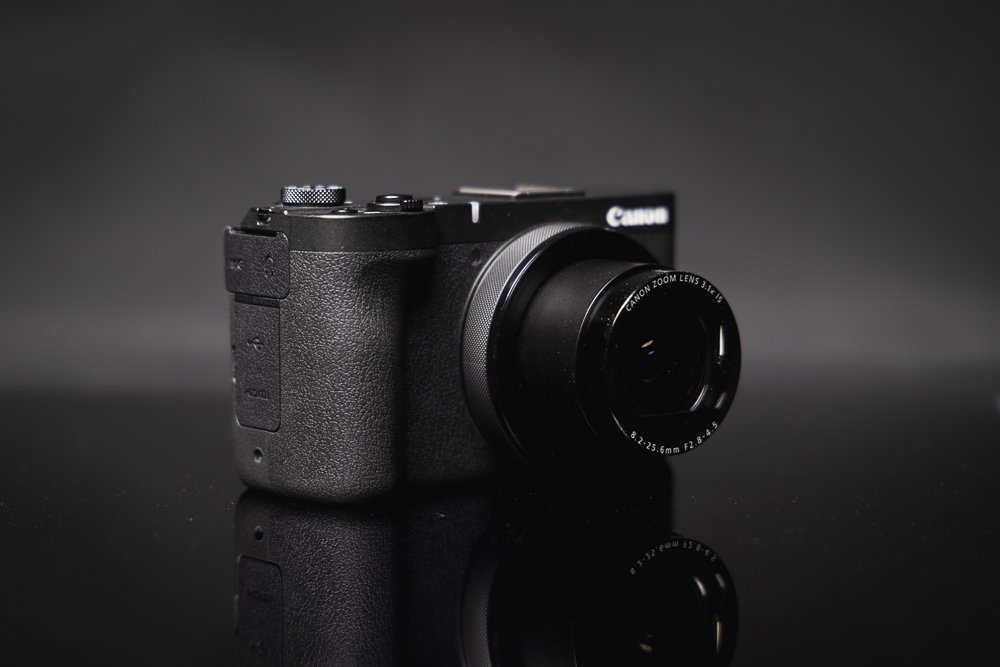
Straight out of the box (and I’m pleased to see Canon using mostly recycled packaging for their cameras) the camera feels like a premium camera. It has a little weight to it and feels dense - though at 426 grams, it’s certainly not heavy. That dense feel makes sense when you think of all of the technology crammed inside this thing! The package comes with a battery and wind cover for the mic, this camera is certainly targeted towards vloggers after all.
✌️ Ergonomics
The ergonomics of the camera are another standout feature. Canon have somehow managed to make this feature packed camera incredibly simple to handle and use. I’ve used my fair share of small cameras and there is usually a compromise when it comes to button layout. The PowerShot V1 focuses on being simple and fast to use. Startup time is quick, the buttons all makes sense in terms of placement and the flip out LCD touchscreen is a joy to use in all but the very brightest of situations.

🔎 What is missing?
I do have two very minor gripes with the body. Firstly, and probably most importantly is that the PowerShot V1 is not weather-sealed. Canon has obviously had to work thermal wonders to keep the issue of overheating at bay. However, that does come at the expense of not being able to use the camera in wetter conditions - which is a shame for more travel focussed users. My other personal issue is the lack of EVF - though I really am stretching here as the camera is packed with other features - I really don’t know how they would have fit an EVF in, so its absence is understandable.

📸 Canon Powershot V1 for Stills Photography
I’m going to break the review up into the two main areas of use for this camera, stills and video. The 1.4 inch CMOS sensor crams in 22 megapixels which helps deliver fantastically rich images. I’m not going to bang on about ‘Canon colour science’ but if you know, you know. The PowerShot V1 delivers images that certainly have that ‘Canon Feel’ and as an owner of the Canon R5 MkII - in some ways I preferred the images out of the V1 but my mixed emotions towards the R5 MkII is a conversation for another day.
Source - Gordon Laing via YouTube
I’ll talk more about the 16-50mm equivalent lens in the video section but suffice to say it delivers wonderfully crisp images with little compromise and with Optical Image Stabilisation - it’s more than just a typical ‘point and shoot’ lens. There is a bit of distortion but nothing that isn’t very easily fixed and sharpness throughout the aperture range seemed decent from my own very basic testing - though YouTube is your friend if you want to find some very detailed examples. The lens has a maximum aperture of f2.8 at the wide end going to f4.5 at the longer end which is decent for a small camera like this.

🌅 Image Performance
The images have decent dynamic range and I was impressed with the lowlight performance. I really think we have reached a point where you would struggle to find a truly ‘bad’ modern camera for stills but I’m pleased to say that the PowerShot V1 is a good stills performer, even with its diminutive form factor. The Dual Pixel Autofocus performs very well. It's nice to see some of Canon’s new tracking features built in. An additional bonus is the built in ND filter which can help in some scenarios - the mechanical shutter maxes out at 1/2000 of a second but there is an electronic shutter that delivers up to an incredible 1/16000 of a second.

Overall, the PowerShot V1 delivers fantastic images from what is a compact camera. The lens is sharp and the sensor renders images with plenty of dynamic range. As a professional photographer, I would have no problem using this camera to deliver images for social media, websites etc. and for most users, they will not be disappointed with the image performance and more importantly, the usability of this camera to capture great images.

🎥 Canon Powershot V1 for Videography
There is no doubt that this little powerhouse is mainly focussed on the video side of things with its primary customer base being vloggers and content creators. However, to simply class this little camera as a ‘vloggers camera’ would be missing some rather large points. Most notably the 4K 60 P video and the fact that this camera has Canon Log 3 - a feature that up until only a few years ago was reserved mostly for Canon’s premium Cinema line of cameras. It shouldn’t be overlooked that this ‘pocket’ camera, if used in the right hands, is capable of producing some beautiful video.
➕ AdditIonal Features
Other key video features include Canon’s ‘Movie Digital IS’ - this worked well in the field but it does come with a small crop factor and call me old-fashioned, but I appear to be the only person that still likes a bit of ‘normal’ camera shake. The previously mentioned built-in ND filter is also a great feature though fairly commonplace in video oriented compact cameras these days. In addition to the 4K 60 P, this little beast also delivers Full HD 120 P which for a lot of content creators will be a great addition - for those looking to make more ‘cinematic’ content, the choices of frame rates have you well covered. The Dual Pixel Autofocus also appeared to work well with the lens and I rarely found the camera ‘hunting’ for focus - in particular when used as a vlog-style camera.

📽️ The Lens for video
One of the most crucial features for videography and in particular for the vloggers out there is the lens, and with a 16mm equivalent at the wide end - it really does have you covered. One of the main gripes for most vlog-style cameras is that you normally need the dreaded ‘selfie-stick’ to get the camera far enough away from the user so that they do not completely dominate the frame. The Powershot V1 is wide enough that this really is not an issue. The lens is slightly more compromised at the long end - the 50mm equivalent offers some degree of ‘zoom’ but from a personal perspective, I’d love to have seen this closer to 80mm or ideally, 105mm. I must caveat that with the fact that I don’t know the technical limitations of building a lens with that zoom range so it may not be possible!
🖥️ Video Performnace
Video quality overall is great and for most users, they will be happy with the results. The audio also sounds fantastic for a small camera and even though I’d always recommend using a wireless lav etc. the onboard audio sounds full and rich - just remember to use the supplied wind-cover when outside. For more advanced users, the addition of C-Log 3 is great to see. Lowlight performance was decent with noise present as you start to ramp up the ISO - but this is where I feel some people forget the basics of videography in terms of looking for good lighting scenarios, with balanced audio and good framing - it is only a camera after all and won’t make poorly shot video look incredible, so some user skill is required to get the absolute most out of this camera - but it is certainly easy to get good looking footage from it.
Source - PetaPixel via YouTube
✅ Pros
Pocketable and easy to carry daily
Strong video-first feature set (creator-friendly controls)
Canon colour and pleasing skin tones
Built-in ND filter is genuinely useful outdoors
Solid image quality for the size
🔴 Cons
Price is premium for a compact (around £959 at launch)
No built-in EVF (composition can be tricky in bright light)
Not weather sealed
Some video modes/features may involve crop / trade-offs (depending on settings)
🤔 FREQUENTLY ASKED QUESTIONS…
-
Yes — it’s very clearly built for creators: a wide built-in lens, flip/vari-angle screen, strong AF, and creator-focused video tools like 4K 60p, Full HD 120p and Canon Log 3. If you want something more “grab-and-go” than an interchangeable-lens setup, it’s a strong fit for YouTube-style talking head + travel footage.
-
Most likely, yes. The V1’s lens goes to 16mm equivalent at the wide end, which is wide enough that you usually don’t need to push the camera far away on a selfie stick just to fit yourself in frame. It’s one of the big reasons this camera makes sense as a “pocket vlogging” option.
-
It does shoot 4K 60p, but expect trade-offs depending on mode. Canon’s own specs list 4K 60p and also show 4K 60p (Crop) in its comparison table, and the detailed specs list “4K (cropped)” at 50/60. If you want the widest possible look, check which 4K mode you’re in.
-
Canon highlights an active cooling vent designed to prevent overheating on longer shoots. In the official specs, Canon also lists movie recording times up to 6 hours at standard frame rates (with the usual caveat that temperature, power and card capacity can limit this). Real-world results still depend on conditions, but it’s clearly designed for longer recording.
-
Yes — the V1 includes Canon Log 3, which is useful if you want more flexibility in grading (recovering highlights/shadows and matching other cameras). If you don’t grade, you can ignore it and shoot a normal profile; if you do grade, Log 3 is one of the key reasons this compact is “serious” for video.
-
Yes — it has a built-in ND filter, which is great for keeping motion looking natural in bright daylight (e.g., sticking near 1/50 or 1/100 shutter without cranking aperture/ISO). Some published specs list it as a 3EV ND filter—handy for outdoor vlogging and “cinematic” settings.
-
You’ve got Optical IS plus Canon’s Movie Digital IS. Movie Digital IS can help smooth handheld footage, but it commonly comes with some crop/field-of-view reduction — and you’ve already noted there’s a crop trade-off in the field. Best practice: use Optical IS for a wider look, and turn on Digital IS when you truly need the extra stability.
-
Audio is a big strength for creator cameras. Canon lists an external microphone input and a headphone socket for monitoring, plus a built-in mic with noise reduction. In your review, you also mention the onboard audio sounds strong and that Canon includes a wind cover — but for best results you still recommend getting the mic closer (e.g., wireless lav).
-
Yes — Canon lists UVC/UAC support (plug-and-play webcam style) and positions it for live streaming. That’s ideal if you want a clean, simple setup without extra adapters. Just remember that stream quality will still depend heavily on your Wi-Fi/upload speed and platform requirements.
-
It’s not “only” a vlogging camera. You mention strong stills performance, good dynamic range, and decent low-light results, and Canon’s specs confirm a 22.3MP sensor and RAW support. For everyday travel/EDC and content stills (social/web), it should be more than capable — especially if you value a compact you’ll actually carry.
-
No — and this is worth making very explicit because people search it. Canon’s official specs list no water/dust resistance, and you call out the lack of weather sealing as one of your main body gripes (likely connected to the cooling/thermal design). If you shoot outdoors a lot, plan around that (bag, cover, or choose a different camera).
-
No — there’s no built-in EVF. You mention this in your “what’s missing” section, and Canon’s own comparison table lists EVF as “None” for the V1. In bright sun you’ll be relying on the rear screen, so consider a shade/angle adjustment strategy if you shoot outdoors a lot.
-
Canon specifies 1× UHS-II SD card slot, and also recommends using a fast card for 4K recording. If you plan to shoot lots of 4K (especially higher bitrates / 4K 50/60), prioritise a reputable UHS-II card with strong sustained write speeds rather than the cheapest option.
-
It feels premium and “dense” but not heavy at 426g, and Canon’s official specs also list 426g. That’s heavier than some tiny compacts, but still very reasonable for what you’re getting (large-ish sensor + strong video features + cooling).

✅ Final Thoughts…
I’ve taken a slightly different approach to this review, without focussing too heavily on every technical detail. As I mentioned at the start though, I find it genuinely mind-blowing that a ‘pocket size’ camera can deliver all of these features and functions. More importantly, it delivers fantastic stills and video performance in a simple to use, well built and stylish form factor. If you know that this camera suits your needs as a user, it’s very difficult to find any downside to it. However, there is one…

My biggest downside to this camera is the cost, at £959 - it’s expensive. Shopping around may bring that price down a little but that price still places this camera very much in the ‘premium compact’ category. The strange thing is, I actually think it is worth the money - this camera is incredibly capable. My main issue with the cost is that it puts this camera very near the price point of some other very capable mirrorless cameras. I’m not going to start making comparisons as this isn’t an ‘A vs B’ review - but at nearly a thousand pounds, that's a large chunk of change to be spending on a camera. That’s before we even get into the ‘camera vs phone’ debate for making vlog style content (camera every time for me but again, a conversation for another day!).

If the price is not the deciding factor for you, then one thing is for sure - you’ll be hard-pressed to find a more capable little camera that can slip in your pocket. Canon have done their research and delivered a camera that will have 99% of its target market covered! I would have no issue using this camera as an ‘everyday carry’ or for travel. For content creators, I think the PowerShot V1 would be an excellent option. Please leave a comment below if you like the look of this camera or if you think there are better options out there, I’d love to get your thoughts…
Posts you might also like…

About the Author - Ross Jukes is a professional Photographer and Videographer with over a decade of experience. Working in both Digital and Analogue formats, Ross has worked with international clients, had his worked published numerous times and exhibited his work extensively. With a passion for all things photographic, Ross combines his experience, enthusiasm and dedication to his art form to create engaging and educational content for the photographic community.
Disclaimer: All links to Amazon UK/US are affiliated links - you will still pay the same price but I will receive a small commission for providing the link. All information provided in this blog is intended either for educational or entertainment purposes and is accurate to the best knowledge of the author. However, further research/professional advice should be sought before making purchases/implementing any advice given and no responsibility is taken by the author or parties mentioned here within.

After nearly two months of regular use, the Bright Tangerine Titan Arm 2 Ti has become far more useful than I expected. I tested it for monitor mounting, lighting, teleprompter setups and general rigging — and while it is significantly more expensive than a typical magic arm, there is a very obvious difference in quality.